Tag: dublin
-

St. Michaels Estate and Inchicore have improvements coming… But it could’ve been so much more
St. Michaels Estate was a staple of Inchicore and Dublin city for positive, but mainly negative reasons. For many years St Michael’s Estate in Inchicore had an unenviable reputation as one of the worst affected areas in the city for heroin abuse
But in 2018 a massive plan by St. Patricks Athletic (which included a state of the art 12,000-seater stadium, a new shopping centre, library, housing and parking spaces) was rejected by the Dublin City Council and only recently the contract for the alternative plan of just 578 new residential homes will be completed early in October.
The main reason behind the Richmond Arena proposal being rejected was an alternative plan that focused only on housing by former Minister of Housing Eoghan Murphy.
Murphy is no longer in office but his proposal has gone through and the St. Michaels area will welcome almost 600 new residential homes, 441 cost rentals and 137 social homes.

The current state of the site that will become these new homes Talking about the new homes and the plan DCC have said The new housing development will not only help meet local housing needs, but it is being designed to the highest environmental and energy standards. Homes will be built to Nearly Zero Energy Building (NZEB) standards, meaning they will be highly energy-efficient and comfortable to live in.”
’Outside St. Michael’s Estate now has the whole plan in pictures of what they want this to be when completed.The plan is still going ahead despite faced criticism by then TD Catherine Byrne. She said that Eoghan Murphy’s proposal would ‘destroy’ the local community and near her retirement she even spoke at an event she wasn’t invited to speak at about the St. Michael’s Estate project and once again voiced her strong opinion against the residential redevelopment. She also talked about how she thought that Murphy and the Government were using St. Michael’s Estate as a ‘testing ground’ for cost rental housing.
St. Patrick’s Athletic, obviously disappointed with the decision, also voiced their disagreement with the decision and not going for the Richmond Arena idea which would have given the area a lot more amenities. Former club president Tom O’Mahony response to the decision some time ago was “the reasons which were given for rejecting our proposal, such as, for example, that it would require variations to the Dublin City Development Plan, are issues which could be resolved if there was a willingness to accept that the benefits of our proposal far exceed those of the alternative.’

They are very keen to show how many houses they are building Still, St. Patrick’s Athletic remain hopeful of some sort of compromise that will allow something for the club in the new plans. On their club website they still have outlined plans of the Richmond Arena with some key headlines such as saying ‘The stadium development will be financially independent and will not be reliant on receiving any Government grants’ and ‘The City Development Plan envisages the development of a high-quality, vibrant, mixed-use urban quarter which will help to regenerate Inchicore.’
But as shown the work is under way, the contract is now complete, and St. Michaels Estate will soon be cost rental housing with no football stadium or shopping centre to show for any efforts. Although it was widely known that Inchicore and specifically St. Michaels Estate needed this redevelopment it does seem like they have missed out on transforming Inchicore completely by taking the easy and risk-free road.
-

Tying Up Loose Ends: New Competition Amongst Dublin’s Student Nights
By Rían Cahill
Blinding lights flashed, and the floor pumped with heavy kicks as I moved through the sea of awkward elbows to the bar at the back of the crowd. €3 for a shot or add a dash for €3.50. I was in it now; the defining factors of a Dublin student night stared me in the face as I watched cliques and crowds shift their feet and scream loudly over the music. Hands high in the air swung slightly out of sync with the music, highlighting inexperienced party goers.
“Loose Ends”, a brand-new student focused club night launched on Thursday in an effort to nurture a much-needed expansion in the growing dance music scene. Youth-friendly pricing has been at the forefront of their approach to create a hub for young people to experience their introduction to dance music or to encourage existing interests.
Jack Larkin, a student DJ who played at the club told me, “It’s great that college DJs are being given this chance and to contribute to many people’s introduction to the electronic music scene in Dublin”
Cheap tickets and effective drink deals have been put in place to create a valid alternative to their Harcourt Street competition, who can often afford to reduce prices to entice students.
Launched and facilitated by the country’s leading party starters, Index, Loose Ends have vowed to create a space “built for students” according to their Instagram account. Aiming to give both students a cheaper dance music-oriented student night out and student DJs a chance to cut their teeth on one of Dublin’s most desirable venues.
Student DJs have always found a home in the city though. Small and intimate venues have laid host to the growth of countless Irish artists over the years and this brash claim that “Dublin’s midweek student night out has been dominated by overpriced, tacky dancefloors”, comes as a slap in the face for many promoters who have been fighting for this cause long before this new endeavour by the country’s leading promoters.
Carefully curated lineups that cater to different tastes and genres throughout the year are a staple of Echo Exchange, another student focused event in the city, who have been running student nights every Tuesday since January. Constant variety in lineups catering to everyone’s interests has created a surprisingly tight-knit community which often fills up the back-alley smoking area with talks of music, dancing, friendships and much more.
Michael Wilson, co-founder of echo exchange, told me why he started his weekly event “We started this to create a cheaper alternative to the current midweek student nights while also delivering quality music. We hoped that that combination might educate some newcomers about quality dance music along the way”

Photo Credits: Rían Cahill With the number of clubs which have closed down in the city over the past 10 years, there has been an ongoing struggle for students to reach an ever-increasing price point. Venues that take the hit to facilitate regular student nights are often dependent on a large attendance rate on a regular basis to ensure the survival of their club. The introduction of another midweek club night, especially one in a venue which has the potential to cater to over 700 people with two rooms on a good night, may just be the competition necessary for many clubs to fold.
A common theme amongst the younger Abbey Street crowd was the focus on non-music-oriented discussions. Compared to the Dame Street punters who seemed to obsess over subgenres, categories and equipment, the crowd seemed blissfully unaware of any complexities in the music and were happy to just dance until the lights came on. This disparity creates a sort of safety net for both events as they will likely not have to share one demographic.
Although venues are closing and prices are increasing, students will always find a way to go out on the town whether they can afford it or not. The presence of one more student night then creates diversity in the events which they can choose from, creating communities around the city for different musical interests.
-

Deliveroo launches ‘Shopping’ in Ireland – retail deliveries now live, from beauty to tech in 20 minutes
Deliveroo, the worldwide food delivery service has expanded its horizons by issuing a ‘on-demand’ shopping service alongside its food delivery to four Irish cities starting on the 6th of October.
Now live in Dublin, Cork, Galway and Limerick, the service will allow app users to shop beauty lines, tech and DIY, florists and gift stores alongside a fast delivery guarantee.
Having first launched its expansion in the UK in 2023, Deliveroo has noted a growing in service to a vast array of renowned brands. According to Deliveroo, this service will tap into a significant shift in Irish consumer behaviour.

Bicycle food delivery couriers wait for their mobile app orders in Dublin, Ireland – photo by tupungato via depositphotos. Recent market analysis shows that demand for rapid delivery services has surged, with over 70% of online shoppers in Ireland now considering convenience as a key factor in their purchasing decisions and 29% Irish consumers have increased their frequency of online shopping.
Speaking about the launch, Helen Maher, Regional Director of Deliveroo Ireland, said: “Our mission is to bring the local community to your doorstep, and this is a significant step forward to achieving that.”
“It’s not just about convenience for our customers; it’s about creating a new and vital opportunity for Irish retailers. We directly support physical shops, providing a digital extension to the traditional storefront and generating a new revenue stream that goes straight back into stores,” added Maher.
The first partners to launch are The Perfume Shop and Accessorize, alongside more than 20 local small and medium-sized enterprises (SMEs), providing a new level of choice and convenience. Over the coming weeks Deliveroo is set to partner with more exciting brands, as it looks to build its selection.
Gill Smith, Managing Director at The Perfume Shop, commented: “Our existing partnership with Deliveroo in the UK has proven hugely successful, so we are excited to expand into Ireland.”
“The partnership offers our customers a new level of speed and convenience while reaching a much wider audience. We’re thrilled to be among the first retailers in Ireland to offer on-demand delivery and look forward to serving consumers in this innovative new way,” added Smith.
Also expressing her excitement, Madeleine McCleod, Head of Marketing at Accessorize said “We are extremely excited to be launching with Deliveroo in Ireland, offering customers the opportunity to shop our products with delivery to their door in under 25 minutes.”
“Between office parties, last-minute gifting, and braving the winter weather, it’s not always easy to find time to shop but our collaboration with Deliveroo makes life much easier for our customers.”

Deliveroo cargo box near a parked bicycle – photo by ifeelstock via depositphotos Curious about the possible additional workload for Deliveroo employees, TheCity spoke to Gabriel, a Brazilian Deliveroo rider who has worked for Deliveroo for a number of months.
“I think it is a great addition. It’s something that has become so normal elsewhere, so I think it’s about time Dublin got something like this. It creates more jobs for people like me, so more money is something I won’t turn down!” Gabriel said with a smile.
This retail expansion builds on Deliveroo’s established and successful grocery delivery service in Ireland, which already includes major partners like Tesco Whoosh, M&S Ireland, and SPAR.
For customers, ordering is simple. Users can open the Deliveroo app, navigate to the ‘Shopping’ category, and browse items from retailers in their local area. Once an order is placed, they can track its progress in real-time as a Deliveroo rider delivers it directly to their door.
Deliveroo plans to rapidly expand the service in the coming months, adding more partners and rolling out to new locations across the country.
If you are a business owner and are looking for a good opportunity to expand your clientele, retailers can sign up to be a part of this movement directly from the Deliveroo website.
-

Dublin Airport Claims New Security Measures Will Further Cut Waiting Times For Passengers
Dublin Airport has recently announced new security measures involving liquids, gels and electronics, with it now not being necessary to take electronics out of carry on bags, as well as now being allowed to have liquids and gels up to 2 litres.
These gels and liquids can now be kept in hand luggage, a big change to the previous rules of needing to keep liquids and gels under 100ml and having to keep them in a see-through bag.
However, these are not the only changes to the new security measures, with around 30 new C3 scanners being implemented to both terminals in Dublin Airport. These C3 scanners use advanced technology to see through materials and make any possible security threats easily detectable.
This addition makes Dublin Airport one of the first in Europe to fully switch to C3 scanners, which DAA (Dublin Airport Authority) CEO Kenny Jacobs is thrilled about:
“The completion of the C3 scanner rollout at Dublin Airport marks a major milestone in enhancing the passenger experience. Travellers no longer need to remove liquids or electronics from their hand luggage during security screening, making the process faster, smoother and more secure. This multi-million-euro investment reflects our commitment to reducing queues and improving efficiency, ensuring passengers spend less time waiting and more time enjoying their journey.”

DAA logo at Dublin Airport Terminal 2, photo from dublinairport.com These changes have been introduced as measures to achieve the DAA goal of ensuring 90% of passengers take less than twenty minutes to get past security at Dublin Airport.
The DAA set the same goal for their 2024 year, confirming in their annual reports and accounts that they comfortably exceeded this target at both Dublin and Cork Airport.
However, how impactful will those changes really be? Not just for passengers, but for those who work in airport security and other staff alike. To find out their opinion on the subject, I spoke to Lauren Toland, an air hostess with plenty of knowledge on security in Dublin Airport, who described the changes as “necessary”.
“I think it’s always necessary to keep updating things and trying to make things easier for passengers. I know more than anyone how stressful the airport can be, busy literally all the time, so any little help that can make things slightly easier is always welcome. People just want to get through security as quick as possible, obviously the checks have to be done thoroughly, but to be able to do it to the best of the security’s ability just means it’s a better scenario for everyone involved.”
Lauren went on to describe how the complaints about security become “tiring”.
“I don’t think anyone on the planet enjoys going through security, it can be tiring to hear people complaining about it but I’m definitely hearing less and less of it as the years go by, which is a credit to the company for genuinely trying to improve things.”
With this response, as well as the optimistic statement made by the DAA CEO Kenny Jacobs, it is clear that these new security measures appear to be bringing positive change so far. Shorter waiting times for passengers as well as new advanced equipment for staff appears to be leading to a smoother experience for all involved.
We will soon discover the true extent to which the new measures have had once the DAA releases its annual report for 2025 later on this year.
-

Stay With Us: The Community-Led Cafe
Have you ever been in a coffee shop and thought you could make it better? That is exactly what Steven Harris thought before he opened Stay With Us cafe in 2022. A dream project that became reality after Harris was advised to have another income on the side, as his job was only a 6-month contract work in sports. Stay With Us has grown its own community in the small space it occupies just down the road from St. Peter’s Church in Phibsborough.
Harris said working as a barista was what inspired him to open his own business. He had saved up money and started looking for a place to open. “I say to people [I did] not [have] enough to buy a house but enough to start a business,” he said. Harris said he did not intentionally choose Phibsborough; it just happened to have a unit that was the size he wanted and within the price range he was looking for.
Harris and his friend did all the labour to make sure the unit was up and ready for business in just 6 short weeks. When asked about the quick turnaround, he explained how not having to wait on any tradesmen meant they could work quickly. Though Harris did not have a background in construction, he said he was lucky to have some DIY knowledge and had the advantage of asking people he knew for some help; he also relied on some YouTube tutorials. He said because they were doing the work for free at the start it “gave the business a kickstart off the bat without having a lot of outgoings.”

Hot chocolate bought in Stay With Us, latte art creating a swan on top. Photo credit: Zita Fox When asked about the possibility of expanding the Stay With Us brand, Harris informed The
Harris is a physiotherapist for the NHS in Scotland for most of the year. That is where he got the idea to have multiple different establishments. There is a man in Edinburgh who owns around 12 coffee shops, but they all have different names and none of them are related to each other. He goes on to say that they are a similar fit if you know what to look for then of course, you would realise it is the same person who owns them all.
Harris points out how all those cafes have their own little communities, workers, and regulars and how he too wanted to have that broad appeal. He said having the different brands to market makes it far more interesting for himself: “everything’s just slightly different and a bit fresher.”
Stay With Us continues to pull people in with its charm. Full of treats and drinks, mainly coffee, the cafe has created a small, safe bubble in the centre of Dublin. Whether you go in when it is lashing rain, morning time, or the last order of the day, you will be greeted with some of the most welcoming staff around. For now, it seems that Harris is happy with just the two cafes, but who knows what the future holds.
-

From Pill to shot: Game-changing HIV medication available in the EU
A new HIV drug that can prevent HIV has been rolled out in Ireland.
The newly-approved HIV PrEP (pre-exposure prophylaxis) medication, called Yeytuo, is now available across the EU and will soon be available worldwide.
Lenacapavir was developed by GILEAD sciences back in 2010 and was approved by the US Federal Drug Administration (FDA) in August 2022. Three years later, in August 2025, Yeytuo, the EU version of Lenacapavir, was approved for PrEP medication.
The European Commission approved the new PrEP medication on Aug 26, 2025.
Yeytuo is in a class of HIV (Human Immunodeficiency Virus) medication called capsid inhibitors, which decreases the HIV in the blood.
Professor Jack Lambert, a consultant in infectious diseases at the Mater Hospital in Dublin said the medication represents a big leap forward in HIV treatment. “I think the practical thing is that it’s one of the first treatments that you can give twice a year and then on top of that, it’s injectable,” said Professor Lambert. “It’s an incredible benefit on the current PrEP regimes.”
It is also accompanied by two tablets the day after the injection, and the patient should practice safe sex.
Yeytuo has also had 99.9% success rates in clinical trials in preventing HIV in patients, and it provides patients with easy uptake because it only needs to be administered twice a year, compared to taking PrEP pills daily.
The drug itself can be used “by people who have HIV or those who are trying to prevent it,” Professor Lambert added.

Gilead logo with the ‘lenacapavir’ inscription displayed on a screen and illustrative syringes are seen in this illustration photo taken in Krakow, Poland on June 20, 2025. (Photo by Jakub Porzycki/NurPhoto via Getty Images) One underlying problem of the new medication is its very high cost, priced at $28,000 per patient.
Speaking to TheCity.ie, Professor Lambert said that “…it has to be cost effective, the current cost the company wants to charge for PrEP for this particular agent is beyond, and the current PrEP drugs like Truvada cost €20 to €30 a month, so huge difference in cost.”
At the beginning of October Gilead Sciences announced that it would make generic versions of the medication to be made available to low-income countries.
They are partnering with different laboratories worldwide by sharing their medical patent of Lenacapavir to lessen the cost of the medication from $28,000 to $40 a year.
GILEAD sciences, together with UN AIDS, Dr. Reddy Laboratories and several medical groups worldwide wide aim to make the medication more accessible by the end of 2026.
Countries like India have begun marketing Lenacapavir and it is to be supplied by Dr. Reddy’s Laboratories.
Dr. Reddy’s Laboratories aims to make the drug more accessible to 120 low-income countries.
Meanwhile, here in Ireland, there is still no information about the cost of the new medication, and it remains the US price, which is equivalent to more than €24,000.
Aside from the cost, there are also side effects to be considered when using Yeytuo, such as “major or minor reactions at the injection site,” Professor Lambert said.
Side-effects/Reactions could include swelling, redness, bruising, warmth, pain or discomfort, itching, hardened skin, small mass or lump/bump.

Redness and swelling on arm Photo from: Shuttershock “I think there are very few downsides to the injectable HIV medications, both for treatment and for PrEP,” Professor Lambert added.
Though the medication itself is considered a game-changer in the field of HIV, its success is yet to be determined globally.
“What you’re going to have to do is look at the new cases over the next number of years. For example, in Ireland, there are 400 new HIV cases a year. If they implement a new PrEP program, those numbers would drop to 200. It’s just indirect evidence that the medication has been successful,” Professor Jack Lambert said
-

Rowing – a call to the water and the wild
Rowers at Island Bridge – Photo: Mary Phelan
Rowing, which has been described as a natural anti-depressant, is gaining popularity in Ireland, and there are now over 100 clubs around the country which are affiliated with Rowing Ireland.
If you are looking for a low impact sport, but one which engages more than 80 per cent of your muscles, then rowing may be just the thing for you. According to Jennifer Butterly, a member of Neptune Club, It could even be life changing, She says “for that hour I’m not thinking about anything else, I’m completely in the moment. I’m so focused on trying to remember all the steps that I am removed from my everyday life. Whatever is going on is tuned out, and on the little breaks when a newbie is being instructed, I can take in the beautiful surroundings. It makes me so happy to be alive”.

Richard Ryan : Photo Mary Phelan
Richard Ryan is a coach with Neptune Rowing Club, Island bridge. After an invitation to the club over 30 years ago, he said he got hooked and just kept coming back. He rowed competitively for several years before becoming a coach.
“Rowing is like a natural anti-depressant”
Jennifer ButterlyHe says “I just love the place, the river, and the setting. There are great health benefits with rowing, you’re using every bone in your body, from your neck to your toes. You learn a new skill; it’s a good all-round outdoors exercise – it‘s different”. He also enjoys teaching people who’ve never been in a boat before to master the skill of rowing.
“People often learn things about themselves too, like the need to be more flexible, or to stretch more, and to learn to concentrate and pay attention to detail as one false move, like stepping into the boat the wrong way, could cause damage to the boat, or endanger the lives of other rowers”.
Another reason why some people like the sport is because it is non-contact, which means you’re not going to collide with another player or get injured, unlike sports such as rugby or football. Richard adds “It’s not all about brawn, it’s also about engaging your brain, and mastering a technique”.
One of the reasons for the rising popularity in rowing is because of the success of Irish rowers in the Olympics over the last few years. Only last month Ireland won a double gold on the last day of the World Rowing Championships in Shanghai. One was for an individual gold, the other being won in a mixed double sculls.
“The main ingredients for success are “commitment, a good coach, a natural technique, and just showing up”.
Each rowing club is different, but in Neptune you can sign up for an 8-week course, for 1.5 hours on Saturday or Sunday mornings, all year round. If you miss a class for one week, it is not a problem, as they are run on a rolling basis, so you can go the following week instead. The classes consist of what they call ‘trips ‘– and for beginners, trips mean going up and down the river twice, which is the equivalent of 7 kms.
Another rower in the club, Ellen Roche, said that “apart from offering a full body workout, the personal benefits of learning something new feels like a great achievement. Also, the huge volunteer effort involved in making it all happen is very impressive”.
Here’s to learning new skills and the joy of being out in nature.
-
Students Demand Permanent Fees Cut Ahead of Budget
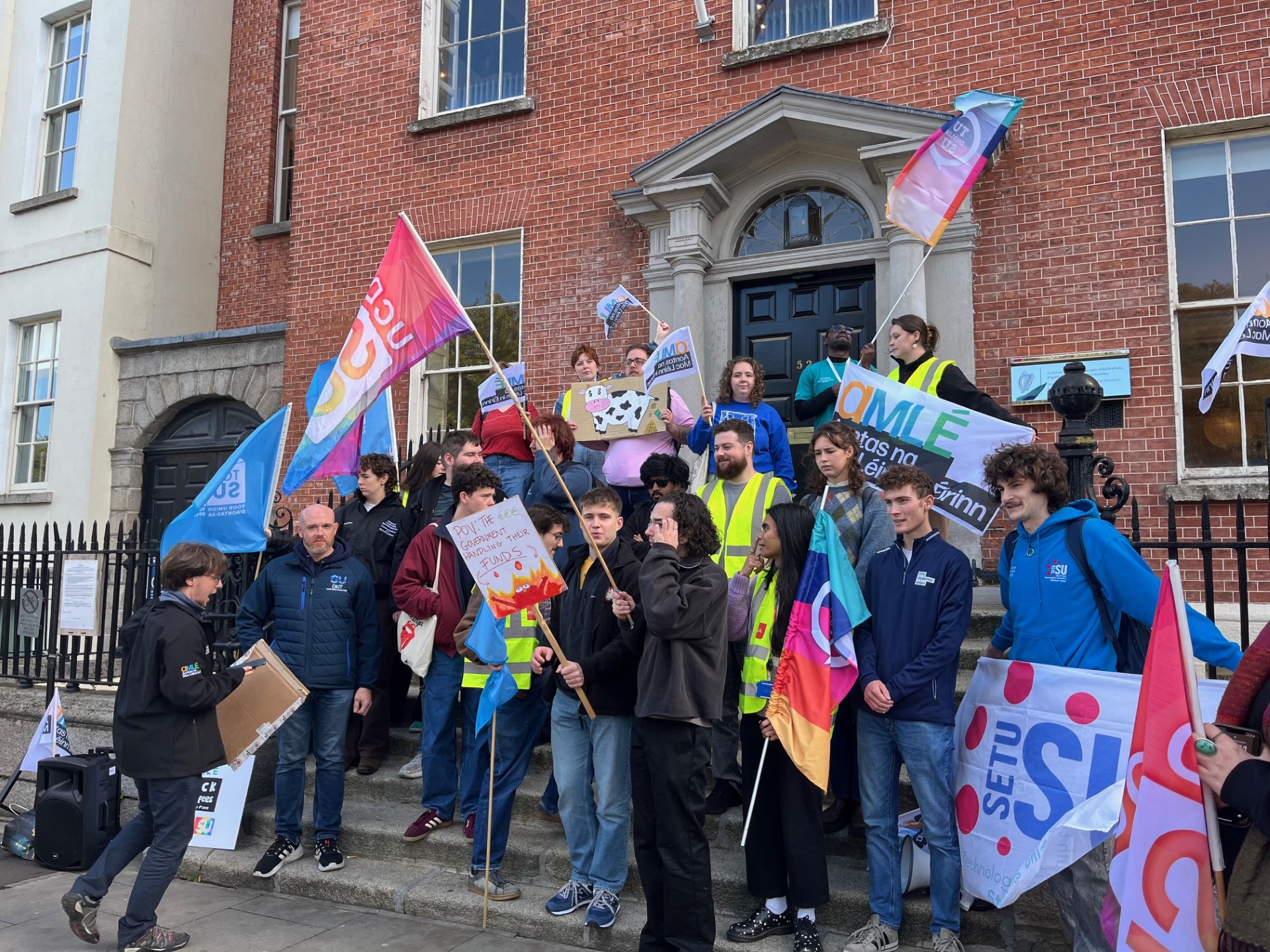
A group of over sixty third level students from across the country gathered outside the Department of Further and Higher Education on Monday demanding a cut in third level fees in Tuesday’s Budget.
Representatives from AMLÉ (Aontas na Mac Léin, formally Union of Students in Ireland), along with members of various university student unions attended the demonstration demanding the government lower fees for third level students.
Many travelled from across the country for the protest, including representatives from University of Galway, and SETU Carlow.
Some of the speakers at the event highlighted the cost of accommodation across the country, and that many technological universities have no on campus accommodation.
One speaker said that only 18% of accommodation at University College Cork was owned by the college.
Also in attendance was the Labour Party leader Ivana Bacik, who said that education should be free.

Labour Party leader Ivana Bacik TD speaking at the protest against third level fee increases. “We will be fighting to ensure this budget does see a permanent reduction in fees,” she said.
As it stands, fees are currently around €3,000 for most students. But for the past three years, when the department was under Simon Harris and his successor Patrick O’Donovan, third level fees were reduced by €1,000 for the year, an act which was repeated each year.
Both Fianna Fáil and Fine Gael committed to cutting fees over the lifetime of the government during the 2024 election campaign, and it is something which features in the Programme for Government.
But the new minister for Further and Higher Education, James Lawless, shocked many students earlier this summer when he announced that it was unlikely that there would be another €1,000 reduction in Budget 2026.
Recent reports suggest that there will be a permanent €500 cut in fees this year, rather than another one-off reduction.
This news has angered students across the country, leading to Monday’s protest outside of the Minister’s office on Stephen’s Green.
Speakers led chants off, “Hey hey, ho ho! Student fees have got to go!” and “No way we won’t pay!”
There were also some expletive laden chants.

Over 60 students gathered outside the Department for Further and Higher Education to protest fee rises. The attendees at the protest are hopeful that they got their message across.
“I think it’s a shame to be honest,” said Barry Sexton, Vice President for Welfare and Equality in SETU Carlow Student’s Union.
“The Government is absolutely swelling with money. There’s money coming from every corner in this government,” he said.
“They don’t need to take money from the students, of all people, the most underprivileged people in the country.”

Barry Sexton, VP for Welfare & Equality in SETU Carlow Student’s Union. “Paying an extra €500 for people who are impoverished and less well-off is absolutely devastating.”
For Barry, he isn’t confident that the Government will keep their promise to abolish fees. “I don’t see it happening any time soon. Fianna Fáil and Fine Gael are in government together so they obviously should be working on the same goals, and they shouldn’t be falling back on what the other said to escape out of it.”

Members of Trinity College Student’s Union at Monday’s protest. Left to right: Lorenzo Cheasty, Natalie Byrne, Harry Johnston, Amelia Flanagan, Grace McNally. Most of the students felt strongly about the issue of fees. Amelia Flanagan, Environmental Officer for Trinity College, Dublin, Student’s Union said, “this is student fees, and if we can’t stand up for ourselves in this regard, what we stand up for ourselves, if we’re not showing out, then what’s the point of a student’s union existing if we can’t protest against a fee rise for ourselves?”
Grace O’Malley, Health Science VP for TCD SU shared a similar sentiment. “I think from a health science aspect as well, we already have so many hidden costs in our course like our uniforms, transportation, placements, living on placement, having to work unpaid for the entire week, and on top of that having to work an actual job where we do get paid.”
“Now our fees are going up, and we’re not even sure if they are going up. We’re going back to college, unsure, uncertain, and scared of what’s going to happen,” she said.
A spokesman for Minister Lawless told TheCity.ie that, “Budget negotiations are ongoing, and Minister Lawless remains committed to securing the strongest possible package for students and their families, with a clear focus on directing the greatest support to those who need it most. This, of course, remains dependent on the Department of Public Expenditure and Reform.”
The issue of fees is sure to be one of the biggest stories from this week’s budget and will be watched closely by students and their families across the country.
-
Fringe Frenzy: The Importance of Festivities For Everyone
The Dublin Fringe Festival 2025 has come to an end, with thousands of people attending different events of creative and performing arts.
The 31st annual edition of the festival showcased its usual sites of creative and performing arts, with some events being ticketed and some being free, providing an affordable experience for anybody interested in engaging with cultures such as this.
The festival is known for its inclusivity, with a diverse group of performers and attendees alike visible in every corner.
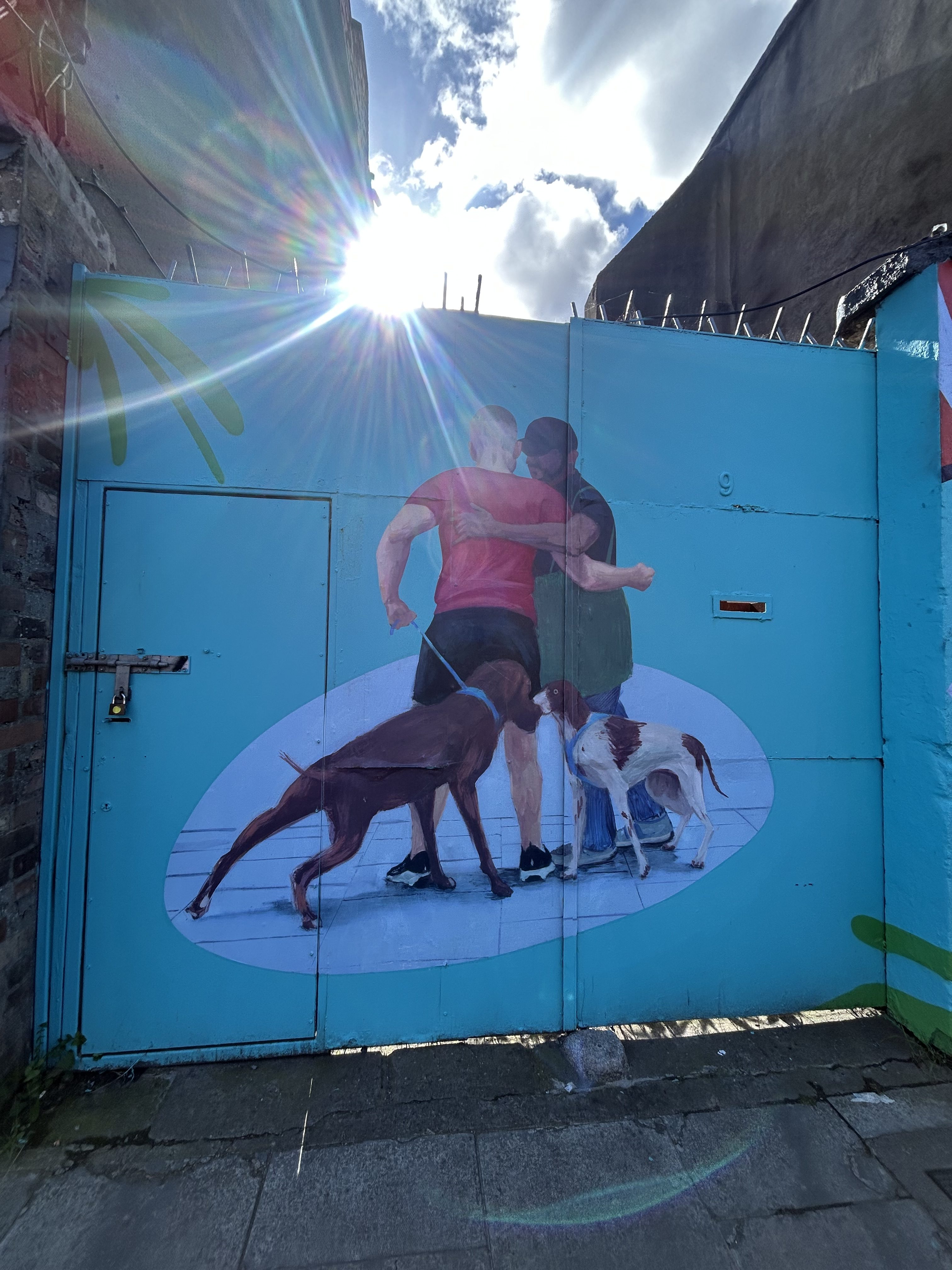
With ranges of performances, there is also art exhibits, such as the Minaw Collective, an outdoor visual art exhibition, completely free to the public to go and see.

Art piece at the Minaw Collective. Photo by Nathan Clarke While there were many venues that transformed into a culture hub during the festival, Bewley’s Café Theatre turned into a hotspot for events, with five different events taking place over September.
I spoke to Colm Maher, who was involved in the running of these shows in the café theatre and described the importance the festival brings in providing “a platform to young artists starting their career in theatre.”
“It also gives a platform for artists in other disciplines to tell their story on stage. For example, in Bewley’s this year Davina Devine, who is a drag queen, put a show together telling her story. And Farah Elle, a singer/songwriter, got to tell her story about growing up in Libya.”
As well as this, Colm also explained the importance that events like this brings to the venues themselves, explaining that “for Bewley’s the Fringe brings in a demograph of young people that the café might not otherwise attract.”
Of course, it is mainly the performers who can reap the rewards from performing at the Fringe Festival, as Colm proudly explained the many success stories that have come from some of these shows:
“Dublin Old School that transferred to the National Theatre in London and was then made into a movie and My Left Nut, going on to become a TV series. They follow this format of one hour shows breaking out of a fertile festival environment, in Edinburgh they had Fleabag and Baby Reindeer. In short, a Fringe show mounted on a shoe-string budget has the potential to break out into the mainstream. That is the dream! Which is part of what Fringe is all about.”

Bewley’ Café. Photo by Nathan Clarke Stories such as this perfectly encapsulate why it is so important to have shows such as this, opening the doors for young and talented performers to further develop their stage skills and provide a platform to be picked up by other venues.
Colm goes onto develop this point, as “the intense and concentrated atmosphere of a festival environment help incubate fresh and exciting talent, ensuring theatre is kept alive in our age of online streaming platforms; Fringe festival remind people that you can’t beat a live show!”
The festival is renowned for it’s incredible atmosphere, which evidently takes a lot of parties’ involvement to foster.
With the Fringe Festival entering it’s 32nd year next year, it is clear to see the impact it can have on businesses, performers and consumers alike, as Colm put it:
“Though, more importantly, I like to ensure all the companies have a good experience in the venue. I like to foster a collaborative and creative atmosphere, which is what the spirit of Fringe is all about.”
You must be logged in to post a comment.