Tag: health

  • Irish healthcare workers react to HSE report focusing on “person-centred care”

    Irish healthcare workers react to HSE report focusing on “person-centred care”

    The HSE has released a new report, which has asked hospital staff to rethink how they refer to patients.

    The report mentions a programme which seeks to personalise the treatment of patients within the healthcare system over the coming months, with eighteen hospitals already committing to the new guidelines.

    “In nursing, it’s more about asking the patient what they want to be called. It’s always been that way,” said Liz Roche, Area Director of Nursing and Midwifery planning and development at the HSE.

    “Some patients want to be called ‘Mr. Bloggs’ rather than by their first names and vice versa some would rather be called by their first name. It all comes under the umbrella of ‘person-centred care’,” Ms. Roche continued. “It also works in reverse – that is us,as professionals, should be introducing ourselves to patients. There is a big drive called #hellomynameis.’

    Amy Mc Grath, 21, is a recently qualified nurse working in Dublin. As a young nurse, she doesn’t predict any personal changes in relation to “person-centred care”.

    “We were taught from the beginning not to be using ‘pet names’ with patients because most of them are so much older than us that it can seem patronising,” she told TheCity.ie. “So, I don’t see it changing how I talk to patients. I think some people will find it difficult but that’s just because it’s in the Irish culture to use ‘lads’ and stuff.”

    According to the report, the HSE’s main aim is “to enable a culture of person-centredness within the health and social care system that positively impacts on [the] experience of people who use services, their families and staff.”

    “Calling someone ‘love’ or ‘pet’ is seen as being not ‘person-centred’ as you can call it to anyone.”

    “People prefer to be called by their own name as they find it more personal and [they feel] that people are trying to get to know them,” said psychiatric nursing student Niall Treacy, 22.

    Treacy believes a “balance” should be achieved as “we can’t look at everything in a clinical matter and some informal language around patients may comfort them rather than the constant professionalism.

    “It’s a career where compassion is the centre force so the clinical language isn’t always needed and people may find it more comforting to be called ‘love’ or ‘pet’.”

  • Ireland ranks highly for skin cancer risk

    Ireland ranks highly for skin cancer risk

    The Public Health (Sunbeds) Act 2014, was signed into law on 24 June 2014 and states that the sale or hire of a sunbed to any person under 18 years-of-age is illegal. The act was introduced to regulate the use of sunbeds by those under 18, in order to reduce their likelihood of developing skin cancer.

    This means that people under the age of 18 can’t use sunbeds while on the premises of a tanning salon and are prohibited to enter areas of the business where they keep their sunbeds.

    It had been known that teenagers are recruited by the HSE to take part in a “test purchase procedure” in which they send teenagers between the ages of 15-17 to go undercover and try buy sunbed sessions from tanning businesses.

    Following a  Freedom of Information request, it has been revealed that there have been 101 occasions in which a teenager (between 15 and 17) has been sent to a sunbed premises by the HSE since the commencement of the test purchasing programme. The FOI disclosed 12 contraventions resulted during these inspections.

    The HSE Environmental Health Service has recorded 62 non-compliances with the age restriction provisions of sunbeds legislation, which is an Act breach under section 4, 5 and 6 of the legislation.  

    A spokesperson for the HSE said: “It is widely accepted that one of the only practicable enforcement options available to control authorities in relation to sales to minors is through a test purchase procedure. Section 18 of the Public Health (Sunbeds) Act 2014 permits the use of test purchase procedures.

    “Test Purchase involves the sending of a volunteer minor aged 15 to 17 years-of-age into sunbed premises for the purpose of the person using, purchasing or hiring a sunbed on those premises. The intention is to ascertain if the owner, manager or employee is complying with the legal provisions regarding the sale, use or hire of a sunbed on a sunbed premises to under aged persons.”

    When asked about the success of the teenage programme, the spokesperson said: “The main evidence to show the success of the legislation, focusing on its primary purpose, protection of minors, can be seen in the reduction in non-compliant outcomes for test purchase inspections while the number of test purchase inspections has increased. The reduction in overall infringements is indicative of an increase in compliance and understanding of the law and the continued enforcement.”

    In 2016, 25 test purchasing inspections were carried out with six non-compliant outcomes. In 2017, 47 test purchasing inspections were carried out with five non-compliant outcomes.

    A person who commits an offence under the legislation is liable on conviction to pay a fine of up to €4,000 or could be imprisoned for up to six months. It was revealed that the HSE inspections have resulted in 23 fixed penalty notices of €300 each, and four prosecutions for not notifying the HSE of operation as a sunbed business. Out of the four prosecutions, only three resulted in convictions with fines of €300, €650 and €250.

    Each sunbed establishment is required to pay a notification fee of €120 to the HSE, and as of September 2018, there are 516 sunbed businesses on the national database. There has been a high compliance rate with the requirement for a sunbed business operator to notify their business to the HSE annually  with less than 2% not notified in 2018.

    There were a total of 489 inspections of sunbed businesses carried out in 2017, compared to 264 in the first six months of 2018. In 2017, 184 infringements of the Act were discovered compared to 121 in 2018 so far.

    In a report from July 2018, it was revealed that Ireland is ranked 14th out of 62 countries on the international skin cancer index, investigated by Derma Plus.

    The report acknowledged that the high levels of UV light exposure, when mixed with a lighter skin tone, led to higher rates of skin cancer.

    According to the World Health Organisation (WHO), regular exposure to UV radiation should not exceed two sessions per week with a max of 30 minutes per session. Sunbeds mainly emit UVA radiation, which activates the melanin pigment already embedded in the upper skin cells.

    There has been significant research on the link between sunbeds and cancer. The Environmental Health Association of Ireland have claimed that 7 percent of the Irish population uses tanning beds and that 3 percent of them use them once a week. The chance of getting melanoma is increased by 75 percent when someone under the age of 30 uses a sunbed.

    Figures from the HSE show that there are approximately 8,000 cases of non-melanoma skin cancer every year and 800 cases of malignant melanoma.

  • More than 1,600 cyclists fined since 2015

    More than 1,600 cyclists fined since 2015

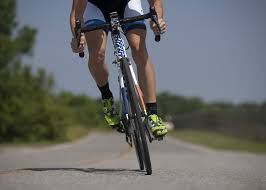
    A total of 1,660 on the spot fines have been handed out to cyclists in the past two years.
    The fixed charge fines were introduced on the 31st of July 2015 by Paschal Donohue who was the transport minister at the time.

    Cyclists breaking red lights is by far the most frequent infraction with 843 of the 1,660 fines being accounted for by this offence.

    There are seven offences for which cyclists can be fined including: cycling recklessly, failure to have lights, cycling in a pedestrianised area, breaking a red light, failing to stop for a school warden and failing to stop at a railway barrier or bridge crossing.

    So far this year there has been 439 fines issued with 172 of them being for breaking a red light, 106 for not having front and rear lights, 88 for cycling in a pedestrianised area, and 73 for cycling without adequate consideration,

    Cyclists can be ordered to pay a €40 fine which can rise to €2,000 if the fine remains unpaid for more than 56 days.

    By Eoghan McGrane

  • Adverse reactions to HPV vaccine decrease

    Adverse reactions to HPV vaccine decrease

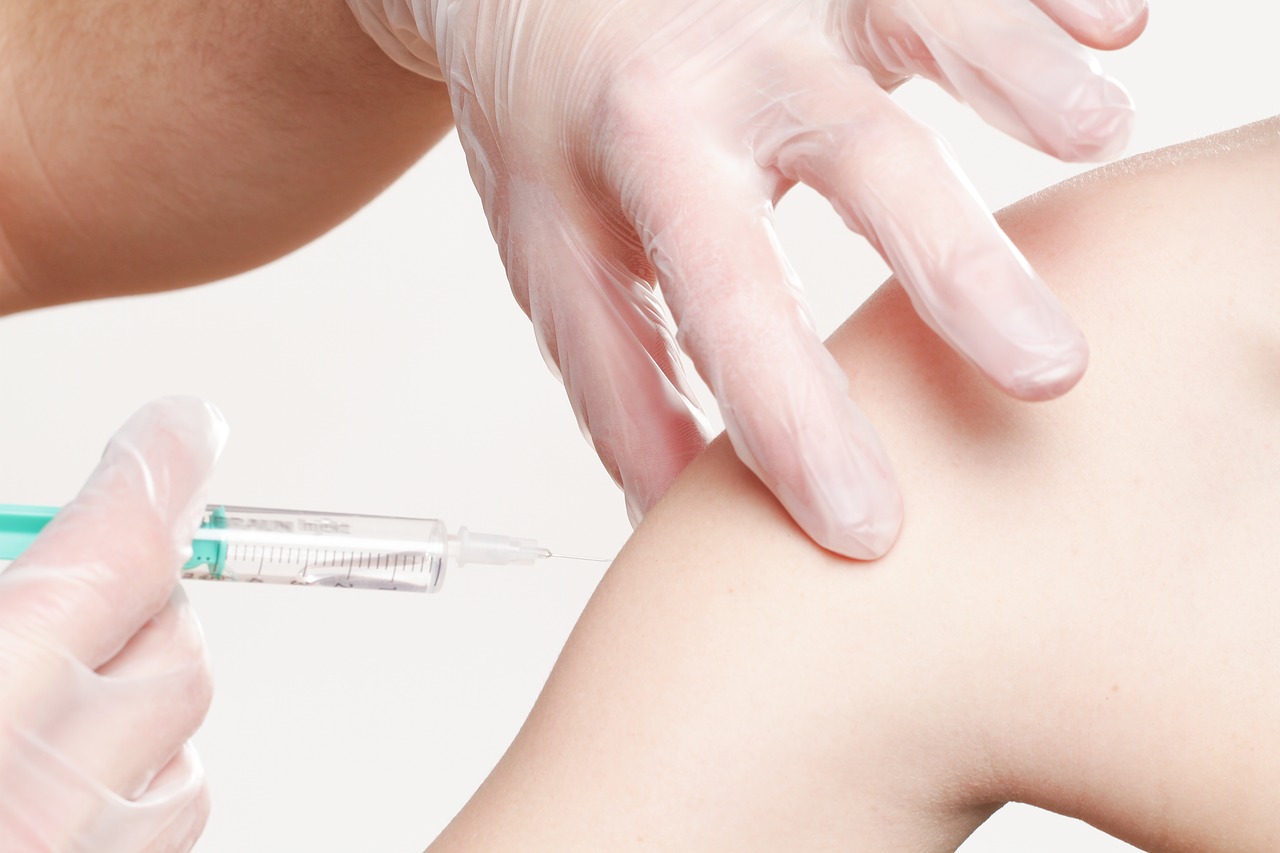
    The number of reported adverse reactions to the Human Papilloma Virus (HPV) vaccine looks like it will fall substantially in 2017, according to figures released by the Health Products Regulatory Authority (HPRA).

    In information released under the FOI Act, HPRA records show that forty reports of adverse reactions to the vaccine were reported from January to September 2017. So far this year, the number of reports have fallen by 68% when compared to last year.

    In 2016, 125 adverse reactions to the vaccine were reported, up from 110 reports in 2015.

    Picture1

    Source: HPRA

    The most common HPV vaccine is Gardasil.  This vaccine has been administered to girls in first year of secondary schools since September 2009.  The vaccine was also issued to sixth year students on a catch-up programme.  

    Students receive two or three doses of the vaccination.

    The vaccination is said to prevent pre-cancerous growths in the female genitalia and cervical and anal cancers.  It also protects from some sexually transmitted infections.  

    Since the introduction of the vaccine in Irish schools, there have been some reports that Irish teenagers have reported serious adverse effects to the HPV vaccine.

    These include daily headaches, chronic fatigue, memory and concentration issues, early onset of menopause and neurological issues, according to an online group who claim they or their children suffered negative reactions to the vaccine.

    There is not, however, any medical evidence that the adverse reactions reported online is directly linked to the HPV vaccination.

    However, in further documentation received under the FOI Act, the Health Service Executive (HSE) do not list any of the above complaints as an adverse reaction to the vaccine in the information provided in the package leaflet.

    The HSE say that difficulty breathing (bronchospasm), has very rarely been reported (less than 1 in 10,000 patients).  More rarely (less than 1 in every 500,000 to one million patients), anaphylaxis was seen in patients. This is when the immune system overreacts to the presence of a foreign body.

    The package leaflet says that other side effects could be experienced following the administration of the HPV vaccination. However, these are not unique to the Gardasil injection and could be experienced following the administration of any vaccination. These include muscle weakness, abnormal sensations, confusion, dizziness, vomiting, aching muscles or unusual tiredness or weakness.

    Figure released by the HSE in August 2017 showed that uptake for the vaccine had fallen by 15% in the last two years.  

    A total of 22,721 first year students received both doses of the HPV vaccine in the 2015/2016 academic year.  The previous year, 26,799 girls received both vaccines.

    Minister for Health Simon Harris has expressed concern over the falling numbers of girls receiving the vaccine.  Addressing the Seanad recently, he emphasised that the HPV vaccination saves lives in countries with high uptake of the vaccination.

    Cervical cancer is the second most common cause of death due to cancer in women aged 25 to 39 years. Around 300 women are diagnosed with cervical cancer in Ireland every year, with an average of 90 people dying from the disease.

    By Louise Burne & Gavin Hyland

  • Dublin restaurant closes due to ‘filthy’ conditions

    Dublin restaurant closes due to ‘filthy’ conditions

    According to figures released by the HSE, Dublin has seen the most restaurant closures so far in 2017.

    Dublin accounted for 44 percent of the total closures in Ireland so far. Following Dublin is Donegal and Cork, each accounting for three percent of the closures.

    1

    The lowest amount of closures took place in Laois, Kildare, Longford and Wicklow, with each of these counties only having one food establishment closed.

    There have been no closures recorded as of yet in counties Carlow, Cavan, Clare, Galway, Kerry, Kilkenny, Leitrim, Mayo, Monaghan, Offaly, Roscommon, and Waterford.

    Punjab Pantry is one of the many food establishments that have been closed this year due to breaches of food safety legislation.

    Punjab Pantry, with an address of 39 Richmond Street South, Dublin 2, was closed in February this year by an environmental health officer working with the HSE.

    Documents released by the HSE have revealed the reasoning behind the restaurant’s closure, with many legislation breaches being documented.

    The environmental health officer recorded approximately 90 to 100 rodent droppings at the back entrance to the premises, as a result of the back door not being adequately pest proofed. A large hole was noted around the pipework at the back entrance also, giving access to the rodents.

    Poor temperature control was also noted on the premises with chicken and garlic mayonnaise being stored at the wrong temperatures.

    Drainage facilities did not meet the requirements of legislation either. The equipment sink in the kitchen was not connected to the drainage system and the wash hand basin in the basement kitchen was blocked.

    The equipment and food preparation surfaces were also a cause for concern, with rust found on the interior of the cooking equipment and dirt, food particles, human hair and debris noted on food preparation surfaces and equipment.

    According to the HSE report, the conditions of the restaurant were ‘filthy’.

    By Nicole McNelis

  • 2800% increase in number of emergency beds

    2800% increase in number of emergency beds

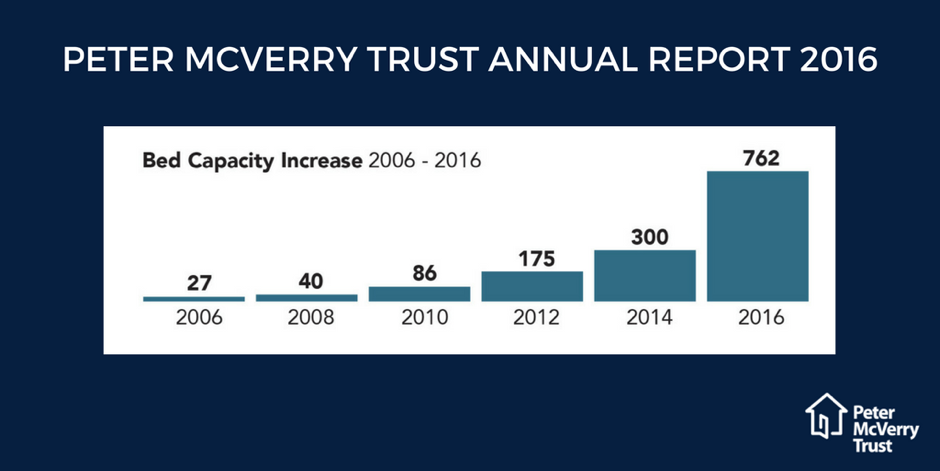
    Peter McVerry Trust (PMVT) annual report has revealed an increase of 2,800% in the number of beds it has provided in emergency accommodation in the last decade.

    The figures released in the latest annual report by the national housing and homeless charity revealed that their bed capacity has seen a twenty-eight fold increase in the past ten years.

    “We’ve been responding to a deepening crisis for the past five years and each year, as the number of people in homelessness has grown higher, it has become much more difficult to respond as resources are stretched ever further,” said Pat Doyle, CEO of Peter McVerry Trust.

    PMV2
    Source: @PMVTrust

    “We have said to government all along that the solution has to be a housing led one yet we find ourselves constantly being asked to deliver greater levels of emergency accommodation,” said Mr. Doyle.

    Mr. Doyle also said that this is “frustrating” because “emergency accommodation is more expensive and less effective than other models such as Housing First. Yet Housing First receives less than one percent of the national homeless budget each year in Ireland.”

    The report also found that there was a sixteen percent increase in the number of people in housing supported by the trust.

    The trust said the government should “switch its funding to more effective forms of responding to homelessness, such as Housing First rather than continue to rely more and more [on] emergency accommodation.”

    Speaking at the launch of the report at the Croke Park Conference Centre, Minister for Housing, Planning and Local Government, Eoghan Murphy, said the Housing First model “almost seems obvious as a solution.”

    The Minister however said “that wasn’t the case when it was first introduced, and it has needed its own pioneers here in Ireland, which it has in the McVerry Trust.”

    PMV3
    Source: @PMVTrust

    The Housing First model is based on providing both housing and intensive case management which aims to end rough sleeping by helping people with access to housing and support for health or social needs so they can live independently in a community.

    In late 2017, Peter McVerry Trust signed an international partnership with the Pathways Housing First Institute. The organisation is headed up by Dr Sam Tsemberis, the founder of the Housing First movement.

    Minister Murphy said he had recently met with Dr Tsemberis to discuss the Housing First model and its success in other countries. “I have read a great deal about it, and indeed it was probably the first thing that Pat and Fr Peter raised with me when we met in my first week on the job,” said Minister Murphy.

    The minister also thanked Father McVerry, the trust’s many employees and CEO Pat Doyle for their hard work with the charity.

    “We are dealing with a crisis in homelessness – a crisis which has a number of different fronts, which must be tackled simultaneously,” said Minister Murphy.

    He also announced that a Director of Housing First will be put in place by the Dublin Region Homeless Executive shortly.

    The Minister added: “The Rebuilding Ireland target is to triple housing first in Dublin to 300 – this is being vigorously pursued. It of course requires the building of more single accommodation by local authorities and Housing bodies.”

    The report also found that 1,208 people accessed the charity’s prevention services in 2016. Some of the prevention services include the Information and Access Centre, the Homeless Youth Cafe and the Streets to Home support service.

    By Keeva Tyrell


  • Ireland’s population boom set to put a strain on health services

    Ireland’s population boom set to put a strain on health services

    Ireland’s population is set to rise by nearly a quarter by 2030 according to a new report by the Economic and Social Research Institute (ESRI).

    According to findings in Projections of Demand for Healthcare in Ireland, 2015-2030, Ireland’s population of people aged 80 and over is set to rise by almost 94 percent. This, alongside an increase in the general population, will have a significant impact on Ireland’s health service.

    The report states that demand across all health and social care sectors will “increase significantly” for all years up to 2030. This report used population information from the census of 2016, alongside statistics from the past twelve months regarding the use of a range of healthcare services, including public and private hospital inpatient care, emergency department use, and GP services.

    In a breakdown of the impact on health services, the report states that the demand for home help and residential care will skyrocket by up to 54 percent, with the demand on inpatient beds in public hospitals set to rise by 37 percent. Also, the demand for local GP visits will also increase by up to 27 percent.

    The report also remarks that Ireland’s population over the past twenty years has increased by 31 percent. This boom in population was significantly higher than the EU average, which was only 6 percent.

    Minister for Health Simon Harris has responded to the publication of the report, stating that he has “long been of the view that we need to increase capacity in our health services, but that this must be done in an evidence-based manner.”

    The Minister added that he welcomes “the publication of this report and the development of the underlying projection model upon which the analysis and findings are based”.

    By Sean Meehan


  • Ireland continues to fuel ‘Heavy Drinkers’ stereotype

    Ireland continues to fuel ‘Heavy Drinkers’ stereotype

    “The number of new cases of alcohol-related cancers in Ireland is expected to double by 2020.”

    This is the stark statement by the Irish Cancer Society’s Cancer Prevention Manager Kevin O’Hagan on the Central Statistics Office (CSO) report released on October 18th 2017. A grim picture was painted, which showed that in 2014, Irish people between the ages of 18 and 24 topped the EU table for excessively drinking alcohol.

    Irish people have a reputation for being heavy drinkers. The average EU rate of alcohol consumption between people aged 18-24 is 11.7% for men and 4.3% for women. More than a quarter of Irish males (26.8%) aged 18-24 engaged in binge drinking at least once a week in 2014, which was over double the EU average. The figure for Irish women of the same age was over treble the EU average at 15.5%.

    The data from the CSO report looks like this:

    5.17  EU: Persons with heavy episodic drinking at least once a week, 2014
      % of cohort
    Country Males   Females   Total
    18-24 25-64 18+   18-24 25-64 18+   18-24 25-64 18+
    Cyprus 0.5 1.6 1.4 0.4 0.1 0.1 0.4 0.8 0.7
    Latvia 0.6 2.2 1.9 0.7 0.1 0.1 0.7 1.1 0.9
    Lithuania 2.0 6.9 5.7 0.0 0.7 0.5 1.0 3.7 2.8
    Croatia 2.3 3.4 3.3 0.0 0.8 0.6 1.2 2.0 1.9
    Italy 2.9 1.8 1.8 0.7 0.4 0.4 1.8 1.1 1.1
    Slovakia 3.2 2.9 2.7 0.6 0.3 0.3 1.9 1.6 1.5
    Greece 3.6 2.8 2.5 0.8 0.4 0.4 2.2 1.6 1.4
    Hungary 3.6 3.8 3.9 0.0 0.6 0.6 1.8 2.2 2.2
    Bulgaria 4.6 4.5 4.0 0.0 0.5 0.5 2.4 2.4 2.1
    Poland 5.4 6.1 5.5 2.1 0.7 0.7 3.8 3.3 2.9
    Portugal 6.6 5.3 5.0 1.3 0.6 0.5 4.0 2.8 2.6
    Romania 6.6 23.2 20.3 1.2 2.6 2.4 4.0 12.9 11.0
    Spain 7.3 4.3 4.1 2.3 1.5 1.2 4.9 2.9 2.7
    Czech Republic 10.2 3.7 4.0 0.9 0.3 0.3 5.8 2.0 2.1
    Austria 10.3 3.6 3.9 4.3 0.7 1.0 7.3 2.2 2.4
    EU 28 11.7 9.3 9.0 4.3 2.6 2.6 8.0 5.9 5.6
    Estonia 12.0 10.9 9.8 1.4 0.9 0.8 7.4 6.4 5.4
    Slovenia 12.7 5.3 5.6 4.3 1.0 1.2 8.5 3.2 3.3
    Luxembourg 14.4 18.5 17.4 7.2 5.7 5.5 10.9 12.2 11.4
    Sweden 14.4 6.4 6.8 7.1 1.5 2.0 10.9 4.0 4.4
    Denmark 16.0 14.2 14.3 10.7 3.7 4.5 13.2 9.0 9.3
    United Kingdom 17.0 17.8 15.5 6.5 6.2 4.9 11.0 11.6 9.8
    Finland 19.4 21.2 18.9 10.7 4.4 4.4 14.6 12.6 11.3
    Germany 22.0 12.7 13.5 8.0 4.9 5.4 15.2 8.8 9.4
    Malta 25.8 10.2 11.6 11.2 2.1 2.8 18.7 6.2 7.2
    Belgium 25.9 14.1 13.6 9.5 3.1 3.7 17.2 8.5 8.5
    Ireland 26.8 21.2 20.8 15.5 6.5 6.8 21.4 13.8 13.7
    Turkey 2.3 3.3 2.9 0.1 0.2 0.2 1.2 1.7 1.5
    Iceland 4.1 3.3 3.0 6.3 0.5 1.3 5.1 1.9 2.1
    Norway 8.7 3.6 3.7 5.1 0.7 1.1 7.0 2.1 2.4
    Source: CSO IHS, Eurostat EHIS

    “The statistics are very disappointing in that we have known for some time that alcohol consumption is the third leading risk factor for disease and mortality in Europe.” Kevin O’Hagan, the Irish Cancer Society’s Cancer Prevention Manager said.

    According to the society’s website, alcohol is associated with seven different types of cancer: throat cancer, mouth cancer, cancer of the voice box, cancer of the oesophagus, breast cancer, liver cancer and bowel cancer.

    Every year, 900 people develop cancer from excessively drinking alcohol. Of those 900, over 500 die from the disease.

    Excessive drinking or ‘binge drinking’ is described by the HSE’s website as drinking more than six standard drinks in one sitting. A standard drink is a pub measure of spirits, a small glass of wine, an alcopop or a half pint of beer.

    For drinkers of alcohol, the recommended weekly intake for women is 11 standard drinks and 17 standard drinks for men.

    In Europe, an estimated 10% of all cancer cases in men and 3% of all cancer cases in women are attributable to alcohol consumption, according to the Irish Cancer Society.

    Kevin O’Hagan highlights some of the risks associated with alcohol consumption for women.

    “More than 100 studies have looked at the link between alcohol and breast cancer in women. These studies have time and time again found that drinking alcohol increases breast cancer risk.” He explained: “Evidence has shown that drinking one standard drink a day is associated with a 9% increase in the risk of a women developing breast cancer, while drinking 3 to 6 standard drinks a day increases the risk by 41%.”   

    It is obvious that we have a problem in Ireland with drinking too much alcohol. As well as the CSO data, a global report from May 2014 by the World Health Organisation (WHO) put Ireland as second out of 194 WHO countries for binge drinking.

    The report found that 39% of all Irish people aged 15 and over had excessively drank alcohol in the past 30 days, which put us ahead of the UK (28%) and only below Austria’s 40.5%.

    Ireland has had a complex relationship with alcohol for decades. Since 1960, our levels of drinking almost trebled and are still more than double despite a near 20% drop since reaching its peak.

    Alcohol 1

    Alcohol consumption in Ireland almost trebled over four decades between 1960 (4.9 litres of pure alcohol per capita) and 2000 (14.1 litres of pure alcohol per capita), as alcohol became much more affordable and more widely available. Since then, our alcohol consumption has declined by 19.6%, from a peak of 14.3 litres of pure alcohol per capita in 2001, to 11.5 litres in 2016.”

    These figures were obtained from Alcohol Action Ireland’s website, a national charity that aims to reduce levels of alcohol harm by trying to improve public policy and safety on the matter.

    CEO of Drink Aware, Niamh Gallagher who campaigns for an Ireland without alcohol abuse is well aware of the problems associated with alcohol consumption.

    “We know that regularly drinking alcohol at this level can increase the risk of experiencing alcohol-related harms, including accidents, injuries, violence, stomach disease, cancer and strokes. As well as the impact on physical health, alcohol can have a serious impact on mental health, affecting ability to cope with everyday stresses. It is also linked with particular mental health issues including depression and anxiety,” said Ms Gallagher.

    Solutions

    The solutions to reducing alcohol intake are complex.

    “We need a combination of measures; education and awareness to communicate the impact of alcohol on young people and to build the skills and resilience required to say no; and enforcement of the law, to ensure that young people under age cannot access alcohol and those who supply it to them are punished,” said Ms Gallagher. 

    The Irish Cancer Society’s Cancer Prevention Manager, Kevin O’Hagan said: “The most important thing at the moment is to continue to increase awareness of the link between alcohol and cancer. Presenting this message is particularly challenging in the context of considerable investment by the alcohol industry on marketing and advertising to influence people’s alcohol beliefs and behaviour.”

    Suzanne Costello, Interim Leader of the HSE Alcohol Programme, agreed with Mr O’ Hagan.

    “Alcohol marketing is designed to make alcohol sell. A huge amount of money is invested in it and so alcohol is marketed as something that is largely risk-free. It’s glamorous and aligned with social success in how it’s marketed and hence, for young people, that makes it attractive. The key point to reducing alcohol harm with consumption is the fact that it’s very difficult to achieve because there’s a very strong industry lobby opposing those things. It’s a contested space and the public health community need to make the case and display the evidence in order to get politicians to take action to progress the legislation.”

    The Alcohol Beverage Federation of Ireland (ABFI) represents alcoholic drinks manufacturers and suppliers in Ireland. The Director of ABFI, Patricia Callan, defended the statements made by saying that the drinks industry supports measures to tackle misuse of alcohol and to reduce alcohol consumption of young people.

    “The position of the drinks industry has always been to support the introduction of measures to tackle alcohol misuse and alcohol consumption by young people,” said Ms Callan.

    Ms Callan also said alcohol abuse damages the drinks industry and its reputation and is not something they want.

    It is not in the best interests of the drinks industry when people misuse our product. Ultimately, alcohol misuse damages our brands and our reputation,” she said. “Our industry engages in responsible marketing and promotion, and is governed by some of the strictest regulatory codes in the world.”

    In December 2015, the legislation for the Public Health Bill was approved by the Irish government. The bill’s aim is to deal with minimum unit pricing of alcohol, labelling laws on alcohol, advertising laws and availability of alcohol in Ireland.

    It is our hope that the new Public Health (Alcohol) Bill will introduce much stricter legislation governing alcohol advertising and sponsorship and also health labelling of alcohol products since there is widespread misunderstanding and denial of the harmful effects of alcohol on health,” said Mr O’ Hagan of The Irish Cancer Society.

    Drink Aware are also supportive of the Public Health Bill. CEO Niamh Gallagher said, “We are supportive of the bill but it’s a matter of what happens next.”

    The HSE Interim Leader of the Alcohol Programme, Suzanne Costello, finds this statement to be ‘contradictory’, given the fact that Drink Aware are funded by the alcohol industry.

    “That’s a position that we would find contradictory because if the people that fund Drink Aware are funding the lobbyists to derail the bill, I’m not sure what exactly their position is.”

    Niamh Gallagher admitted to being funded by the alcohol industry but stressed that the governance of Drink Aware is separate to the funding.

    “Drink Aware does receive funding from the alcohol industry and the grocery retail industry so we’re not just funded by the alcohol industry. We receive funding from both but our governance is absolutely separate to our funding. Our Board drives our strategy and oversees our work and they have no links to the alcohol industry. They’re completely independent,” Ms Gallagher said.

    The Public Health Bill is still being debated, with it moving back and forth between the Dáil and the Seanad. It is hoped that the Bill will come before the Seanad again in November of this year.

    By Leanne Salmon

  • Cloud of smoke: Divisive cannabis bill set to die?

    Cloud of smoke: Divisive cannabis bill set to die?

    By Andrew Barnes

    As the Cannabis for Medicinal Use Regulation bill was passed on the first day of December last year, news outlets and social media were jam-packed with comment and controversy. What does this bill mean? Who will benefit from it? When will it come into effect? The internet was ablaze with speculation as to what exactly surrounded the proposed legislation. A quick glance back at newspapers and news feeds from around that time and the months that followed and some things are obvious. People were excited as they thought ‘weed’ would be legalised. The Irish Times speculated that the “poorly constructed” bill would make cannabis legal for recreational use for all those over 16. There was a whole lot of disinformation around what the bill really meant.

    All those who thought that they would be getting a slice of Amsterdam were wrong. The Irish Times was not quite on the button. It seemed obvious that these ‘reports’ were simply that, from just reading the bill; a bill that suggested the “regulation, labelling and production of cannabis products for medicinal use.” Almost a year later, confusion still surrounds the bill. A report carried out by the Health Products Regulatory Authority (HPRA) last January and published by Minister for Health Simon Harris on February 10th added some clarity about what may be included in the legislation, but still people felt irked.

    “From talking to people, the whole thing just seems kind of muddled” mused Keith Coughlan, who runs one of the country’s most informative websites on medicinal cannabis: cannabisireland.com. “Social Media is good for getting the point across, with Vera Twomey for example getting her message across, but there’s also a lot ignorance on it too. There needs to be more information about it. It seems the confusion is being caused by what people want [the bill] to be and what it actually is. I think [the Government] are taking baby steps around it at the moment because they don’t want any loopholes in the bill like what happened with the head shops selling those synthetic drugs a few years ago.”

    The “baby-steps” Keith speaks of are the HPRA’s recommendations, made last January and approved by Harris, of a “compassionate access scheme for cannabis-based treatment to be established”. The HPRA advised that cannabis should only be available for the treatment of patients with specified medical conditions, for those who have not responded to other treatments and where there is some evidence that cannabis may be effective. This would only allow those suffering from spasticity associated with multiple sclerosis, those suffering from nausea and vomiting associated with chemotherapy, and people with treatment-resistant epilepsy to have access to medicinal cannabis.

    “It doesn’t go far enough. Even if you look at Vera Twomey’s daughter, after all she’s been through she still needs another consultant to sign off on a medicine her child really needs,” explained Keith. “I think the stigma surrounding cannabis in the media and the disaster of the head shops a few years ago is making it much more difficult for the government to come in and actually implement a proper bill that will help a wide range of people suffering from illness. But this isn’t smoking weed we’re talking about, it’s CBD oil. It has no THC (the drug that induces the ‘high’ in cannabis), we’re not talking about five year olds smoking joints, we’re talking about controlled cannabinoid [the element in the cannabis that researchers have found beneficial] use. There shouldn’t be a problem.”

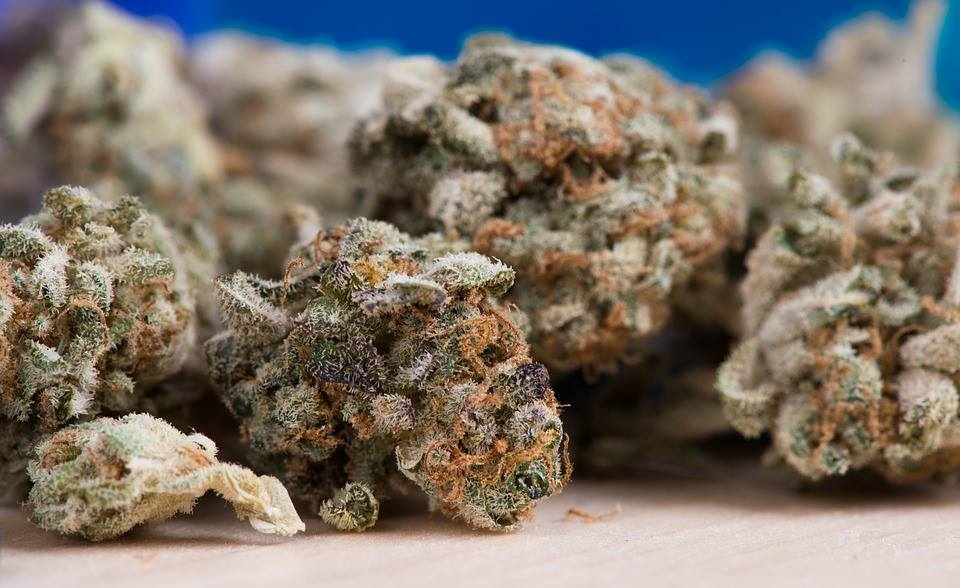
    Medicinal Cannabis image
    Confusion remains around the legalization of medicinal cannabis

    Keith set up the website in 2015 to inform and allow a discussion to take place about the use of medicinal cannabis products, a discussion that has become more progressive in recent years. “It was really set up to allow people to discuss what was working for them and what wasn’t. Where to get the CBD Oil and what was the best one to use for different conditions. Now there’s a lot more talk about it and it seems the more talk the more confusion surrounding it. We try to use the website to give clear and accurate information.”

    January’s 83 page report published by the HPRA only exemplified the gap between public and media perception and the truth of the matter. This time in scientific terms. The ‘findings’ section said: There​ appears to be a significant gap between the public perception of effectiveness and safety and the regulatory requirement for scientific data which is mandatory to determine the role of cannabis as a medicine … the best outcome for patients is the development of authorised cannabis based medicines where the safety, efficacy and quality can be assured.”

    This is something that has been suggested by Dr Michael Harty, Chairman of the Oireachtas Committee on Health. Dr Harty has opposed the bill – which passed without amendment, since its first utterance in the Dáil. His interpretation of the bill was in line with the viewpoint of the Irish Times and much of the public on the matter.  He made the argument to his colleagues that “it is designed to legalise recreational drug use in the guise of legalising it for medicinal use… [it] is so flawed that it does not deserve a second reading”.

    Dr Harty, an independent TD representing County Clare believes in cannabis for medicinal use but warns that there are dangers surrounding the substance too. “There are huge problems around smoking cannabis. As the HPRA report has shown there is not a whole lot of concrete evidence surrounding cannabis consumption. Studies so far have not been conclusive on the effects of the drug, particularly [the] use of THC and its side-effects. There have been a number of links found between cannabis use, particularly in younger people, and schizophrenia and other mental health problems.  Medicinal products, medical extracts from cannabis, that is a different issue. I have a particular interest in making medicinal cannabis products available for patients. That should be pursued.”

    This was another issue that the Joint Health Committee found in their final report in July, which has indefinitely shelved the bill. The report is strongly critical of the bill on multiple grounds. The report criticises the provision around removing cannabis from the Misuse of Drugs Act, saying that this could have “unintended policy consequences” like decriminalising cannabis in non-medicinal circumstances. It also says access to cannabis would be too loose under the bill, meaning that it could be potentially harmful for patients and would take steps towards decriminalising marijuana for recreational use.

    This is something that Keith echoes too. “While the recommendations aren’t conclusive enough for my liking I do agree with some of the ways that the [HPRA and Joint Healthcare Committees] are approaching the matter. People seem to think that there is no consequence to taking cannabis. It is a drug at the end of the day and there is probably too much positive media coverage. It does have harmful effects and people, particularly young people who are seeing all of the talk of weed being a medicine, need to know about the dangers that come with it. Saying that, who are they to judge if it benefits someone with a particular illness or not? If someone is taking CBD oil for a particular illness and finds that it is helping them recover, who are we to tell them it’s not?”

    And so it seems that the confusion surrounding the matter lies within the bill itself, while the anger, by those like Vera Twomey and Keith, has been caused by the restrictive HPRA recommendations and the findings of the Joint Health Committee.

    The man at the centre of all of this is TD Gino Kenny, who understands the confusion and anger, but said: “Overall that the bill was extremely positive, we weren’t going out trying to legalise cannabis for over 16s, that clearly wasn’t the intention … the intention of the bill was to make cannabis available for medicinal purposes for all those who need it.”

    Mr Kenny said that the spin on the bill by some, that the bill was a ‘trojan horse’ to make ways for recreational cannabis use, was down to “hidden agendas”. He said: “I think certain people have very biased opinions on medicinal cannabis. They think that the introduction of medicinal cannabis was only a Trojan horse to get recreational cannabis through the back door, but that’s completely false…. if [I] wanted to put a bill forth for recreational use I’d put a bill forward for recreational use, I wouldn’t hide it … that kind of writing was misleading. [Michael Harty] shouldn’t be giving his own personal views on the subject, especially as chairman of the Health Committee, I think he’s biased towards a bill that has gotten cross party support.”

    Mr Kenny also explained how he wasn’t pleased with the HPRA’s recommendations that medicinal cannabis would be available for use for what he believes is such a small minority of sufferers, nor did he agree with the Joint Healthcare Committee’s reports. “They are flawed, I’ve read them and it’s easy to see that it’s fundamentally flawed. The HRPA’s is quite a sizeable report, and if you read it, it’s quite prejudiced against medicinal cannabis, and it goes on to say that the only medicine that they would recommend is pharmaceutical grade cannabis, and if that’s what the end-game is for the cannabis access programme – where it only suits pharmaceutical grades, well that’s not going far enough, that’s not progress. I’m being objective when I say that, I’m taking my political hat off; that’s not progress. That’s going backwards. It’s nothing new than what we have already, they’re just fast-tracking certain pharmaceutical branded medicines to treat certain illnesses.”

    The next stage for the bill is for it to be passed to the Business Committee of the Dáil. The HRPA report and the Joint Health Committee’s report will be considered now by the members of the Business Committee (which decides matters relating to business and the agenda within the Dáil). Committee members will then decide either to accept the report or reject the findings. Kenny, along with fellow TD and advocate for the bill Richard Boyd Barrett, have promised to argue their case to the Business Committee and condemn the Joint Health Care Committee Report.

    This is unprecedented territory for a bill proposal and will lead to two possible outcomes. The Business Committee will let the bill go forward or it will accept the Joint Healthcare Committee’s report and a motion will come back to the Dáil in which they can effectively vote to squash the bill.

    No time frame has yet been given and the bill that began with confusion and hysteria looks fit to go on in the same vein.

  • Want to Make Creamed Corn Into a Meal? Add Shrimp

    Lorem ipsum dolor sit amet, consectetur adipiscing elit. Phasellus sagittis semper tortor. Quisque non felis elementum augue ullamcorper laoreet. Nam porta leo ut felis suscipit, vel semper lectus vehicula. Nulla vitae porta leo. Class aptent taciti sociosqu ad litora torquent per conubia nostra, per inceptos himenaeos. Fusce bibendum arcu in lacinia condimentum. Aenean id nunc quis ex congue facilisis. Proin non tempus arcu. Donec dictum elementum ex et aliquet. Praesent at pulvinar augue, ut ultricies mauris. Nulla congue nulla in semper cursus. Sed auctor condimentum sem a tincidunt. Duis rhoncus maximus varius. Nullam imperdiet imperdiet massa vel lacinia. Nam auctor odio velit, at ultricies nisi dictum quis. Vestibulum tempus tellus nec leo malesuada, in tempus quam vehicula.

    Sed nec blandit nibh. Pellentesque commodo suscipit gravida. Sed sit amet ex sed mi dignissim elementum in ut quam. Vivamus laoreet non mauris eget mattis. Nam turpis orci, consectetur vel accumsan sed, condimentum at sapien. Nunc ut egestas neque, eu hendrerit lacus. Suspendisse fermentum congue dui nec fringilla. Duis volutpat nunc lectus. Suspendisse potenti. Suspendisse egestas venenatis nunc. Donec at laoreet lacus.

    Pellentesque tristique nisi justo. Mauris quis risus luctus, suscipit dui et, fermentum purus. Donec dui magna, sollicitudin nec malesuada in, porttitor eu augue. Cum sociis natoque penatibus et magnis dis parturient montes, nascetur ridiculus mus. Pellentesque non est sollicitudin, luctus lacus quis, rhoncus sapien. Pellentesque pellentesque sodales enim a faucibus. Aliquam commodo non nisl posuere lobortis. Quisque mi nibh, pharetra quis efficitur eu, lobortis dignissim dui. Cras vitae laoreet massa, in maximus nisi. Donec a posuere massa, et bibendum metus. Ut urna magna, sollicitudin in tellus a, varius vulputate est. Aliquam sit amet iaculis purus. Maecenas aliquam tellus eu ultrices auctor. Etiam in hendrerit tellus.