Tag: health

  • The Wonder Women Club Wicklow – the importance of supporting women

    The Wonder Women Club Wicklow – the importance of supporting women

    By Julia Brennan

    (Photo: Creative Commons license)

    A group of ladies proudly known as The Wonder Women from county Wicklow band together to chat about security in Ireland for women.

    A local women’s chat circle has opened up in the centre of Wicklow to both promote womens’ well-being and have frank and healthy discussions simply about what it is like being female. They have named themselves The Wonder Women Club, a local drop-in where women can support women through deep and meaningful conversations on female empowerment and self-love.

    The meetings consist of sitting, listening and learning intently about the different life journeys of the individual women present, the youngest being 20 and the eldest 65. Discussions can range from how social media affects the female body image to consent in sex to women’s safety in nightclubs. Every week, different topics can be discussed and experiences shared and empathised with. When entering the small room of twinkly lights and relaxing music it is like entering a new atmosphere, a safe space where no judgement could possibly be felt. 

    After many events involving numerous breaches of security for women in both the UK and Ireland came to light once again, it felt like a good opportunity to have a sit down and ask what real life women think of Ireland’s treatment of its female population.

    I spoke to Hannah and Sheenagh, two young aspiring women and co-founders of the Wonder Women Club. The intuitive pair came together to create a group of like-minded people who could chat through all of their similar experiences as women in Ireland.

    “The inspiration was essentially the fact that we needed a space for ourselves as much as we realised other people needed it,” said Sheenagh. “Both me and Hannah went through a series of events that genuinely felt targeted at us as women, for example different forms of sexual harassment, different forms of street harassment and we were sitting back saying that there is just nowhere we can go to sit and talk about this stuff,” she added. 

    Hannah, the other half of the brains behind the operation had herself experienced sexual assault a few weeks before the club was set up. “I really wanted to meet women that would support me, there can be a difference between talking to strangers and to friends, friendships can be very intense but with people who don’t know you coming to support you, it can feel very nice,” she said.

    I asked the group if they felt that Ireland was progressive enough in regard to security for women, all of them collectively said no. 

    “Sheenagh and I had a bad experience on the DART recently where we and another girl were harassed and it was not even that late at night or anything,” said Hannah. “I think there should be security guards on DARTs for people’s safety, it is such a scary feeling to be alone or even with a friend and be harassed like that,” she added.

    “It’s almost like there are more ticket inspectors than security guards,” said Clara. “There are plenty of security guards on the Red Line but it feels like they are there solely for intimidation rather than to be of help.”

    “Security guards come on the DART to intimidate but they are never there when something actually goes down,” added Sheenagh. Sheenagh also stated that Hannah texted the emergency number made available on board when anti-social behaviour occurs, no one responded. “Those who are supposed to help don’t care, and it’s awful because it can be such a comforting feeling that if something did happen to you, someone would care,” she said.

    Many of the members attending the chat circle all had varying reasons for taking part. Clara had voiced that finding a club after leaving school was challenging. “There aren’t very many places outside of school or college where you can go and meet people of different age groups that isn’t a sports club or a Slimming World group, there was no middle ground until this came along,” said Clara.

    Emily, another participant, told me that despite having a friend group with similar interests, chatting about female-orientated things proved tricky. “In my first year, I fell into my friend group who are mainly all guys. We all like the same stuff and we’re all kind of nerdy and get on really well together but there are just some things that I feel I can’t talk about with a group of all guys but that I can talk about with other women,” said Emily.

    “Recently we had gone on a holiday and bear in mind, they have known me for nearly a decade and they asked me why I wear so much makeup, I said it’s not for you it’s for me,” she said with a laugh.

    Joan, an older woman who had moved from Tallaght to Wicklow to be with her husband fifteen years ago, told me she had seen an advert for the support group on Facebook at a time when she had been feeling particularly low. “My husband has dementia and Parkinsons, and I feel very alone, I know nobody here, most people I know are back in Tallaght so I feel it is lovely to be able to come and talk to a nice group of women,” she said.

    The way in which the group brings up subjects that could be deemed ‘taboo’ or uneasy for others also seems to be a very positive factor for members. “For me to be around a group of like-minded women and be able to discuss topics particularly ones that are uncomfortable is great because a lot of the time you can think: am I the only one going through this or is there something wrong with me? And it can be nice to find out that there are other people going through the same thing,” said regular member Anzel.

    Colette, another regular member, had known Sheenagh and Hannah for years before the group started. “I thought it was an amazing idea, I felt it would be nice to hear other people’s perspectives and also talk about mine and maybe learn a bit from all of it,” she said.

    Another member, Róise, voiced that events in the UK drove her to search for a movement that felt similarly in her frustration. “I was angry about what happened to Sarah Everard, and my boyfriend suggested I join a movement as a way of putting my anger into something and all other movements appeared really big or too far away which felt overwhelming, then I found this and it seemed like a good mix of fitting it into the week while also being able to make friends,” she said.

    Upon meeting this group of unique individuals I realised that all it can take is just one small group of incredible and supportive women to make a powerful impact on society today.
  • The death of James Michael Tyler – keeping the prostate cancer awareness conversation going

    The death of James Michael Tyler – keeping the prostate cancer awareness conversation going

    By Julia Brennan

    Image – Creative Commons License/Google

    The untimely death of James Michael Tyler, the actor best known for playing the beloved Central Perk café manager Gunther in the award-winning TV show ‘Friends’, has reminded us that awareness around cancer and its symptoms remains a vital and much-needed ongoing discussion.

    According to a Media Village article, Tyler, aged 59, was diagnosed with advanced prostate cancer in 2018. Tyler became an active cancer awareness advocate after receiving his diagnosis. On Sunday the 24th of October, Tyler succumbed to the illness.

    His fellow ‘Friends’ actors, including including Jennifer Aniston, paid their tributes to their dear co-star. Aniston posted her final scripted scene with Gunther to Instagram stating, “Friends would not have been the same without you…You will be so missed”.

    The official ‘Friends’ TV show Twitter also mourned the loss of the actor, by tweeting “Warner Bros. Television mourns the loss of James Michael Tyler, a beloved actor and integral part of our FRIENDS family”.

    With the month of ‘Movember’ rapidly approaching, a yearly event where men grow out their facial hair to raise awareness of men’s health issues, it seems only appropriate to discuss this disease and how you can be aware of any symptoms that may appear.

    In Ireland alone, about 3,890 men are diagnosed with prostate cancer every year, meaning that 1 in 7 men will be diagnosed with prostate cancer during their lifetime according to the Irish Cancer Society. It is regarded as the second most common cancer in the country.

    A spokesperson from the Irish Cancer Society said that prostate cancer is more common in older men. “The risk increases with age. It usually affects men over 50.  Nearly 2 in every 3 prostate cancers are diagnosed in men over 65, and it is rare in men under 40. The average age at diagnosis is about 66.”

    Prostate cancer does have treatments including active surveillance, external beam radiotherapy, hormone therapy and much more. 

    “Some men with a prostate cancer diagnosis may be given the choice between different treatment options, and indeed they may worry that they may not choose the right treatment. It is imperative that if anyone is given the choice between treatments, that they openly discuss these treatment options with their medical team/family so that the patient/family involved can make an informed decision,” said Irish Cancer Society spokesperson.

    There are many reductions of risk, mainly revolving around keeping a good physical weight and active lifestyle and most importantly, having a knowledge of your family health history and discussing with your GP the pros and cons of PSA and DRE (Digital Rectal Examination) testing.

    Despite prostate cancer being common, it’s still important to keep the conversation going and ensure people know the symptoms and signs. So, what is the prostate and what does it do?

    The prostate gland is a small gland the size of a walnut that lies just below the bladder. Running through your prostate is a tube that helps carry urine. If the prostate becomes enlarged it can become increasingly difficult to pass urine because it presses on the urethra.

    The prostate is also responsible for semen production that mixes with sperm. It also makes a protein called prostate specific antigen (PSA), which turns semen into liquid. If your PSA level is higher than usual it can be a sign of prostate cancer, however it can also be a sign of a prostate or urinary infection.

    For further information, help and support on prostate cancer please visit the Irish Cancer Society website at https://www.cancer.ie/cancer-information-and-support/cancer-types/prostate-cancer or the HSE website at https://www.hse.ie/eng/services/list/5/cancer/profinfo/resources/gpreferrals/gp-prostate-referral-form-and-guideline.html

  • The rise of the “BoPo” movement on Instagram

    The rise of the “BoPo” movement on Instagram

    Loving your appearance can be hard. It often seems like everywhere we look, we’re being told we’re not good enough. Not thin enough, not pretty enough, not curvy enough. Niamh Talbot discusses how these tides are beginning to change, starting with social media.

    Stock photo from Pixabay.

    Body image concerns are common among young women and can have serious negative consequences. Most young women use social media daily, and research suggests that viewing idealised appearance-focused content is associated with poorer body image. But perhaps social media isn’t all bad?

    Looking back, social media hasn’t exactly been safe spaces for body positivity. However, a growing number of women online are pushing back against society’s ideals and the physical pressures engrained in so many of us.

    A new “body positivity” or “BoPo” movement has emerged on social media in recent years. The movement aims to challenge narrow beauty ideals and encourage acceptance and appreciation of bodies of all shapes, sizes, and appearances. 

    Instagram is leading the way on social media with BoPo accounts such as @bodyposipanda gaining over 1 million followers. These accounts are sharing their stories with hashtags like #bodypositivity, #bopo, #bodyacceptance, and #effyourbeautystandards to promote the notion that all bodies are beautiful and worthy.

    A search for the hashtag #bodypositive returns almost 9 million posts, and #effyourbeautystandards generates almost 4 million posts.

    Research has shown that viewing body positive Instagram content may improve women’s body image, at least in the short term.

    In a 2019 study, 195 young women viewed either body positive content, idealised content with thin women, or appearance-neutral content taken from Instagram.

    Before and after viewing this content they were asked to rate their mood, body satisfaction, and the extent to which they focused on their appearance.

    They found that brief exposure to body positive Instagram posts resulted in improved body image and mood in young women, compared to idealised and appearance-neutral posts.

    These women felt more satisfied with their bodies and had a more positive mood. In contrast, those who viewed idealised Instagram posts had poorer body image and mood.

    Popular Irish influencers have embraced this body positive movement, with the likes of Roz Purcell leading the way. Purcell has posted many ‘Instagram vs Reality’ shots to highlight that the version many people portray online is merely a polished persona. Speaking about her posts. She said, “In a world of beautiful strangers and comparison try remember what this place is, the highlight reel, that split second you see of someone’s day, that good angle or edited photo. That’s all it is – nothing more.”

    Other Irish influencers are following suit, like makeup artist Aideen Murphy (@aideenkate).

    Murphy hasn’t always had a good relationship with body image and explains it’s been a journey: “In the influencing world, you’re around a lot of women who have the ideal body type. It’s like people expect you to look exactly like them, and they expect you to want to look like them too. And I definitely did at one stage. I felt like skinny equaled successful.”

    After nearly two years of a strict gym and diet routine, Murphy decided to finally give it a break. “I wasn’t seeing the results I wanted which was so frustrating, I still wasn’t as slim as my friends and it felt like my body just wasn’t built for it. Then I started to see a lot more women, who looked like me, posting content embracing their bodies and size. They could still post fashion and beauty content being so called “plus-size” and their followers loved it.”

    “I just eventually decided, why am I being so hard on myself trying to be something I’m not. If these women could be confident in themselves and still be successful, why couldn’t I,” she said.

    Murphy believes it’s imperative that influencers take responsibility when it comes to editing and posting photos, “It can be so dangerous for young girls to see perfect bodies and clear skin all over their feeds and think that people naturally look like that. I think seeing someone you admire post photos showing all their so-called “flaws” can hugely affect how you think about yourself, especially as a teenager.”

    “Seeing other women in their bikinis and underwear with their rolls, cellulite, stretch marks, hyperpigmentation, and bellies on show normalised fat bodies for me and taught me not to feel ashamed in my own skin,” Murphy said.

    “I saw these beautiful, gorgeous bodies and saw myself.”

  • Smartwatches are changing how we exercise

    Smartwatches are changing how we exercise

    In the midst of the Covid-19 pandemic, fitness resources like trainers and gyms are harder to access. Nathan Davies explores how technology makes it easier than ever to get fit at home.

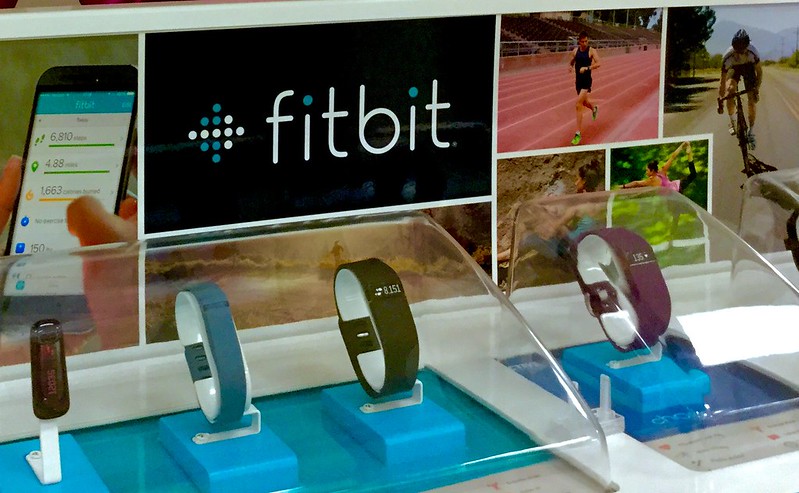
    Photo taken by Mike Mozart. Sourced from Flickr.

    Never before has the topic of health been as important as it is today. Covid-19 continues to dominate the news cycle, placing our mental and physical health at the forefront of public consciousness.

    The pandemic has also created new problems that must be overcome around health and fitness. Covid-19 restrictions have made it harder to access the resources needed to improve ourselves. Personal trainers and physiotherapists are harder to reach, while most gyms have been closed or severely restricted.

    This new environment has seen an acceleration of an already growing trend; the digitisation of fitness.

    Studies conducted in the past few months have shown just how Covid-19 has impacted the ways in which we keep fit. One survey from Dublin-based Amárach Research found that almost two-thirds of people surveyed had spent more time in online fitness classes than they did before the pandemic.

    The study also brought to light the growing use of devices when tracking fitness goals, with 60% of people having used mobile apps, smartwatches, and other devices in order to track their activity and compete with family and friends.

    The numbers show just how popular digital fitness is becoming, and personal accounts from athletes explain why.

    “For me, the best thing about them [smartwatches] is being able to track how far and how long I swim for with the GPS in the watch.” said Wicklow-based triathlete Anthony McGrath. “I like to see how far I go and try to beat it the next time.”

    Fellow triathlete Jean Fogarty favours the health benefits from her smartwatch: “I use mine to keep track of my weight,” she said. “Counting calories, checking resting heart rate and peak heart rate. You couldn’t do any of that years ago.”

    Agreeing with McGrath, she sees the benefit in tracking her progress. “I can set a distance on the app and start running. 

    “When I hit that distance, the watch will buzz to let me know I have hit my goal. It takes so much of the weight off my shoulders. I don’t have to work out how far I ran. It knows how many calories I burned whether I’ve swam, cycled or even gone kayaking.

    “It keeps me motivated. I know when I’m doing well. I know when I’ve had a lazy day. It kept me motivated during lockdown to keep exercising.”

    However, these technologies have not come without their downsides. Like all digital technologies, the issue of privacy has inevitably been raised given how much data these devices are gathering.

    Google’s ongoing acquisition of Fitbit has raised alarms given their history with gathering data for advertisement purposes. The ramifications of the merger have been scrutinised by the EU, who warn that it presents a “high level of risk to the fundamental rights to privacy and to the protection of personal data.”

    Despite Google claiming they have no intention to use the data in this manner, the EU’s fears may be justified. Fitbit’s ability to gather sensitive health information on its 28 million users may present yet another digital privacy issue in the wrong hands.

  • Watch: How do students adapt to a new way of life?

    Watch: How do students adapt to a new way of life?

    ​In ​one way or another the crisis brought by Covid-19 pandemic has had an impact on everybody’s lives. Three 3rd year journalism students from TU Dublin show how TheCity.ie how they are embracing these strange and uncertain times.

    Niamh shares how much her daily life has changed since her college and the hostel she worked at have closed due to the pandemic. She also gives some creative ideas on how to enjoy the time in lockdown and remain positive.

    Eric shares his experience on what it is like working in a supermarket during lockdown and how he finds a balance between completing his studies and working long shifts.

    Gavin gives viewers a sneak peak into what it feels like to quarantine in rural Ireland, with all its pleasures and struggles.

  • Watch: Exercise for athletes during quarantine

    Watch: Exercise for athletes during quarantine

    For many people, exercise is an essential part of anyone’s lifestyle. Whether it’s a run in the morning, a couple of hours in the gym or even a few exercises at home – for athletes, it’s not a lifestyle, it’s their life. Third year TUD student journalists take a look for TheCity.ie.

    Athletes need to stay in shape in order to reach their peak condition, and with the sudden shutdown of all available facilities, athletes find themselves at a serious disadvantage. Many of the most hardworking and determined have had to adapt and use whatever they can to their advantage.

    Their exercises may seem silly to some, but they’re so important to others – even now, exercise can be used as a form of charity; to the frontline workers putting their lives on the live every night. We look at a variety of stories, from athletes to our own journalists, finding out how much their exercise means to them and why they are doing it so passionately.

  • ‘My phone commanded my non-stop attention… so I quit’: Why we shouldn’t let smartphones rule our lives

    ‘My phone commanded my non-stop attention… so I quit’: Why we shouldn’t let smartphones rule our lives

    Radio-cassette player used to listen to music in 2020-set film The Half of It (Photo: YouTube)

    We check them up to 150 times a day but is it good for our well-being? Tech insiders have described the methods used by app developers to effectively “programme” us to never put our phones down. TheCity.ie’s Paul Caffrey explains why he ditched his device after three years and explores the beginnings of a backlash against them

    On Friday night, Netflix released The Half of It, a thoughtful film depicting 17-year-olds posting each other handwritten love letters and listening to their favourite music on portable analogue radio-cassette players. 

    Modelled on the clever premise of Edmond Rostand’s 1897 classic Cyrano de Bergerac, the expert wordsmith here is “shy, straight-A student” Ellie (played by Leah Lewis), who ghostwrites all of “inarticulate jock” Paul’s romantic notes to Aster, the popular girl of his dreams. 

    In this scene from screenwriter Alice Wu’s somewhat aspirational 105-minute present-day piece, high schoolers Ellie and Aster listen to music on a portable analogue radio-tape set that first has to be tuned in and its aerial extended — and don’t check their smartphones or mention Spotify once.

    GHOSTWRITER: Leah Lewis plays Ellie, a shy student who favours pen and paper over messaging apps, in The Half of It, released by Netflix on Friday 1st May (Photo: YouTube)

    Currently, a whopping 91% of Irish people own a smartphone, but I was never so keen on the idea. Until 2016, I resisted owning one and brazened it out with my no-nonsense 2007 Nokia. 

    It wasn’t easy shrugging off the endless comments about my stubborn refusal to switch over to the latest techology that’s been firmly in fashion since 2012. 

    Finally, I gave in and purchased an Android, internet-enabled device — the cheapest, least advanced Huawei that I could find. Suddenly, a whole new world of apps and 24/7 internet in the palm of my hand opened up to me. 

    A Nokia 2007 model (Photo: Paul Caffrey)

    At first, it was exciting. I found endless uses for the device, both professionally and socially. But it quickly took control of my life. Like a love/hate relationship, I couldn’t seem to get any peace from this thing until I switched it off at night. 

    After three years, I ditched it. I’m now back to a basic phone with no internet function and I’m managing fine. 

    I can Zoom, Facetime or Skype call — and tune in to a range of radio and television stations around the world — using my laptop. 

    I watch Sky News, CNN, BBC News, Netflix, the Dáil channel and RTÉ on a TV and enjoy listening to our native radio stations on an analogue radio set. I like the intimacy and sense of shared experience of live radio.

    I listen to my favourite CDs on a hifi (though also own an iPod), and regularly buy newspapers and current affairs magazines (though also hold online subscriptions to some publications). 

    In short, in terms of keeping up with the latest goings on, I don’t miss much. 

    During the extended Covid-19 lockdown period, the internet is certainly a lifeline to many for keeping up with studies, work and friendships. 

    But I personally don’t feel the need to access that world using these rather bulky handheld computers.

    RETRO-STYLE: Some smartphones are being styled as cassettes in a nod to the era that went before (Photo: Pinterest.ie)

    I’m not missing Whatsapp at all. Each Whatsapp group I joined began with a sense of shared purpose and camaraderie — and went downhill from there. I’ve found there are other ways to stay in touch with friends and colleagues. 

    In March, Whatsapp was criticised for enabling false “health tips” to be widely shared in group messaging during the pandemic, causing anxiety to many. Whatsapp has since reportedly made some efforts to prevent this spread of false information.

    When it comes to general health risks, the more time you spend on your phone, the more likely you are to be depressed, a Northwestern University (Illinois) study found in 2015. Other research has shown the more time spent on your smartphone — particularly close to bedtime — the worse you’ll sleep.

    Moreover, as President Michael D Higgins told the Irish Daily Mail in March 2018, social media can be used as “an instrument of abuse, which it so unfortunately has been for so many.” 

    President Michael D Higgins was interviewed by the Irish Daily Mail in March 2018 (Photo: Paul Caffrey)

    By any reckoning, the endless rise of “social” smartphone apps has enabled bullies, crooks, scam artists and worse to thrive like never before using platforms that let them pose as anyone they want to be. 

    The internet has long been a world of opportunities for those who wish harm on others; smartphones increase their opportunities.

    Smartphone app Tinder and its ilk are reportedly popular with so-called “romance scammers” who seek your cash rather than your love using false profiles. So much so that gardaí have issued official advice on how to spot such confidence tricksters.

    WATCH: The 2011 film Cyberbully illustrated the psychological effects of relentless online bullying on teenagers in a realistic way (Video: YouTube)

    For anyone who hasn’t suffered consistent bullying or depression before, it may be hard to understand my instinctive aversion to being permanently hooked up to the world wide web.

    It saddens me now to learn that children who own a smartphone are at greater risk of being bullied, harassed or worse, as I know all too well what it’s like to live in constant fear. 

    Had smartphones been on trend when I was at secondary school, my life would certainly have been much worse than it already was on a daily basis.

    Relentless harassment and threats (of physical harm and even death), along with ritual violence and humiliation — while existing in constant fear of being beaten up — was bad enough.

    I won’t understate the huge impact on me when there’s any kind of reoccurrence of that trauma in my present-day life. 

    As I’ve discovered myself, online bullying and harassment doesn’t just affect schoolchildren. Owning an internet-enabled smartphone for three years in adulthood showed me that even now, I’m not immune to it.

    As one good friend remarked to me recently: “I’m glad you’re still here.”

    Coco’s Law: Nicole Fox Fenton, 21, had been constantly bullied online (Photo: Facebook)

    In January 2018, 21-year-old Dubliner Nicole Fox Fenton, also known as Coco, took her own life after being consistently targeted with abuse and death threats on a messenger group. She was afraid to leave her house in the weeks before her death.

    Last year, in a significant step forward, new legislation to crack down on online bullying was named after the young woman.

    As it turns out, I’m far from the only adult who feels smartphone-phobic. Something of a movement against the devices has been underway for the past few years, with some tech experts on board. 

    Former Google employee Tristan Harris says we check our smartphones about 150 times a day and that we’re all being “programmed” by tech giants to never put our device down. 

    Google headquarters in California where Tristan Harris worked (Photo: Twitter)

    App developers use techniques that “work on everybody” to get our attention “at all costs” and keep the world’s three-and-a-half billion smartphone users hooked 24/7, he says. 

    Harris told America’s PBS NewsHour in 2017 that, after spending just 20 minutes scrolling through his own smartphone:

    “I don’t feel very good after that. I feel like my anxiety goes up.”

    Tristan Harris describes how ‘your phone is trying to control your life’

    The Stanford University graduate set up the Center for Humane Technology in 2018 that urges tech executives to consider the mental health of consumers instead of always looking to their company’s bottom line. 

    Meanwhile stars like Tom Cruise, Vince Vaughn, Robbie Williams and Elton John refuse to own a mobile phone.

    Big Little Lies star Shailene Woodley owns an iPhone (with no data) that she uses like a portable computer when wifi is available, but only communicates using a basic T-Mobile flip phone. The star told Jimmy Kimmel Live last year

    “We don’t notice each other any more.”

    Shailene Woodley, 28, blames smartphones for a “bigger lack of camaraderie and community than there’s ever been.” (Photo: YouTube)

    US comedian Ari Shaffir told the BBC in 2016 after ditching his iPhone: 

    “It’s every moment of your life. There needs to be an etiquette built around it and we haven’t built it yet.”

    Canadian inventor Ann Makosinski, 22, has never owned a smartphone and explained why when she was 18 in this TEDx Teen talk.

    Businessman and commentator Steve Hilton, former adviser to British Prime Minister David Cameron, refuses to own any kind of mobile phone, insisting that smartphones “have turned us into tech-addicted zombies”.

    Businessman Steve Hilton refuses to own a mobile phone (Photo: Twitter)

    And after three years of being connected to the world wide web at every waking moment, I found that I’d had enough, too.

    Enough of the incessant social media updates, non-stop email alerts and continuous news flashes at every moment of the day.

    My own inability to stop impulsively posting status updates on social media at any given moment was becoming problematic. The more I used the thing, the lower my overall mood became. 

    Break-out panel: Paul Caffrey

    Does the smartphone and its ever-enticing LED screen limit our ability to make conscious choices about how we spend our time? It certainly had that effect on me. 

    The world changed in the early 2010s when smartphones became universally popular. The days of using our laptops to surf the internet — while separately picking up the phone to make a call — were gone. 

    In the 2000s, we had more stuff, but perhaps a more restful night’s sleep. Nowadays, our internet-enabled smartphones have replaced items like alarm clocks (Photo: Paul Caffrey)

    In short, this cassette-sized appliance was taking over my life. Before long, it controlled me, commanding my non-stop attention to the exclusion of all else. So I quit.

    This AsapSCIENCE video that explores how our smartphones alter how our brains function — and suggests we all take a “smartphone vacation” — has had 63,000 likes on YouTube. 

    Since doing away with my smartphone, I’m unable to obtain apps that range from the handy but laughably unnecessary (turn my heating on before I get home or switch on the kettle remotely from the sofa) to the downright ludicrous (an app which tells me if it’s dark outside). 

    I’ve been reading more newspapers and books and find that I’m more alert because I’m forced to use my brain more. My sleep is less disturbed and I feel less anxious in general. Social media is still a part of my life but I can put it away when I want to. 

    And what do you know, I’m somehow in a majority after all. Currently, 55% of the world’s entire population do not own a smartphone, according to number crunchers Statista.

  • ‘It is vital for us to prioritize our sleep during this time’ –  How students can rest peacefully during a pandemic

    ‘It is vital for us to prioritize our sleep during this time’ – How students can rest peacefully during a pandemic

    As the Covid-19 pandemic continues to impact Ireland, many people have reported that they are having sleep issues. TheCity.ie’s Kim O’Leary speaks to sleep physiologist Motty Varghese about how to ensure students get a good night’s rest – especially as they approach the final few weeks of assessments.

    Students sleeping in lecture theatre (Photo: Pexels)

    For the last four weeks, I have found myself spending the late night hours constantly tossing and turning in my bed, unable to drift off into an uninterrupted sleep. There is always a distraction of some sort.

    The latest Covid-19 updates from Ireland and around the world, as well as the anxiety about final assessments at college, make it hard to ‘switch off’ and sleep through the night.

    With the final few weeks of the academic year upon us, many TU Dublin students are wondering how they can get some peaceful rest, despite the troubling circumstances they are experiencing.

    I interviewed Motty Varghese of The Sleep Therapy Clinic – a senior respiratory and sleep physiologist in St James’s Hospital Dublin since 2003. Mr Varghese is passionate about helping individuals with sleep disorders. He graduated as a Respiratory Therapist and is also a licensed Sleep Technologist with The Board Of Polysomnography Technologists in the United States. 

    College student asleep at her desk (Photo: Pexels)

    I started our interview by asking Motty Varghese, how many hours of sleep each night does the average person require?

    Varghese: Sleep need is variable between individuals and every individual’s sleep need is unique to themselves. The recommended sleep duration for an adult is over seven hours, and not recommended is less than six hours or over 10 hours. In sleep problems like insomnia, your sleep quantity can be compromised. In sleep disorders like obstructive sleep apnea or restless legs syndrome, you will have a tendency to sleep for a longer time. However, despite increased sleep duration, the person can still feel tired.

    Teenagers or young adults would also have a tendency to go to bed very late and wake up very late. If there is an extreme delay in sleep onset, it could be symptoms of Delayed Sleep Phase Disorder (DSPD) – unfortunately, this can have an adverse impact on their academic performance. This happens due to a delay in their circadian clock, not exclusively due to poor habits alone. This warrants therapy, since regularising their sleep patterns by strategic light exposure can bring multifaceted benefits.

    O’Leary: As the Covid-19 pandemic continues, do you think there has been a noticeable change or disruption in sleep patterns? If so, why?

    Varghese: Yes, this has been flagged as a problem by many. If you remember, the lockdown was implemented around the same time the clocks moved by an hour for DST. With the implementation of lockdown, many people started working remotely, and with it came some flexibility in the morning as well. Our sleep patterns changed and we started sleeping in in the morning. Along with it, there is a general anxiety about COVID 19 and this has been leading to an aroused mental state or a state of hyper-alertness for people. It is needless to say when we are hyperalert, our sleep onset can be delayed and the sleep quality can be compromised along with sleep quantity.

    O’Leary:   What recommendations/advice would you have as a sleep expert for TU Dublin students having difficulty getting enough sleep during the pandemic, as well as preparing for their final assessments and exams?

    Varghese: Your approach to protect your sleep should focus on a few factors:

    1.      Avoid a state of hyper-alertness

    Preoccupying yourself with thoughts of what is happening around you can lead to cognitive or mental arousal. You also want to be informed at the same time. Hence avoid consumption of news via TV, social media, or other sources close to bedtime. Relying on credible sources of information will help to avoid unnecessary panic. Engaging in some relaxing activities like meditating, doing some breathing exercises etc can also help reduce anxiety.

    2.      Prioritize sleep

    You know how important sleep is for you, yet you cannot force it. Understand that sleep is a natural process, but you can nurture it by adopting certain good habits. It may go against what your preferences are, but prioritizing sleep will pay you the dividends now, more than ever.

    3.      Have a routine

    It would also be unrealistic to ask you to adhere to the pre-lockdown sleep schedule since you have the flexibility of working/studying from home and not commute. You may be waking up late, but ensure you still have a structure and are not sleeping in too late. On the upside, at least you are not accumulating a “sleep debt” and focus on consistency of bedtime and wake time through the week. You can gradually move to an earlier wake time when the lockdown is over.

    4.      Know your rhythm

    Whether you are working or studying, productivity is an important factor to keep our stress levels down during lockdown. Everyone has a chronotype – evening, morning, or intermediate – based on your genetic coding. We also call them “larks” and “owls”. This would also mean you will have a preferred bedtime, wake time, and time of optimal alertness during the day. For instance, an evening type person tends to go to bed late and wake up late and a morning type person will do the exact opposite. Pay attention to this pattern of sleepiness at night and alertness during the day. You will be able to be productive and get more done by following your circadian rhythm.

    5.      Light

    Light is a powerhouse of energy. Focusing on light exposure during the day and reducing light exposure closer to bedtime indicates to our body about the day-night cycle and prepares itself for sleep at night and alertness during the day. Seek out natural daylight in the morning and avoid blue light exposure from screen devices for two hours before bed time.

    Blue light from screens can hinder sleep (Photo: Unsplash)

    O’Leary: Are there any particular food types that can help people to have a more restful night’s sleep?

    Varghese: A lot of research has been done into the effect of food on sleep. Research indicated a carbohydrate-rich meal ingested four hours before bedtime in the evening reduced sleep onset latency. It is also advised not to eat any food within 2-3 hours of bedtime since this can increase the body temperature (and delay sleep), cause heartburn, etc.

    Food that is rich in tryptophan is also mentioned in the proposed relation of food and sleep.

    O’Leary:  Is it true that less sleep may weaken the immune system and make people more susceptible to illness, such as this virus (Covid-19)?

    Varghese : It is true that sleep and immunity have a mutual relationship. We have known for a very long time that there is an increased chance to catch a common cold or to have flu symptoms if you are sleeping poorly. There is also evidence that the flu vaccination was more potent in individuals who were good sleepers compared to poor sleepers.

    It is also vital for us to prioritize our sleep during this time when we are constantly looking for a new line of defence against the virus. It would also be ideal if sleep becomes part of our public health messaging along with good dietary habits and exercise.

    O’Leary: Do you think that more studies should be carried out to analyze sleep patterns during the Covid-19 pandemic?

    Varghese: Pandemics like this are thankfully not a common occurrence and it will be useful to study how sleep patterns are affected during this period. It will help to prepare for any future pandemics if at all it happened. Sleep monitoring wearable devices (like Fitbit) will come in handy in situations like this to look at the sleep habits of a large number of people.

    O’Leary: Some people are also reporting that they are having vivid dreams as of late, do you think that dreams are an important coping mechanism during this stressful time?

    Varghese: Dreams occur during a specific stage of sleep called REM sleep. The functions of REM sleep are memory formation and emotion regulation. The information which we take in during the day is processed during REM sleep and converted to memory.

    Unfortunately, we have an information overload now which is not very pleasant, and this may be having an effect on our dreams.

    Most of the REM sleep or dream sleep happens in the second half of the night. So we may also be getting some more dreams in the extended sleep period in morning hours and these dreams are possibly influenced by the information we received the previous day.

  • Addressing the big bad 5G monster

    Addressing the big bad 5G monster

    By Dave Stapleton, Luke Toomey and Robert Geoghegan

    In an era of alluring, ubiquitous online misinformation, falling down a rabbit hole and ending up on the weird side of YouTube again is inevitable and each evolution of mobile network technology has been no different.

    5G has already begun to roll out across Ireland, despite questions and concerns being raised about the safety of this new technology.

    Local councils across Ireland, including Wicklow, Sligo and Clare, have passed motions opposing the rollout of 5G; Sinn Fein put forward a now withdrawn action to halt its rollout until public safety could be guaranteed; many anti-5G campaign groups have been organised through social media and local petitions.

    The majority of the concerns raised have been about the health risks 5G could pose; one central point of contention is that it will emit dangerous levels of radiation that cause cancer. It’s created a level of unrest not seen during the rollout of 4G and 3G, despite similar risks and concerns posed by these predecessors.

    In contrast to this, Irish telecoms regulator, Comreg, recently published a report that suggests emissions from mobile operator transmitters are well within the limits set by global safety bodies. The Irish Cancer Society also published a guide that states there’s: “simply no evidence to support worrying about phones or masts when talking about cancer risk.”

    So, who is right?

    What is 5G?

    5G networks promise faster speeds, more reliability and lower latency. Like its predecessors, 3G and 4G, it operates through radio signals over a range of frequency bands to transmit and communicate with larger transmitters with antennas mounted on masts or buildings.

    These technologies continuously emit electromagnetic radiation that surrounds us, but this concept isn’t anything new. A whole range of current technologies; tv, radio and mobile phone signals to name a few, as well as natural sources like sunlight, already emit this type of radiation known as non-ionising.

    Where 5G differs, is that it operates on millimeter wave frequencies, which travel shorter distances than the typical frequencies used by 4G or Wi-Fi. These millimeters will allow our mobile phones to not only access the internet at much faster speeds but also offer increased stability. However, the more powerful frequencies for 5G networks, emit more powerful radiation levels and need more transmitter masts to be built to allow the signal to travel.

    Our current 4G connections are capable of operating on frequencies of about 2.5 GHz; meanwhile, 5G is capable of running on frequencies of up to 500 GHz. It’s no question that it will offer a huge leap forward in terms of connection speed, but the problem is, could all this extra energy be harmful to our health?

    Health concerns in context

    Health concerns surrounding the 5G conversation are complex. An article from the New York Times suggested that all fears of cancer-causing radiation being emitted from mobile phone technologies, can be linked back to a report conducted by consultant and physicist, Dr Bill P. Curry. His report argued that wireless technology in classrooms were “likely to be a serious health hazard”. Although this study was later debunked by the Professor of Radiology at New York University, the damage was largely done. The idea that mobile phone technologies emitted dangerous levels of radiation had entered into public discourse and continued to evolve into the monster that is now the 5G conspiracy.

    Many local councils and anti-5G campaigners that argue these increased radiation emissions will be harmful to health, often refer to a report published in 2014 by the International Agency Research on Cancer (IARC). The IARC is a part of the World Health Organisation (WHO), who classified mobile phone signals to be “possibly carcinogenic to humans” in the report.

    However, IARC applies that classification to situations where there is “limited evidence of carcinogenicity”.

    “This category is used most commonly when the evidence of carcinogenicity is inadequate in humans and inadequate or limited in experimental animals. Limited evidence in experimental animals means that the available information suggests a carcinogenic effect but is not conclusive.”

    This means there might be some weak correlation drawn between mobile phone signals and emissions – but that is a mountain away from a causal link being found. As such, the IARC’s approach is to maintain a level of caution to be on the safe side, just like how many products we buy contain warnings: “Warning: choking hazard” for example.

    Some everyday products we consume, such as a cup of coffee, fall under this same classification of possibly carcinogenic. Even meat and alcohol fall under a higher category due to stronger evidence.

    Ionising radiation

    Both mobile phones and telecom antennas emit electromagnetic radiation, whether they’re set up for 4G or 5G. These emissions are classed as non-ionising radiation, which is considered to be at the lower end of the frequency spectrum. Most electrical gear produces this type of radiation, from microwave ovens to power lines.

    The other form of radiation, ionising radiation, poses serious health risks to humans – things that fall under this category include x-rays or UV rays from the sun. Clearly, the health risks posed by these are much different than that of non-ionising radiation, as reported in Horizon Magazine, an EU research and innovation magazine published by the EU Commission.

    Horizon Magazine’s report highlights the difficulty in finding a correlation of radiation emitted from wireless technology and cancer, showing that there was no increase of risk from mobile use. However, there are “‘suggestions of higher glioma [a type of tumor] rates, but errors and biases could not be ruled out, so no causal relationship could be established”.

    Overall, one can’t say with absolute certainty that 5G doesn’t cause cancer, but it’s highly unlikely that it will, and everything will continue as usual.

  • Seasonal Affective Disorder – What is it?

    Seasonal Affective Disorder – What is it?

    Seasonal Affective Disorder (SAD) is a form of depression closely related with the darker months of the year. Sometimes referred to as the winter blues, SAD is a condition that affects up to one in 15 people in Ireland every year. 

    According to the HSE, the symptoms of seasonal affective disorder (SAD) are similar to those of normal depression but become particularly heightened during the Autumn and Winter months, sometimes lasting until Spring. The nature and severity of SAD varies greatly among sufferers with some finding the condition a bit irritating while others experience a severe and significant impact on their daily life.

    The symptoms of SAD can include but are not limited to:

    • a persistent low mood
    • a loss of pleasure or interest in normal everyday activities
    • feeling irritable
    • feelings of despair, guilt and worthlessness
    • low self-esteem
    • tearfulness
    • feeling stressed or anxious
    • a reduced sex drive
    • becoming less sociable

    Sandra O’Loughlin is a nurse from county Kildare. For Sandra, her SAD was further aggravated by her shift work.

    Sandra said: “I think everybody feels a bit crap when the long nights draw in and you get to the stage where you’re getting up and going to bed in the dark, but for me I think it’s another level. I genuinely used to experience really high levels of depression and anxiety that I wouldn’t otherwise feel during the brighter months.

    “If I could have worked a regular 9-5 I think I wouldn’t notice it as much, but I was starting work at half 7 in the morning and finishing at half 8 at night so on days where I was working I literally wouldn’t see the sun for pretty much four months of the year,” she continued. “Even in the hospital there are very few windows as it is.

    “At my lowest, I was ignoring my family and friends and calling in sick to work. No one knew what was going on with me, I didn’t even know what was going on with me, I just thought I was going mad,” said Sandra. “When I finally went to my GP, she suggested pretty quickly that it was SAD. I actually had chronically low levels of vitamin D as well so she prescribed me a supplement amongst other treatments.”

    Two years ago Sandra made a career change, and left the hospital wards to become a public health nurse. Her new job means she can spend a lot more time outdoors and has a constant change of scenery.

    “The job change has made all the difference for me,” said Sandra. “I also do light therapy which I find really effective. I know not everyone does, maybe it’s a placebo thing for me but the light therapy definitely makes me feel good.”

    According to Mental Health Ireland: “SAD may begin at any age, but it most commonly starts between 18 and 30. It occurs throughout the northern and southern hemispheres but is extremely rare in people living within 30 degrees of the Equator, where daylight hours are long, constant and extremely bright.

    “Symptoms generally appear between September and November and continue until March or April, when there may be a sudden burst of energy and activity accompanying the longer, brighter spring and summer days. A diagnosis is usually made after you’ve experienced two or more consecutive winters of symptoms.”

    Mental Health Ireland list these six treatments for seasonal affective disorder:

    If you’re experiencing symptoms of seasonal affective disorder contact your GP or go to Mental Health Ireland for further information and options.