Tag: slider

  • Support Local with TheCity.ie’s Market Guide!

    Support Local with TheCity.ie’s Market Guide!

    By Sadhbh McDonnell

    Supporting local has never been more important, with an increasing number of small businesses feeling the strain of the current cost of living crisis. TheCity.ie has created a guide to markets happening all over Dublin.

    Munya Market is an up-and-coming late-night market, which takes place in Fegans 1924 on Chancery St. Dublin 7. The late-night market is one of Irelands firsts and started in June this year by Oran Lapettina. 

    Every Thursday and Saturday from 6pm-10pm, the café consists of stalls selling Jewellery, photo prints, crochet pieces and preloved clothes. Flash tattoos from tattoo artists such as big smoke ink, are also available from €30.  The market also hosts open mic and hip hop nights for you to enjoy while browsing the stalls.

    Speaking to Olivia Grimes, a student from Maynooth, she described how helpful the market has been for buying and selling clothes at reasonable prices. “I’ve rented a stall at the market before, and it’s really helped me make and save some money as a student”. She added, “it almost feels like a real life Depop, and there’s always a good atmosphere on the night”.

    A picture containing chart

Description automatically generated

    Via Munya Market Instagram

    Munya Market have recently began collaborating with The Soundhouse Dublin, to host an extended late-night market.  The event is free entry all night and celebrates local talent from tattoo artists to crochet designers. It’s a whole venue takeover, with local DJs playing until 2:30am. Dates for future Soundhouse collaborations can be found on Munya Market’s Instagram.

    If you’re on the hunt for a good Flea Market somewhere in Dublin, The Useless Project, hosts a monthly market in The Workman’s Club located near Temple Bar. The founders, Geraldine Carton and Taz Kelleher, have announced they’ll be hosting a Christmas market on the 18th of December.

    A picture containing text, indoor, closet

Description automatically generated

    Via TheUselessProject Instagram

    They stated on their Instagram it’s their biggest flea market yet, with over 50 stalls taking over three floors. Vintage fashion, candles, homeware, crafts, and prints will be found throughout the market, all sustainably sourced and made. Combined with complimentary drinks and music. 

    The Alternative, a Dublin based cultural hub, are also hosting a Dublin Christmas Flea Market in The Grand Social, on Liffey Street. The market will be taking place from Saturday the 10th of December to Sunday the 11th of December.  From 11am to 4pm, the market will consist of 25+ stalls selling fashion, art, and some fun Christmas décor across all four rooms. The venue is expecting a large turn out so to guarantee entry, event tickets can be found here, free of charge.

    WeloveMarkets is also hosting their annual Dandelion Christmas Markets, every Sunday from the 13th of November to the 19th of December in the Well located near Grafton St. If you’re looking to support local businesses this Christmas pop down between 12pm to 5pm for unique, personal, and handmade gifts with over 60 stalls across the whole venue.  

    Jewellery and accessories all handcrafted by Ciarna Pham are available at her own stall, ‘KIKI NA ART’ at this market. Ciarna specialises in hand painted earrings and necklaces of iconic public figures such as David Bowie, Kate Bush and many more. 

    Via KIKI NA ART Instagram 

    According to her website, “I studied fine art painting and also love photography, so I wanted to find a way to mix my love for fashion, art and photography in a way that was funky and wearable.”

    She added, “I always liked the idea of people wearing religious icons around their neck, however I am not religious myself, so I decided to work on the idea of modern icons.”

    If you can’t make these dates, The Liberty Market takes places weekly in Dublin 8 from 9:30am to 4:30pm every Thursday through to Saturday. It’s one of Irelands’ longest running markets, selling freshly made pastries, cakes, and other sweet treats. 

    If you’re shopping on a budget this Christmas, the market is an ideal alternative to higher end retail shops, offering low prices and great bargains.

    On The Liberty Market website they stated, “we work on tiny profit margins (a fraction of your average shop). We have vastly reduced overheads compared to average shops and the overheads which do apply are shared amongst all the traders”.

    They added, “we simply have no time for overcharging customers.”

    If you can’t find what you’re after there, you can always pop down to the Ha’penny market which takes place every Saturday from 12pm to 6pm.  With no market the same as they rotate stall holders each week.

    The Ha'penny Flea | Collect Ireland

    Via www.thegrandsocial.ie

    With an abundance of markets to choose from you’ll have no trouble finding the perfect Christmas gifts, that won’t break your bank account, whilst also supporting Irish local businesses. 
  • “Looks like all our drivers are busy at the moment”- why is it becomming impossible to get a taxi in Dublin?

    “Looks like all our drivers are busy at the moment”- why is it becomming impossible to get a taxi in Dublin?

    Taxi’s warn that the shortage of drivers will only increase over the
    Christmas period.

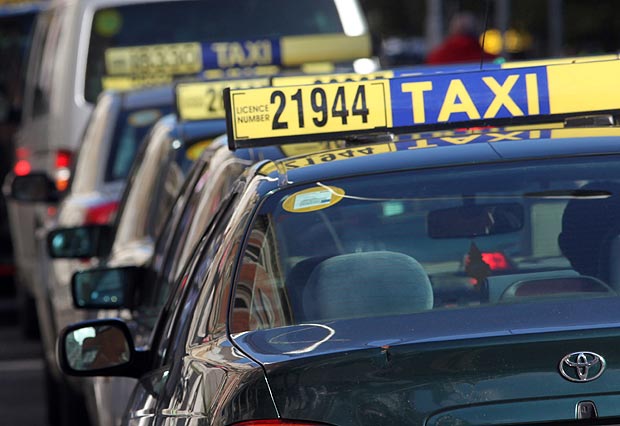
    Taxi rank in the heart of the city.

    By Lucy Harris


    After two years of staying home, Dublin city is slowly starting to return to her old self.

    The beginning of the Christmas chapter only confirms this fact. The streets, now filled with happy shoppers and dotted with musicians give an atmosphere of a pre-pandemic Dublin. December is, without fail, one of the busiest months that Dublin experiences every year.

    But, with the average rent in Dublin City Centre sitting at just over €2000 per month, many locals face the daunting experience of trying to return home after a day in town.
    It’s no secret that Dublin’s transport system is in need of improvement. In comparison to other
    European cities, it rates pretty low.

    Berlin has the U-Bahn, which runs 24 hours, at 15 minute intervals. Paris has the Noctiliens night bus, a series of 47 lines which crisscross the city and outer suburbs of the French capital. Madrid boasts a rate of 89% of its inhabitants living 1 km or less from their nearest station.

    In Dublin, after midnight, the options become very limited. The Luas and train cease running,
    along with the majority of buses. The exception, of course, being the Nitelink, which operates on a Friday and Saturday night with 13 buses running once an hour between midnight and 4am.

    For many people, a taxi is the only course of action. The introduction of apps such as, Free Now and Bolt have streamlined the act of getting a taxi. A quick click of a button and within 3 minutes a taxi will apparate, as if from thin air.

    But it seems that the demand far outweighs the supply. Reports from individuals who have been left wandering the city centre in hopes of flagging down a taxi for hours after their night out finished, are being told on Twitter.
    One user expressed his disappointment in the situation, “I’ve been so frustrated lately living in Dublin. Everything is expensive. On top of that, we have a taxi shortage. I was out last night and although my night ended at 1am, I couldn’t find a taxi for an hour. I felt so helpless”.


    “Covid played a big part for a lot of drivers”, explained David Dunne, local taxi driver in the Dublin 7 area.

    “Before the pandemic, nobody had a second to think, for me anyway I was working over 60 hours a week but then all of a second, I had all of this time.”


    He goes on to explain how during the lockdown he switched nights for daytime work. A sentiment that was reflected in a survey released by the National Transport Authority (NTA) that stated that only 29% of registered taxi drivers in Dublin are currently working on Friday and Saturday nights.
    An element of fear regarding safety also has a part to play for the decreasing amount of taxi
    drivers left on the streets.

    “If a group of drunk people get in the car there’s a way higher risk of something going wrong”, says Dunne. “I’ve had a few cases of people running off without paying or getting sick in the car- if that happens the car is off the road for the night and I’ve lost my income for the week”.


    Dunne also goes on to explain how argumentative people can get late at night, saying how a lot of drivers “just don’t want the hassle of it anymore”.

    Other contributing factors include the rise in the fees that apps like Free Now take from each journey. Free Now increased the fees that they charge drivers to 15% per journey effective from March 2021.

    “When I started it was a 10% fee with Free Now, it keeps gradually getting higher and higher each year”. Dunne also goes on to talk about how, because of these fees, many drivers opt to switch off the app during busy periods and attempt to avail of cash payments.

    So what does the future look like? Well, according to Dunne, the announcement of a 6am closing
    time for nightclubs should ease the load.
    “At the moment everyone in Dublin is looking for a taxi at 3am because that’s when everything
    ends. I’m hoping the new rules give us a bit more of a gradual night of work” ends Dunne.

  • Where is Ireland’s Solar Panels Plan headed?

    Two African men install solar panels neatly on a residential roof of a house near the ocean. Sustainable living. Photo credit- Unsplash

    Solar panels, an option for combatting increasing energy bills

    By Nimra Ahmed

    There is a climate and biodiversity emergency across the world, yet Ireland has been slow in finding solutions to slash the rising costs of energy.

    An attractive system for household electricity generation could be solar photovoltaic (PV) panels.

    Most solar PV systems feed excess power back to the electricity grid where it is consumed by residential, commercial and industrial users. These solar panels would be an additional source of domestically generated energy and help reduce dependency on imported fossil fuels.

    According to a national study of domestic solar potential, if residents fitted solar panels it could reduce electricity bills by €900 per annum and produce 36 per cent of all residential demand. The solar PV system would pay for itself in seven years. Furthermore, the EU policy aspires to have rooftop panels for all new residences by 2029.


    The MaREI Research Centre at University College Cork used satellite data to look at every rooftop in Ireland and found there was enough roof space for 10 solar panels in more than one million homes. Furthermore, residents could also benefit from a substantial grant from the Sustainable Energy Authority of Ireland. Developers also approached Irish landowners for potential solar farms. As of January 2012, farmers who want to install a solar PV system can claim back the VAT incurred on the purchase of the system.


    The review of Irish planning laws began in 2019 but it has taken an energy crisis to push the government into action three years later. The government has finally decided to amend its very restrictive planning rules. As of 2022, the Irish government has said that homeowners will be paid for the exported electricity they produce through their solar PV system to the grid by their energy supplier.

    However, the initial €200 million fund to provide grants to install these panels is not enough and should be increased. Households were given up to €2,400 to install solar panels, this should be doubled to up to €4,800 so that families who are eager to get the benefits but can’t afford the upfront payment can avail of the scheme.

    “The Climate Action Plan process outlines a series of actions that need to be taken by government, by sector and by citizens to meet the ambitious target of a 51 % reduction in greenhouse gas emissions by 2023.”

    Charlie McConalogue, Minister for Agriculture, Food and the Marine

    The government also has plans to put solar panels in every school in the country. Another step Ireland has taken towards sustainability is wind turbines. This has helped in cutting costs and increasing productivity for the future.

    Do you think the government will give more incentives to farmers to increase the number of wind turbines to make it 100% on all farms?

    “The government is fully committed to and recognises the benefits of the deployment of renewable technology at a farm level, as a cost-saving measure and a diversification opportunity as well as contributing in a positive way to the decarbonisation of the energy system. Under the Microgeneration Support scheme, micro-wind is one of four technologies included for support. More details on this scheme can be found here. Homes, farms, businesses and communities to benefit as Eamon Ryan, the Minister for the Environment, Climate and Communications, announces the Micro-generation Support Scheme,” said Charlie McConalogue, Minister for Agriculture, Food and the Marine.

    What can farmers in Ireland do on a small scale that would help increase sustainability on their farms?

    “At a farm scale, there are three ways in which farms can increase their sustainability by: reducing absolute emissions through activities such as reducing chemical fertiliser at farm level, using low emissions slurry spreading (LESS) technologies for spreading animal manures and adopting nutrient planning at a farm level.

    “Increasing carbon sequestration through forestry and better management of organic and mineral soils.”Increasing carbon sequestration through forestry and better management of organic and mineral soils.

    “Contributing to sustainable energy through adopting energy efficiency measures,
    deployment of renewables and the provision of bioenergy materials as a displacement for fossil fuels and energy-intensive materials. The Teagasc Signpost Farm Programme provides further details on the types of measures that can be taken at a farm level: Signpost Programme – Teagasc I Agriculture and Food Development Authority, said McConalogue.”

    Do you think rural Ireland is doing enough to meet the future demands of Carbon
    footprint?

    “Reducing greenhouse gas emissions will require an economy-wide and all-of -L approach where each member of society will have an important contribution to make, including rural Ireland. The Climate Action Plan process outlines a series of actions that need to be taken by government, by sector and by citizens to meet the ambitious target of a 51% reduction in greenhouse gas emissions by 2023. Agriculture must and will play its part in meeting this objective to ensure that we have economically and environmentally sustainable rural and coastal communities, said McConalogue.”

               Charlie McConalogue, Minister for Agriculture, Food and the Marine 
                Photo Courtesy of  Charlie McConalogue.

    “Systems cost roughly between €4,500 and €5,500 typically, to include the inverter, controls and meters. Solar users prioritize their energy, first on the fridge, then the cooker, lights, laptop and other devices, and directing any excess to hot water if they have a hot water diverter installed,” James Boland (48) a solar panel installation businessman.

    “Unwieldy planning processes are hindering Ireland’s transition to cleaner energy with unnecessary delays. But there has been an increase in domestic solar PV panels after the government’s incentives. Unfortunately, there aren’t enough trained workers to put in the panels, so even when homeowners are keen on it, they aren’t ready to wait for a long time for the installation, said Boland.”

  • Illegal drug use escalating in Ireland

    Illegal drug use escalating in Ireland


    In 2021, cocaine was the second most common main problem drug. In 2021, for the first time, the National Drug Treatment Reporting System (NDTRS) recorded more cocaine than heroin cases among those treated for drugs as a main problem. Cannabis was the third most common reported drug problem.

    By Nimra Ahmed

    There has been an increase in illicit drug use in Ireland in both young people and adults. This could be due to unemployment, high population densities, poor facilities or just for recreational purposes.

    According to a Health Research Board (HRB) survey, one in four (23%) of the participants had used an illegal drug at some stage in their life. That means almost 900,000 adults of 15 years and above of the general public have used an illicit drug. Furthermore, one-in-fourteen (7%) revealed that they had used a prohibited drug in July 2021.

    The areas with the highest drug use in Ireland are: North Dublin, Southwest Dublin, Wicklow, Kildare, Southwest and East coast Regional Drug and Alcohol Task Force (RDTF) areas.

    Looking specifically at opioid use, there are an estimated 11,729 problematic opioid users in Dublin alone while the rest of Ireland has approximately 8,146 users.

    AreaKnownEstimateRate
    Co.  Dublin7,91611,72912.72
    Rest of Ireland4,3968,1463.97
    Total12,31219,8756.68
     

     Estimates of the number of problematic opioid users for Co Dublin and the rest of Ireland, and rates per 1,000 population aged 15 to 64 years (2019). Created by Nimra Ahmed using data sourced here.

    There has been an overall increase in the total number of reported cases of drug use in 2021. Statistics show that 10,769 cases were reported for treatment out of which 39.1% were new cases while previously treated cases were 56.6%. Moreover, 4.4% of the cases were of unknown status. 

    In 2020, cannabis was the substance for which treatment was most commonly received, with 1,229 cases. However, in 2021, for the first time in Ireland there were more cases of treatment for cocaine as a main problem drug. The HRB observed for 2021, 34% were treated for opioids, 30% were treated for cocaine, and 21% were treated for cannabis while 11% were treated for benzodiazepines. It was noted that 28% were females who were treated while 72% were males. 

    In 2020, cannabis was the substance for which treatment was most commonly received, with 1,229 cases. However, in 2021, for the first time in Ireland there were more cases of treatment for cocaine as a main problem drug. The HRB observed for 2021, 34% were treated for opioids, 30% were treated for cocaine, and 21% were treated for cannabis while 11% were treated for benzodiazepines. It was noted that 28% were females who were treated while 72% were males.

    Infographics for drug cases and cocaine cases in Ireland. Infographic created. by: Nimra Ahmed using data sourced here.

    At a glance, statistics show that the median age for drug use is 32 years. 13% are homeless even though 21% are employed and 21% have injected themselves at some stage. When we compare the shocking 3,248 cases of cocaine use to the overall drug use the median age is 31 years. 34% are employed and 25% of them are women.

    Infographics for drug cases and cocaine cases in Ireland. Infographic created. by: Nimra Ahmed using data sourced here.

    Since illegal drug use has increased overall, it is necessary to also observe Irish youngsters.   Another recent study on substance abuse in  Irish youngsters showed an increase in cocaine usage amongst 15 to 24-year-olds. This has led to a 170% increase in the treatment of young cocaine users. The Health Research Board’s report, revealed that  26.7% of young adults used illegal drugs in their lifetime, while 18.5% in the last year and 10.5% in the last month. 

    Created by Nimra Ahmed and data gathered here.

    Over one-half of the sample of third-level students participating in the Drug Use in Higher Education in Ireland (DUHEI) survey (N=11,592), in 2021 reported lifetime use of an illegal drug (55%) 

    Brian Pennie, author, speaker, PHD candidate, university lecturer, and life-change strategist, was a chronic heroin addict for 15 years. He believes trauma could lead to addiction. In his infancy he had a surgery without anesthesia which he thinks may be the root cause of  the uneasiness and anxiety he felt throughout his childhood and adulthood.

    These feelings of unrest, anxiety and worry led him to a dark path even though he was at school and held a job. Pennie turned his life around by replacing his addiction of drugs with the addiction of  learning.

    “I used to think I knew a lot. I didn’t. I believed my own lies, weaving an imaginary world full of delusion, denial, and deceit. Combined with chronic anxiety and an overactive mind, this warped view of reality steered me towards a life of addiction,” said Brian Pennie, author, speaker, PHD candidate, university lecturer, and life-change strategist.  

    A person smiling for the camera

Description automatically generated with medium confidence

    Brian Pennie- Photo Credit: Finne

    Philip Byrnes, 44, a General Practitioner (GP), voices his concerns, “substance use is a very real part of Irish society. Youngsters especially females are now using more than ever. 24% of females are lifetime users while males are 29% so, females are not so far behind statistically.”  

    “Nobody seems to know exactly why substance abuse is on the rise. Drug use affects people’s lives, their health both mental and physical, as well as impacting relationships with family and friends”, he added.  

    “One solution that Germany contemplates is to legalize the buying and owning of cannabis (up to 30g) for recreational use. The reason for this is to better protect young people who are already using black market cannabis. If this law passes, it could be a model for other European countries. The solution for the Irish nation is still unknown but we need to act fast if we want to save our society.”  

    Illegal drug use in Ireland had plateaued in 2014/2015 and further decreased in 2016 and 2017. However, since 2018 it has steadily been on an upward trend again. Today in Ireland, cannabis use has stabilised but there is an increase in cocaine use, and the prevalence of polydrug use. 

    Ecstasy and cocaine usage in Ireland is the second highest in the whole of Europe. It represents a huge challenge for policy makers, social workers and addiction counsellors fighting the issues day in, day out.

  • Dublin referees cancel planned strike

    Dublin referees cancel planned strike

    By David Seagrave

    The Dublin branch of the Irish Soccer Referee Society (ISRS) have cancelled a formerly planned two week strike.  

    The planned strike followed incidents of assault and attempted assault on referees in Dublin. Referee assaults can carry a minimum ban of one year, however both instances resulted in suspensions of less than seven games. 

    ISRS’s Dublin branch had previously said that they would ‘withdraw their services’  at all levels of the game from 18th November – 2nd December, however they reversed the decision following talks with the Football Association of Ireland.

    (Image source- Irish Soccer Referees Society)

    Last month it emerged that 234 reports of assault had been submitted to the ISRS, spanning across 18 of their 27 branches. Of those 234 reports, eight were physical assaults. 

    The FAI released a statement following the news of the planned strike, with CEO Jonathan Hill saying, “the FAI will do whatever we have to do”. 

    “Our disciplinary regulations carry clear and serious sanctions to be enforced on anyone who abuses a match official, and we are calling on all leagues to enforce those sanctions. We cannot, and will not tolerate any abuse aimed at a referee at any level of the game,” the statement added 

    David Bergin, Vice Chairman of St Francis FC says that more needs to be done to address assaults against referees. 

    “For the referees, it’s a hard job, it’s a thankless job. Nobody ever says ‘thanks for a great performance, they always have one comment or two comments. We have tried to instill that in our club, and we feel that we’ve made real progress. But that’s not the case everywhere.

    “I believe that every club is working towards an environment that’s safe for players, coaches and especially referees. For the refs, it’s frustrating that it isn’t translating onto the pitch all the time.”

     “The FAI have done some great video work on how to treat referees on the side-line… it’s a lot more prevalent this year, I don’t know what it is. There must be a reason for people being more vocal, but nobody benefits from it,” Bergin added.

    When asked about the lack of lengthy bans for offenders, Bergin replied “I don’t think anyone, in any club, would question a lengthy ban.”

    “They get a few bob to cover their transport costs, but it’s not phenomenal money, you know? It’s a great service, the kids need to be playing and they need referees. You don’t learn [the rules] without referees.”

     Despite criticism of the bans, Bergin also noted that the leagues were run on a voluntary basis – and that clubs also have to take responsibility. 

    “We understand how difficult it is for leagues to administrate and come up with the right size ban for everyone. Everyone appeals everything. The leagues have a thankless job as well, a bit of cop on is needed from everyone; the clubs, the coaches and the players, to make sure that we aren’t forcing volunteers to have to conduct these types of meetings and to go through the processes they have in place. 

    “We should be able to talk about the football, and the performances, and how we can improve going into the next week. We shouldn’t have to talk about referees,” Bergin added.

  • Why is Racism in Ireland Underreported?

    Why is Racism in Ireland Underreported?

     By Injae Kang

    During the Covid-19 pandemic, racism came to the forefront as a serious social issue. Despite the fact that the number of racism reports is expected to decrease compared to the reports throughout the pandemic, underreporting is still a major problem with racism in Ireland.

    There were 530 reports of racial incidents in Ireland in 2019, according to annual reports of racism in Ireland, researched by the Irish Network Against Racism (INAR). The annual report indicates that the numbers have continuously risen since the beginning of 2019.

    Over 700 racial incidents were reported in total in 2020. 

    There were 334 reports concerning hate speech, a figure which has doubled since 2019. 

    Also, racial incidents accounted for 143 reports, 159 reports regarding criminal offences, and 99 reports concerning discrimination.. 

    “We’ve seen that since the outbreak of Covid-19 started, the incidents of racist harassment specifically towards the Asian community have increased,” said Gabriela Mejia, Program and Communications Manager at Hollaback – a global organisation aimed at preventing racial harassment against minorities.

    “Bias and fear were fuelling those incidents, and we all have a part in shutting down that hate,” Mejia added.

    “Especially in 2020, we’ve seen hate against Asian individuals show up in the form of harassment, and violence, but also in the form of microaggressions and harassment in the form of jokes or memes.”

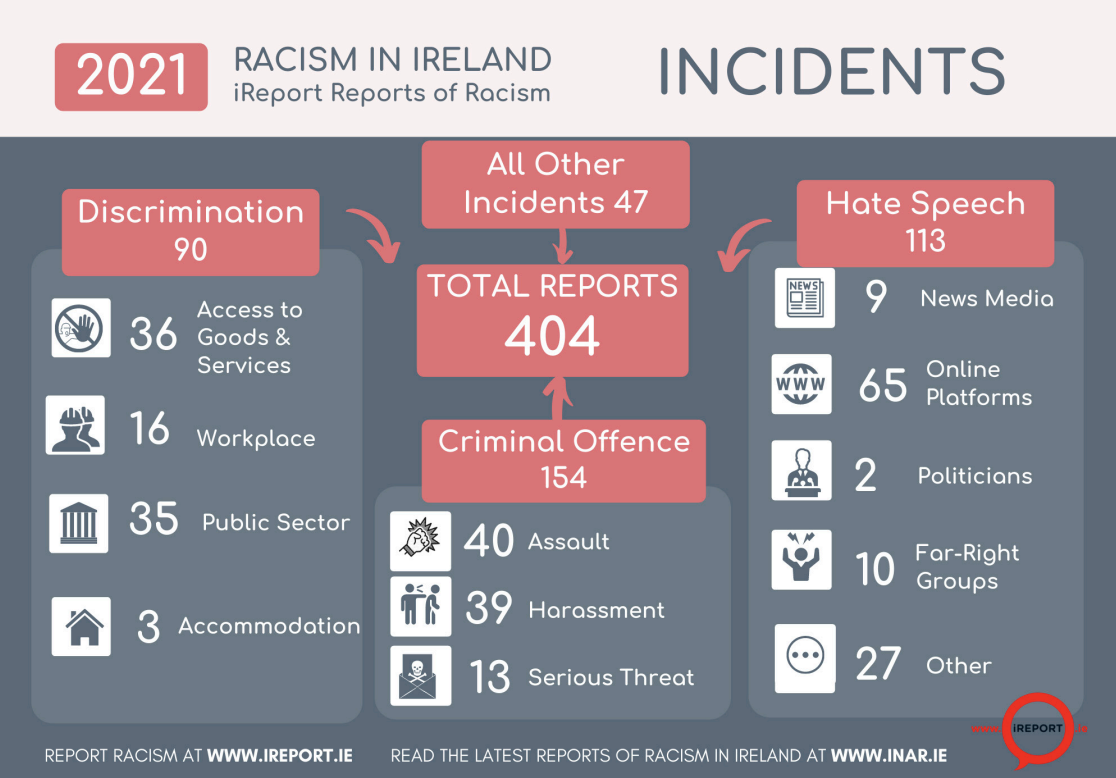
    “404 racist incidents were received in total in 2021”

    In comparison to 2019 and 2020, 2021 showed a reduction in the number of reports of racism. 404 racist incidents were documented  in 2021. Criminal offences accounted for 154 reports (including 40 assaults, 39 harassment, 13 serious threats). 113 reports regarding hate speech, 90 reports concerning discrimination, and 74 reports regarding all other incidents.

    A picture containing diagram

Description automatically generated

    Sourced by the Irish Network Against Racism (INAR).

    The annual report shows that Asian groups (including Chinese, South Asian and others) are most likely to be targeted for racially motivated crimes, with 64% of racist crimes being reported in 2021. In addition, the largest group of discrimination reports came from people of Black African, Black-Irish or Black-Other backgrounds at 24%.

    There were also likely many unreported racist incidents. 

    Fiona Hurley, policy and communications manager at the Nasc Migrant and Refugee Right Centre said that  “the numbers are still under-reported, and the rate is likely to be much higher than recorded.”

    “Our [NASC] own experience of working with people who have experienced a racist incident is that they often think that reporting it to the Gardai will be futile,” she said.

    The Irish Council for International Students released a report last year based on a survey of 760 international students from 75 countries. A survey of the international students revealed that approximately 40% of respondents had experienced racism either as a witness or as a victim in Ireland. 

    However, only 5 percent of respondents reported the incident. Similar findings were found in a survey carried out by iReport.ie. Only 25 percent of those reporting crimes to iReport.ie in 2021 reported the incidents to An Garda Síochána or to the Garda Síochána Ombudsman Commission (GSOC). 

    Although An Gardaí Síochána encourages reporting of crimes among minority groups, launching its online hate crime reporting facility, the figure is down from 43 percent in 2020.

    According to a survey conducted by iReport.ie in 2020, the organisation asked those who experienced racism but did not report it to Gardaí: “If you didn’t report racism incidents to police, why was this?”. 

    The most common reason for not reporting to Gardaí was “I did not think the Gardaí would do anything”. 

    When asked why they had not reported, half of those surveyed “did not expect Gardaí to act if they reported.”

  • “In Turkey, they treat surgery like a production line” – The rise of cosmetic tourism in Ireland.

    In Turkey, they treat surgery like a production line” – The rise of cosmetic tourism in Ireland.

    By Megan Bell. 

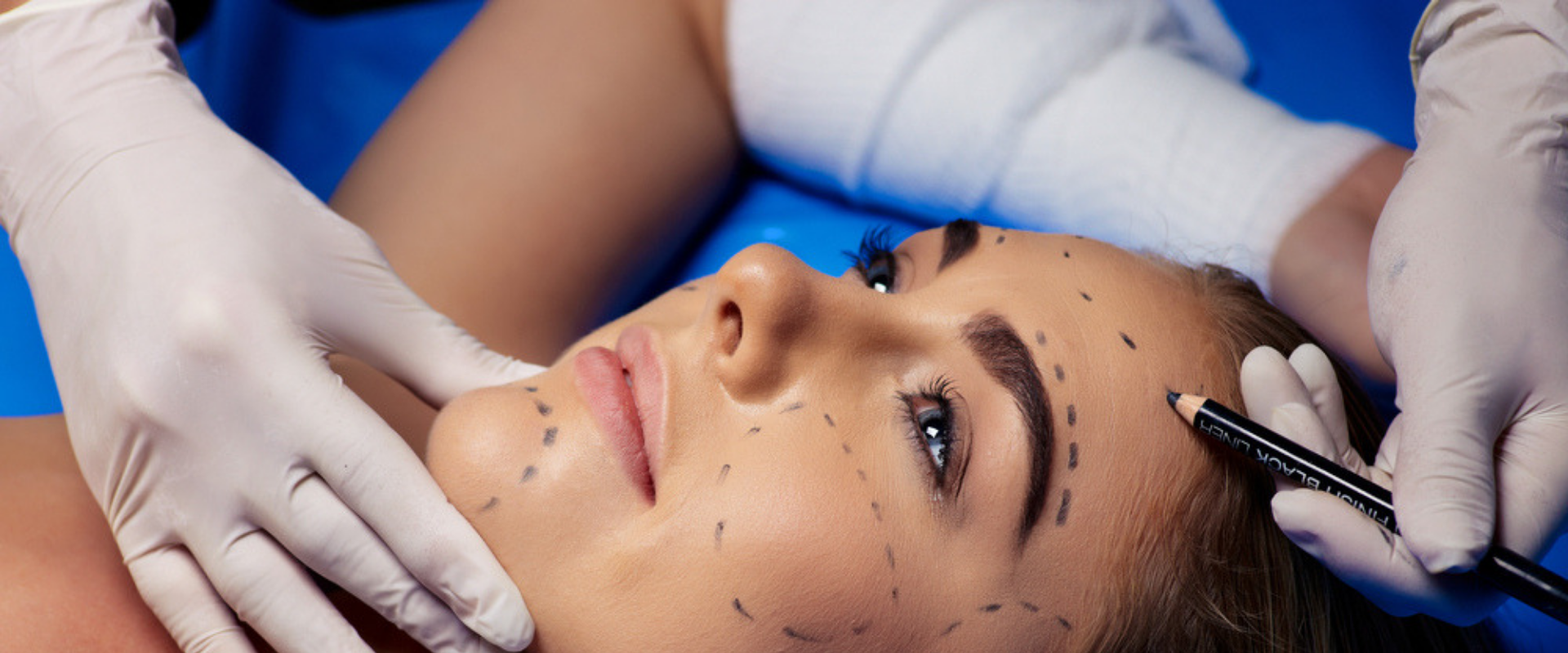
    Image source- Castleknock Cosmetic Clinic.

    The trend for patients to travel abroad to receive cosmetic treatments has been on the rise for the last 10 years. This has been coined as “cosmetic tourism”. 

    Cosmetic tourism is appealing as it is often cheaper to receive these treatments abroad, even when patients take the cost of flights into account. Like all surgery, this does not come without risk, andthe aggressive post-surgery complications of cosmetic tourism have been seen in the Irish health system. 

    But what is cosmetic tourism and what are the hidden dangers? 

    A rise in cosmetic tourism was seen in Ireland throughout the COVID-19 pandemic, as many Irish plastic surgery centres temporarily closed due to restrictions.  

    Last year, a study relating to the burden post-surgery compilations of cosmetic tourism placed on the Irish healthcare system during the pandemic was carried out by Dr Marlese Dempsey at St. James Hospital in Dublin. 

    She found that eight women within four months received treatment in the hospital as a result of complications after receiving cosmetic surgery overseas. All patients were female, aged 18-35. All surgery the women received were in Eastern Europe, mostly Turkey and Lithuania. Most complications were seen as a result of surgical site infection or implant infection. Dr Dempsey also found that the treatment for these women cost the Irish Health System €30,558 (or an average of €3819.75 each). 

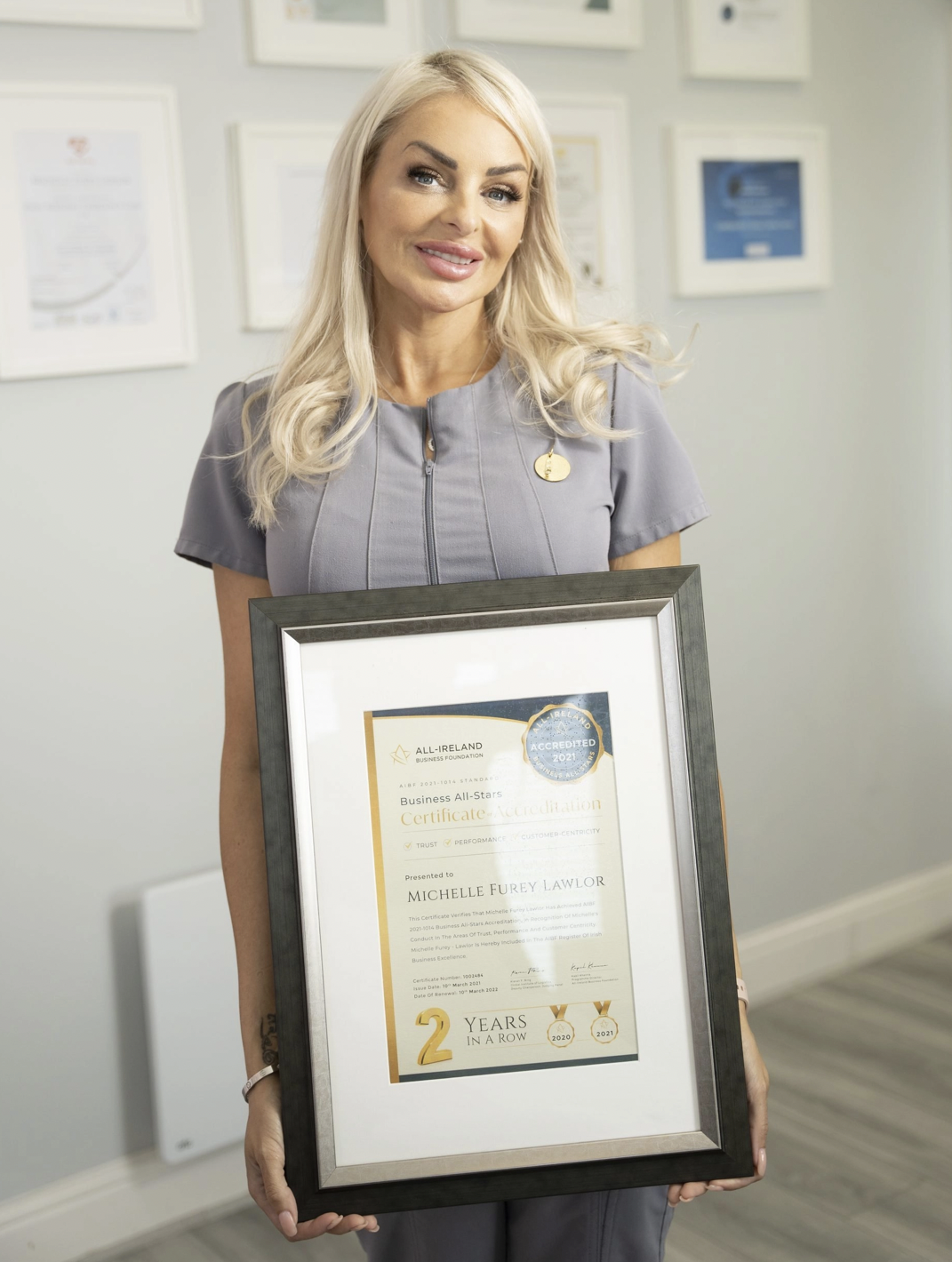
    This is not a new phenomenon, it has been on the rise for years. Michelle Furey-Lawlor, owner of JeJuve Clinic on South William Street in Dublin tells The City about this rise. 

    Michelle Furey-Lawlor is an advanced specialist aesthetician who holds over 50 non-surgical certifications and diplomas in cosmetic surgery. She describes cosmetic surgery as “where individuals travel outside Ireland to have either plastic, dental or bariatric surgeries done”. A rise in recent months has also been seen in surgeries abroad for hip, knees, and other joint replacements as well as women’s treatments and minor surgeries; not just cosmetic surgery. 

    Like many others, Lawlor had her own bad experience with receiving cosmetic surgery abroad. “I travelled to Turkey back in 2018 and had my body botched and destroyed by Turkish doctors when I wanted to have a tummy tuck done,” she says.  

    “I was admitted to St James hospital immediately upon my return to Ireland and received lifesaving surgery.”

    Lawlor was found to have stitches in her mouth, legs, face, and chin. Alongside this, she had 5 litres of fluid removed from the wound of her stomach and voice box damage which led to her being unable to speak for up to 2 weeks. 

    “The Turkish doctors refused to assist the Irish hospital with information about what they had done to me,” she adds. 

    “I had to wait a year for my body to be rebuilt by doctors and surgeons in Lithuania.

    “In Turkey, they treat surgery like a production line. The surgical practice often befriends you on social media. They get your phone number and proceed to organise all the details through WhatsApp. The patient then flies in to receive the procedures and is often released back to their home country after four or five days. 

    “You have no aftercare, you can be blocked on social media by the company if any issues arise, and you can be in medical danger.”

    In 2021, 40 people died from receiving botched surgery outside the EU. Lawlor advises that you ensure the surgeons are registered within the EU, as once they are outside of the EU they have no one to answer to in Ireland. 

    Over the last few years, breast implants and teeth have been the most popular as they follow social media trends. Lawlor offers this advice to anyone looking at travelling abroad to receive any form of surgery: “Do your research and do not go by the advice of influencers, they are paid to entice people in and often make a commission on patients they entice in.

    Michelle Furey-Lawlor, owner of JeJuve Clinic on South William Street. Photo: https://jejuveclinic.com/ 

  • Irish Sewage Plants Behind EU Standards

    Irish Sewage Plants Behind EU Standards

    By David Little

    According to a report released by the Environmental Protection Agency (EPA), half of Ireland’s wastewater is not being treated to EU standards.

    Source- Environmental Protection Agency.

    The report states that EU countries have an average sewage treatment compliance rate of 90%.

    Areas in Dublin such as Malahide and Ringsend have not reached all treatment standards set by the EU’s ‘Urban Wastewater Treatment Directive’ in 2021. The Ringsend plant has previously pumped untreated sewage into Dublin Bay during heavy rainfall, when the sewage treatment plant is overloaded.

    Meanwhile the report stated Howth pumps raw sewage directly into rivers, due to the area’s public sewer system not being connected to treatment plants.

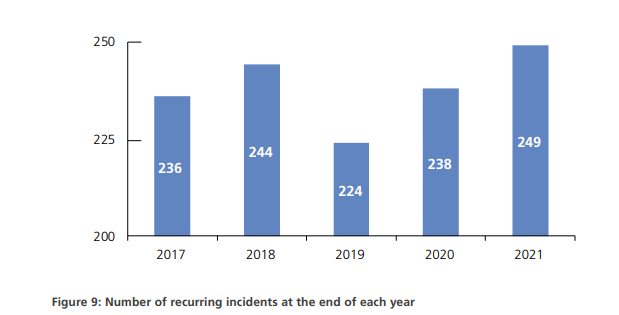
    Number of incidents leading to environmental damage across Ireland. Source: EPA Urban Wastewater Report

    The EPA has stated in the report that a “multibillion-euro investment” by Irish Water is necessary to bring the plants up to EU standards, which have not been met since 2005. 

    Speaking on the matter, Green Party MEP Grace O’Sullivan challenged Irish Water work quickly to meet EU standards. “While Irish Water have said they are playing catch-up  since their setting up in 2014, I don’t believe it is acceptable that we are missing targets from 2005.

    “Work on adamant treatment of our urban wastewater must be fast tracked as soon as possible”.

    Irish Water has previously rejected calls to treat sewage with UV light all year round, citing the lack of “any material improvement” when applied. See the tweet here.

  • Fixing or Worsening the Student Housing Crisis?

    Fixing or Worsening the Student Housing Crisis?

    By Injae Kang 

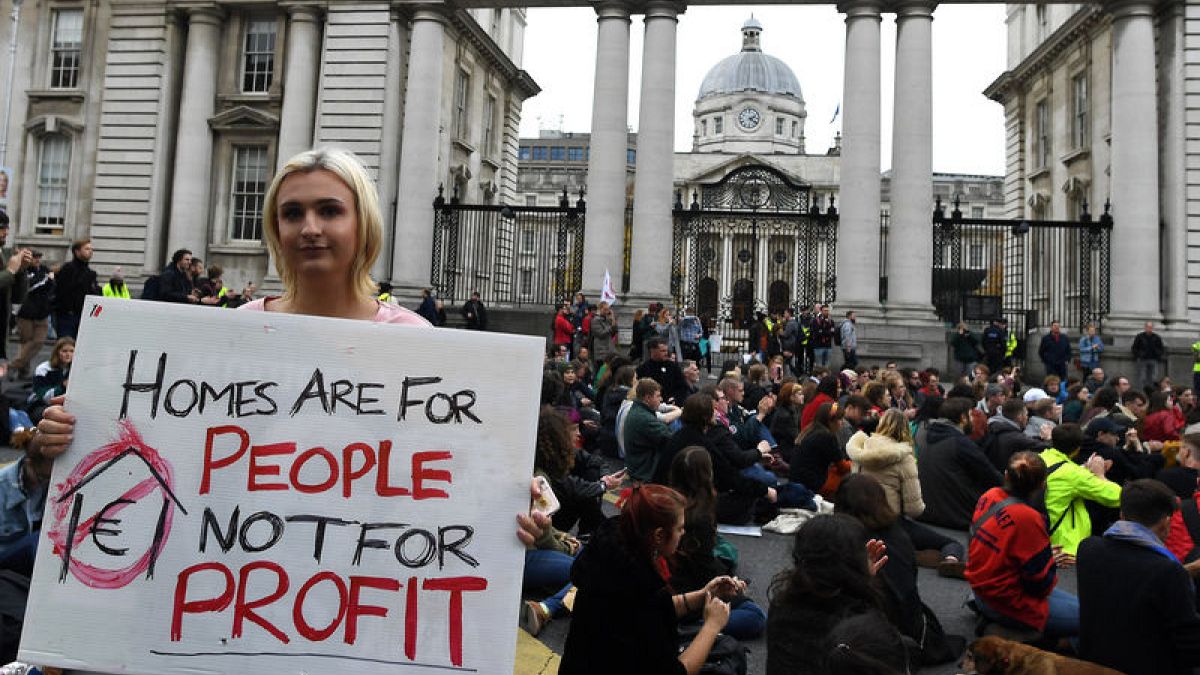
    People block traffic by staging a sit down protest at Ireland’s housing crisis in a ‘Raise the Roof’ rally outside the Taoiseach’s office at Government buildings in Dublin, Ireland, October 3, 2018. REUTERS/Clodagh Kilcoyne

    Finding an affordable room or accommodation in Dublin is an additional challenge for students living away from home. Third-level students in Dublin are facing difficulties with finding accommodation as excessive demand for living in Dublin City has led to a price spike.

    In response to the shortage of student housing, the Irish government launched the National Student Accommodation Strategy (NSAS) in July 2017 which is designed to deliver Purpose-Built Student Accommodation (PBSA). It is expected to reduce the demand for accommodation in the private rental sector by both domestic and international students. The government’s strategy aims to provide a supply of 28,806 bed spaces in the Dublin area and a total national supply of 54,654 bed spaces by 2024.

    PBSA Bed Space Projection

    Chart, line chart

Description automatically generated

    Source by the Department of Education and Skills and the Department of Housing

    Despite the government’s optimistic expectation of PBSAs being available to students in Ireland that would alleviate pressure on the private rental market, it has been criticised over both a lack of supply of PBSAs and the outrageous price.

    While the NSAS aimed to deliver 25,346 PBSA bed spaces to the Dublin area in 2021, the rate of delivery of bed spaces is tapering off. The Covid-19 pandemic created unexpected variables that caused third-level institutions and university campuses to remain closed and resulted in low occupancy rates in PBSAs in the 2020/21 academic year.  

    1,450 PBSA beds were delivered to the Dublin area in 2020 and 1,350 new beds have been delivered as of 2021, bringing the total number of beds to 18,900 in 2022. Furthermore, a total number of 19,300 beds are expected to be delivered by the end of 2023, according to a report from Cushman & Wakefield.

    The purpose of PBSA beds is to provide a solution to the shortage of student housing that offers some practical features, such as being located near the college and offering an affordable price. However, the PBSAs operate under private ownership, instead of universities. This means that they normally come with an extortionate price tag since luxury social areas such as cinemas, music rooms, and bowling alleys are included in the price.

    Prices for the rooms range from €250 to €300 a week. Paying over €1,000 per month for a single room with a shared kitchen is exorbitant for students.

    Caoimhe O’Carroll, a vice president for the Dublin Region in the Union of Students in Ireland said that: “Delivering affordable and fit-for-purpose PBSA will go a long way in alleviating the student accommodation crisis. However, the NSAS was launched in 2017 and since then hasn’t made a dent in the demand for student beds in Ireland.”

    “PBSA is often beyond student price points and puts a high burden of financial pressure on students and or their parents. It is shocking that PBSA rent is not capped at an affordable cost for students.”

    “Luxury PBSA that is outside students’ price points do not meet the demand in the market. Most Dublin PBSA complexes have cinema rooms, in-house gyms etc. These in-house amenities are an unnecessary cost to developers – a cost which is invariably transferred to the pockets of students and reflected in exorbitant rent.”

    In contrast with the realistic prices of student housing, some colleges in Dublin provide an ideal cost of living guideline for 2022/2023 to assist students in budgeting for college. According to the guidelines, monthly rent costs in the private rental market are €750  at Trinity College Dublin, €636 at Technological University Dublin, and €670 at Dublin City University. The average monthly rent cost for students living away from home is €685. 

    Trinity College Dublin says the monthly rental cost in the private rental market is up to €750. However, Vera Yakupova (21) a student at Trinity College Dublin says that the price suggested by TCD is only for a limited number of students. “This might be true only for people who either live at Trinity Hall (On-Campus accommodation) or in a private shared living space. But most students that I know pay more than €600, sometimes even double that.”

    “I searched for a room on Daft.ie for several months and was unable to find an affordable room. So I applied to Trinity Hall and got rejected. They said that there was only a very limited number of rooms available.”

    “Also, once my friends from college were rejected, they moved several times until they found a place to live that they like and find affordable.”

    A picture containing chart

Description automatically generated

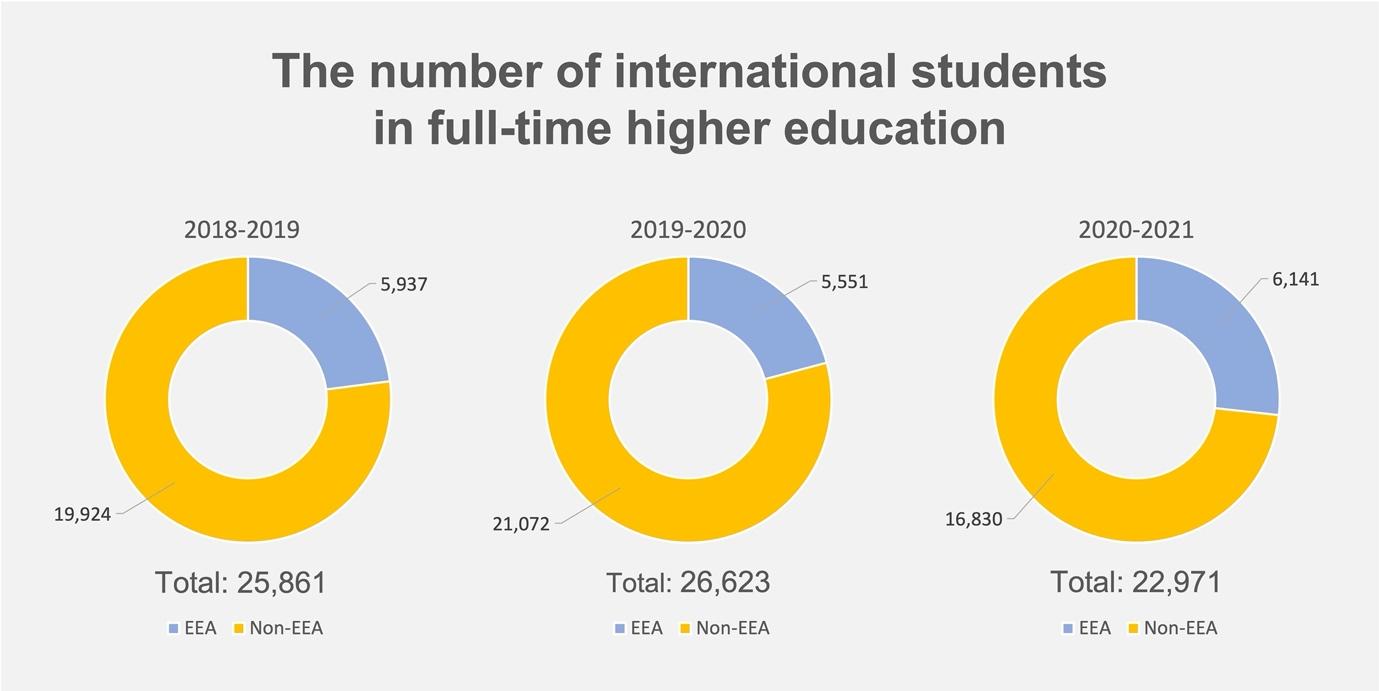
    The number of international students in full-time Higher Education

    Source by Higher Education Authority

    Furthermore, it has also been criticised that there aren’t enough PBSAs in Dublin, despite the extortionate price of PBSA beds. The supply of PBSA beds does not meet the demand for student housing, as the number of international students has been increasing (except for the academic year 2020/2021) and international students are more likely to find private accommodation rather than rent in the private rental sector because of Covid-19.

    The number of international students in full-time higher education in Ireland has risen from 25,861 in 2018/19 to 26,623 in 2019/20, which is the biggest number over 7 years.

    The number of international students in Ireland in 2020/21 decreased by 13.7% compared to the previous academic year following the pandemic.

    Due to the return of on-campus learning and the large portion of international students settling in Dublin for college, the shortages of PBSAs are expected to increase. As a result, some students in Dublin had to stay in hotels or hostels while they waited for their accommodation.

  • Sexism and harassment in the opera industry: An interview with Jade Phoenix

    Sexism and harassment in the opera industry: An interview with Jade Phoenix

    By Katie Ward

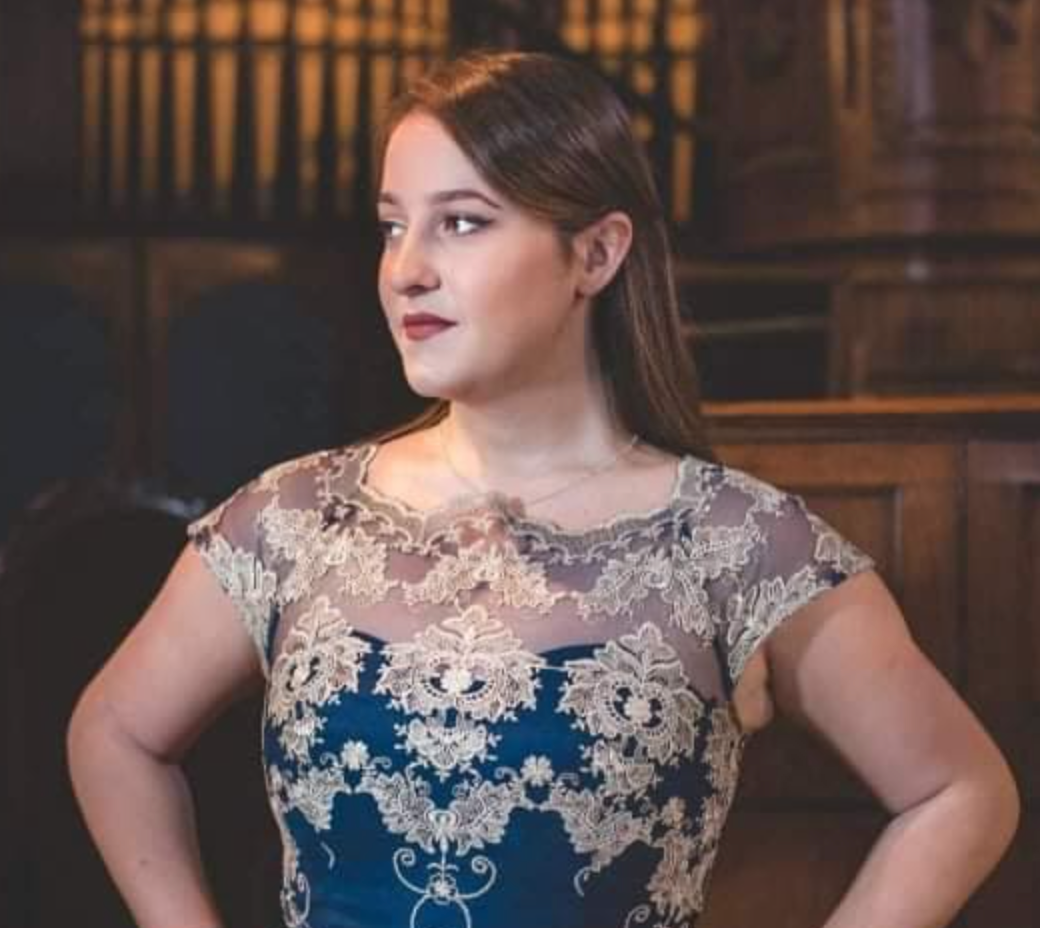
    A person in a dress

Description automatically generated with low confidence
    Jade Phoenix Opera Singer. Photo credit- Jade Phoenix

    Opera singer, Jade Phoenix sat down with The City, to talk to Katie Ward about her experience in the music industry, sexism and sexual harassment.

    Interview with Jade Phoenix by Katie Ward