Tag: slider

  • Stepping out of your comfort zone with Dublin Circus Project

    Stepping out of your comfort zone with Dublin Circus Project

    By Fantine Carron

    After being closed for more than a year, Dublin Circus Project reopened its doors in September to provide a space for artists to express themselves and allow young people to try a different hobby.

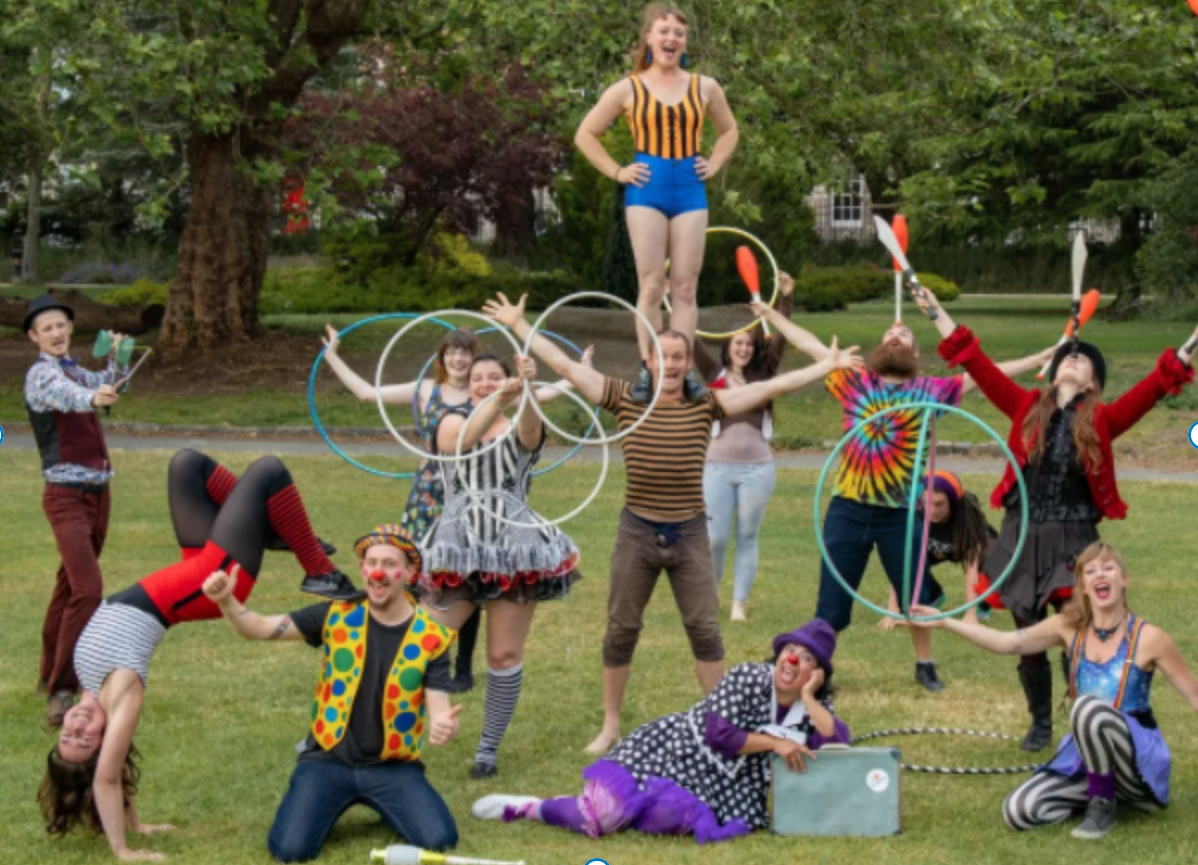
    The Dublin Circus Project provides a space for artists to express themselves (Photo Source)

    The Dublin Circus Project has been through a lot of changes before becoming what it is today. What started off in 2009 as a juggling society, has now become a true collective of artists who all share a common passion for the circus.

    Angelica Santander, who joined the project in 2012, and is now the head tutor, talked with journalist, Fantine Carron about the project and the benefit of practising circus.

    “The Dublin Circus Project really started to kick off in 2013 when we rented our first place, it was an old garage in Frederick Court that we renovated,” she said. “Our main goal was the professional development of artists and we finally had a platform for artists to create and represent their work and be supported in the process.”

    In this new space, they were able to offer their first classes to adults and develop their initial few shows.

    In 2015, they moved to a different location which was more adapted to the needs of acrobatics. This new place, situated in Cabra, allowed them to host residences, create several cabarets, and pursue their classes. They also started working with schools around the area to offer classes to children.

    Now, they are located in The Orchard Community Centre in Cherry Orchard.

    The pandemic deeply impacted the Dublin Circus Project as they had to close down for more than a year.

    “It was very tough. We did do some online teaching but it is complex because it is obviously easier to be in person. For advanced people, it was manageable but not for beginners. At the same time, it was a good exercise to try and think outside the box.” says Angelica Santander.

    Throughout the lockdowns, they posted around forty videos on YouTube allowing people to learn circus while at home.

    It opened its door once again last September, and teaching was able to start again in line with the government’s guidelines.

    “We are now teaching smaller groups, we wear masks, wash our hands, and open the windows regularly.”

    Angelica Santander’s speciality is clowning but she is passionate about circus as a whole.

    “It is a form of art,” she said, “and it has tons of benefits. It teaches resilience and empathy. It also gives a great connection with your body and your mind. You can relax and only focus on what you are doing.”

    She takes the example of juggling. “You have three balls in the air, or five, but only two hands, it’s a great brain exercise because you have to find a way to make it work.”

    One of Dublin Circus Project’s mission is also to give a safe space for everybody.

    “We want to make sure that there is a space for everyone, circus is very inclusive. It provides a positive atmosphere because there is no competition. You are not competing with your colleagues but you are motivated by them,” said Angelica Santander.

    “Art is not competitive.”

    For her, the only competition is when you are competing with yourself to get better. Her advice is simple: “whatever you are good at or whatever you like the most, just practice to get better”.

    “If you fail, it is okay too. Failure is part of the process, it is not against it. You need failure in order to get better and many people tend to forget that, they try to avoid it.” 

    Santander shared how “hopeful” she was for the future.

    “It started off as a young company run by young people. It is actually a good example of achieving your dreams because we grew so much in a short time and we worked so hard to be there so we are not going to stop now.”

    For Angelica Santander, there is still plenty more to do. Her main goal now, shared by the Dublin Circus Project is for circus to be added to schools curriculum. “We believe that it is more than PE and that if you take the competitiveness out, people will flourish.”
  • Christmas in the City

    Christmas in the City

    Reporters Shay Galon, Leigha O’Reilly Hughes and Jane Byrne all take to the streets of Dublin to ask people about their Christmas wishes and the best spots to be in at this festive time of year!

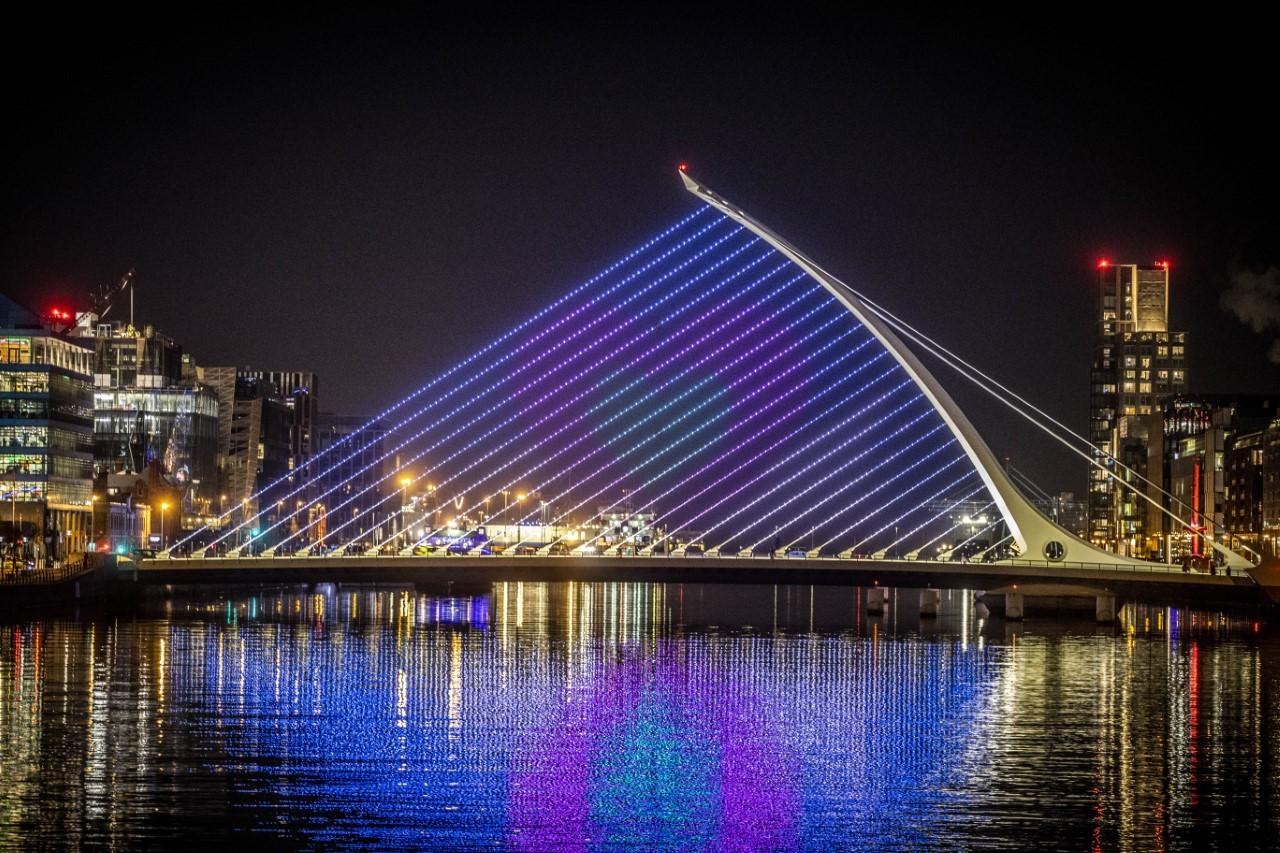
    Samuel Beckett Bridge, photo credit: Conor McCabe

    After a long year and the beginning of a cold winter, Dublin lights up to get everyone in the Christmas mood. 

    Dublin City Council returns with their very popular ‘Dublin winter lights.’ The lights were first switched on, on November 15th and will stay on until January 1st. Twenty one locations, which is an increase of five from last year have been transformed with colourful projections and light displays. Two locations, one on the Southside and the other on the Northside are walking trails that bring the public across Dublin in the most Christmassy way. A team of over sixty people work hard every year to deliver the winter lights. 

    The Lord Mayor of Dublin, Alison Gilliand welcomes the Christmas lights back. “I’ve been a huge fan of ‘Dublin Winter Lights’ ever since it began in 2018. The contrast between the bright lights and the dark evenings makes for a stunning backdrop to the city.”

    Custom House – Photo credit: Conor McCabe

    In an effort to cut down on CO2 emissions Dublin City Council announced that no diesel generators were used this year. Instead, where main power was not accessible, they used Hydrotreated Vegetable Oil which is made from 100% renewable waste materials and results in an up to 90% reduction in CO2 emissions. Furthermore, they recycle all materials and branding from year to year and store all lighting in wooden crates instead of single use plastics. 

    A new location that was added this year and is proving very popular is the light installations at Merrion Square park. So much so that six new dates have been added allowing the light show to run every day up until December 22nd. 

    The park has been transformed into a magical winter walk with light installations, a 15m high Christmas tree in the heart of the park projected with magical images, a virtual snowstorm and dancing penguins and polar bears. At the end, children are seen begging their parents for a nutella crèpe whilst adults can enjoy a mulled wine under the lights. Although tickets are free, due to limited numbers you are asked to book your free ticket online before attending. 

    Other locations garnering spectacular sights include, Trinity College, Grafton Street, City Hall, Millennium Bridge and the Samuel Beckett Bridge among others. 

    Btec GPO, photo credit: Conor McCabe

    New restrictions on nightclubs, the hospitality sector and vaccine requirements mean that we will be looking at a Covid Christmas for the second year in a row. However, a free walk around the Christmas lights in Dublin City is sure to lift the spirits.  In the video attached, we talked to the people of Dublin and gave you a look around the winter lights to get you in the Christmas mood. 

  • What are NFT’s and how are Irish artists using them?

    What are NFT’s and how are Irish artists using them?

    By James Godson

    I sat down with Irish artist Zuphioh to hopefully discover what NFT’s are, and why they’re so popular.

    NFT’s, or Non-Fungible Tokens, appear to have taken the art and crypto-currency world by storm. Their use, however, as shown by their vague name, isn’t very clear to the layman, but what we do know is that there’s huge opportunity within them, careers to be created and, of course, money to be made.

    An NFT, in effect, is a means by which an artist can sell an ‘original’ of their digital artwork to someone who can certify themselves as the sole owner of the piece; similar to how an art collector may own an original Picasso

    Non-fungible tokens (NFTs) – unique collectible crypto assets- by
    Marco Verch Professional Photographer on Flickr Creative Commons Licenses


    The major difference being that, by buying an NFT of art through crypto-currency, a collector can own the original of a digital piece of art, certified through the blockchain. When buying a piece traditionally, you usually receive the physical artwork, along with a certificate of authenticity. An NFT is essentially this certificate, and is always tied to the artwork.

    The Blockchain

    The blockchain, described as simply as possible, is a decentralised ledger, which is distributed amongst all users, that serves to record the provenance of a digital asset, the provenance part relating to the earliest known history of a given asset. 

    Due to how robust the security of the blockchain is, the signature of an NFT sold through crypto-currencies is safe and unique, meaning that if somebody decided to screenshot an NFT and create their own, it would appear in the blockchain after the original sale of the item, and, therefore, not be credited as the original piece.

     Irish artist Zuphioh believes that the advent of NFT’s “empowers artists”.

    Zuphioh is an illustrator and painter based in Dublin, he is currently in his final year of college, and is aiming to write his thesis on NFTs, outlining their benefits for artists and how they could be used in everyday scenarios. 

    “I know artists from all around the world that are creating NFTs now that are legitimately able to make a living from it. I’ve connected and made friends with people all around the world who thanks to this new way of selling work, have managed to leave their jobs for good and commit themselves to creating! I have friends from Mexico, Brazil, Malaysia and many more places who are thriving in this space” 

    “Reylars.Dam is a Mexican artist who I’m collaborating with in February, he’s had pieces sell for more than a Banksy

    Adam has also sold artwork from his “Zebra” art collection as NFT’s, and he has seen a noticeable increasing demand for artwork from young Irish artists like himself. 

    “In my own experience I went from selling nothing in January and February; once I started with NFT’s, I was making enough to actually pursue art as my career”.

    “For me, what is crazy is that I’m going from not being able to buy art supplies to now being able to create on an iPad; It’s definitely benefitted me. It’s not only monetary though, it’s also made me more confident in my work, it’s pushing me to grow my audience and create more”.

    Cutting out the middle man

    The unique selling point of NFT’s from an artist’s perspective is that it removes the need to sell work through galleries or auction houses.

    “I sold my work myself through ‘Maker’s Place’, they take a cut like any fine art establishment, but the likes of Christie’s and Sotheby’s charge a hammer price of 25%-30%, whereas here you’re looking at 10%-15%. There’s nothing stopping an artist selling directly to a buyer and paying no commission either.”

    “Without someone in the middle, someone’s making a sale and another is buying someone else’s work, it means artists are supporting each other without someone else making the majority of the sales”.

    “The art world is all about ‘sell, sell, sell”, whereas now it’s sell and support someone’s work”. 

    The Downsides

    At the moment, NFT’s are the new kid on the block for crypto-bros, that is, speculative investors in crypto-currencies. As a result, the market for NFT’s is flooded with opportunists who’s sole intention is making money from selling collectible NFTs, as the demand is so high.

    “At the moment there are people using it to sell bulls***, at the moment art, which back in March/April was a huge deal, has unfortunately become shadowed by the huge wave of these collectible projects, where people are paying insane money for the small chance to hit it big, which in my head is literally glorified gambling, but covered up with some cutesy monkey or lion or whatever, they’re everywhere; I think Gartner’s Hype Cycle is playing its part. 

    Gartner’s Hype Cycle of Emerging Technologies aims to map the popularity of forward tech as it becomes widely available, and has been used to map the interest in the likes of 3D Printing and Virtual Reality. 

    It starts with an initial explosion of interest, a peak, and a rapid decline in interest. Generally, there is a slight increase in engagement before the technology reaches a “Plataeu of Productivity”, wherein it becomes a normalised part of a given industry.

    IMG_0385.PNG
    iCredit: Gartner

    With any luck, NFT’s will continue to serve its purpose for current and future artists like Zuphioh, and hopefully be rid of its opportunists. 

  • Will there be a 5th Aisling? – Interview with author Sarah Breen

    Will there be a 5th Aisling? – Interview with author Sarah Breen

    By Samantha Dempsey 

    Author, Sarah Breen. Image courtesy of Sarah Breen

    Sarah Breen, co-author of the Aisling series talks to the city about her career and if there will be a fifth Aisling 

    Sarah has been a lover of books from a very young age and always had aspirations to write one but could never really carve out the time. It just wasn’t a priority. However, when she and Emer McLysaght were approached by Gill Books in 2016 and offered a book deal it was an opportunity they just couldn’t turn down. 

    The infamous Aisling was created on day when Sarah and Emer were just out of college and living together in an apartment in Stoneybatter. “One day, while hungover, we started talking about brown mascara. Who buys it? Who can’t commit to a black lash? The more we added characteristics to this person, the more real she started to feel. Unlike us, we decided she would never hoover up coppers rather than picking them up.  

    She ‘hid from the TV licence inspector. She definitely went Down Home every weekend and was naturally good at small talk at funerals. We gave her the name Aisling and, back then, had no idea she would change our lives.” 

    Like most people, Sarah has a lot to juggle around her writing but explains that her normal schedule is writing for about three hours a night Monday to Thursday. “Any longer and the creative juices tend to dry up. Me and Emer have a weekly editorial meeting too. When we’re editing, we’ll get together to talk though changes and take in suggestion. 

    “Our deadline is the end of April so we usually start planning in December and try to get a few chapters in the bag before Christmas. All in it takes about four months for the first draft, then we edit over the summer and then it’s out in October.” 

    When I asked Sarah what her most Aisling moment was, she replied: “To be honest, I’m actually more Majella. The most Majella thing I’ve ever done happened in college. I went out the night before a family holiday and lost my phone (I used to lose my phone constantly). Woke up in someone else’s house with about one hour before my flight was due to take off.  

    “I managed to get a taxi home, fire an armload of stuff from my bedroom floor into a bag, and made it to the airport just in the nick of time. My mother was not happy. When I arrived in Austria I opened my bag to find I’d brought about six bras, no knickers, one outfit and two phone chargers. I didn’t even have a phone to plug them into and had to share clothes with my mother all week.” 

    Sarah and her co-author Emer won the popular fiction category at this years An Post Irish Book Awards and felt “extreme shock!” because the popular fiction category is always so strong as it features international bestselling books, and they we didn’t think they were in with a shot.

    “We are just so so grateful to everyone who voted for us because you know online voting is a massive pain in the hole.” 

    Sarah confirmed that a fifth Aisling is on the way and you can read all about her next Autumn! 

  • Teachers worry among rising COVID-19 cases

    Teachers worry among rising COVID-19 cases

    By Katie Ward

    Creative Commons License on Pixabay.

    With covid-19 cases surpassing 5,000 per day, many teachers are concerned about how the number of cases could affect their health.

    Student primary school teacher, Niamh Daly, said ‘I am quite worried about returning to placement. The cases in schools are so high at the moment, and I know lots of teachers who have gotten Covid in school.’

    ‘I think the government needs to recognise that schools are not safe environments in terms of spreading Covid. Lots of precautions are being taken in schools in terms of PPE, sanitisation routines and ventilation However, it is clear that there are still improvements that could be made in these areas’ she added.

    The Government has implemented mandatory guidelines that children aged nine and older must wear masks while in school. Primary school teacher, Maeve O’Donnell* (name changed to protect identity), from Dublin said: “I do not think it will make much of a difference. Children play and mix in the yard and it’s hard enough to get them to keep coats on outside. I think masks would be hard.”

    “If it helps the spread of the virus, it will be great but that will only work if children are wearing them properly, which I think will be hard to police.”

    New restrictions announced 3 December states that a maximum of four households should mix. O’Donnell said: “I feel pressure around having many close contacts. I am a young teacher, and it is my first year teaching full time. However, I would like to keep some sort of a social life, but it has been difficult in the pandemic. I have been trying to limit my number of contacts by seeing the same people and frequent antigen testing.”

    Daly was of a similar mindset. “At the moment I am still in college, so I am not really able to cut my social contacts. We have big lectures with up to 400 people. From next week, I will cut my social contacts down for when I start teaching again.”

    Public health advice states that children and teachers who have any symptoms of Covid-19 should isolate at home and get a PCR test. 

    “I know many teachers where they would have the same guilt around calling in sick as myself. It is a profession where a lot of the time calling in sick isn’t an option for a lot of people. The expectation has been that teachers come in no matter what. Covid has changed how they expect us to react to being sick, but I don’t think the mentality has caught up,” said O’Donnell.

    Schools all over Ireland are struggling with a teacher shortage due to Covid-19 and there is a lack of substitute teachers available. Fellow EU state Belgium closed schools a week early in the hope to bring down cases. “It is hard to know if we will follow in the same footsteps’ said Daly ‘I hope we don’t but with the rising case numbers everything is up in the air.”

  • Dublin City lights up for Christmas

    Dublin City lights up for Christmas

    Samuel Beckett Bridge, photo credit: Conor McCabe

    By Jane Byrne, Shay Galon and Leigha O’Reilly Hughes

    After a long year and the beginning of a cold winter, Dublin lights up to get everyone in the Christmas mood. 

    Jane Byrne, Shay Galon and Leigha O’Reilly Hughes asks people in Dublin what they want for Christmas

    Dublin City Council returns with their very popular ‘Dublin winter lights.’ The lights were first switched on November 15 and will stay on until January 1. Twenty-one locations — up five from last year — have been transformed with colourful projections and light displays. Two locations, one on the Southside and the other on the Northside, are walking trails that bring the public across Dublin in the most Christmas-y way. A team of over 60 people work hard every year to deliver the winter lights. 

    The Lord Mayor of Dublin, Alison Gilliand, welcomed the Christmas lights back. “I’ve been a huge fan of ‘Dublin Winter Lights’ ever since it began in 2018. The contrast between the bright lights and the dark evenings makes for a stunning backdrop to the city.”

    Custom House – Photo credit: Conor McCabe

    In an effort to cut down on CO2 emissions Dublin City Council announced that no diesel generators were used this year. Instead, where main power was not accessible, they used Hydrotreated Vegetable Oil which is made from 100% renewable waste materials and results in an up to 90% reduction in CO2 emissions. Furthermore, they recycle all materials and branding from year to year and store all lighting in wooden crates instead of single use plastics. 

    A new location that was added this year and is proving very popular is the light installations at Merrion Square park. So much so that six new dates have been added allowing the light show to run every day up until December 22nd. 

    The park has been transformed into a magical winter walk with light installations, a 15m-high Christmas tree in the heart of the park projected with magical images, a virtual snowstorm and dancing penguins and polar bears. At the end, children are seen begging their parents for a nutella crèpe whilst adults can enjoy a mulled wine under the lights. Although tickets are free, due to limited numbers you are asked to book your free ticket online before attending. 

    Other locations garnering spectacular sights include, Trinity College, Grafton Street, City Hall, Millennium Bridge and the Samuel Beckett Bridge among others. 

    Btec GPO, photo credit: Conor McCabe

    New restrictions on nightclubs, the hospitality sector and vaccine requirements mean that we will be looking at a Covid Christmas for the second year in a row. However, a free walk around the Christmas lights in Dublin City is sure to lift the spirits.  In the video, we talked to the people of Dublin and gave you a look around the winter lights to get you in the Christmas mood. 

  • Wave after wave: an analysis of ICU admittance during COVID-19

    Wave after wave: an analysis of ICU admittance during COVID-19

    BY CHRISTOPHER O’FLAHERTY

    The concern coronavirus has created in Ireland was to make sure hospitals weren’t overloaded and to make sure that ICU beds were never full. Christopher O’Flaherty from THECITY.IE has requested information from St Vincents Hospital for the number of personnel admitted into ICU beds during each wave of the pandemic. The stats are provided by the HSE ICU report.

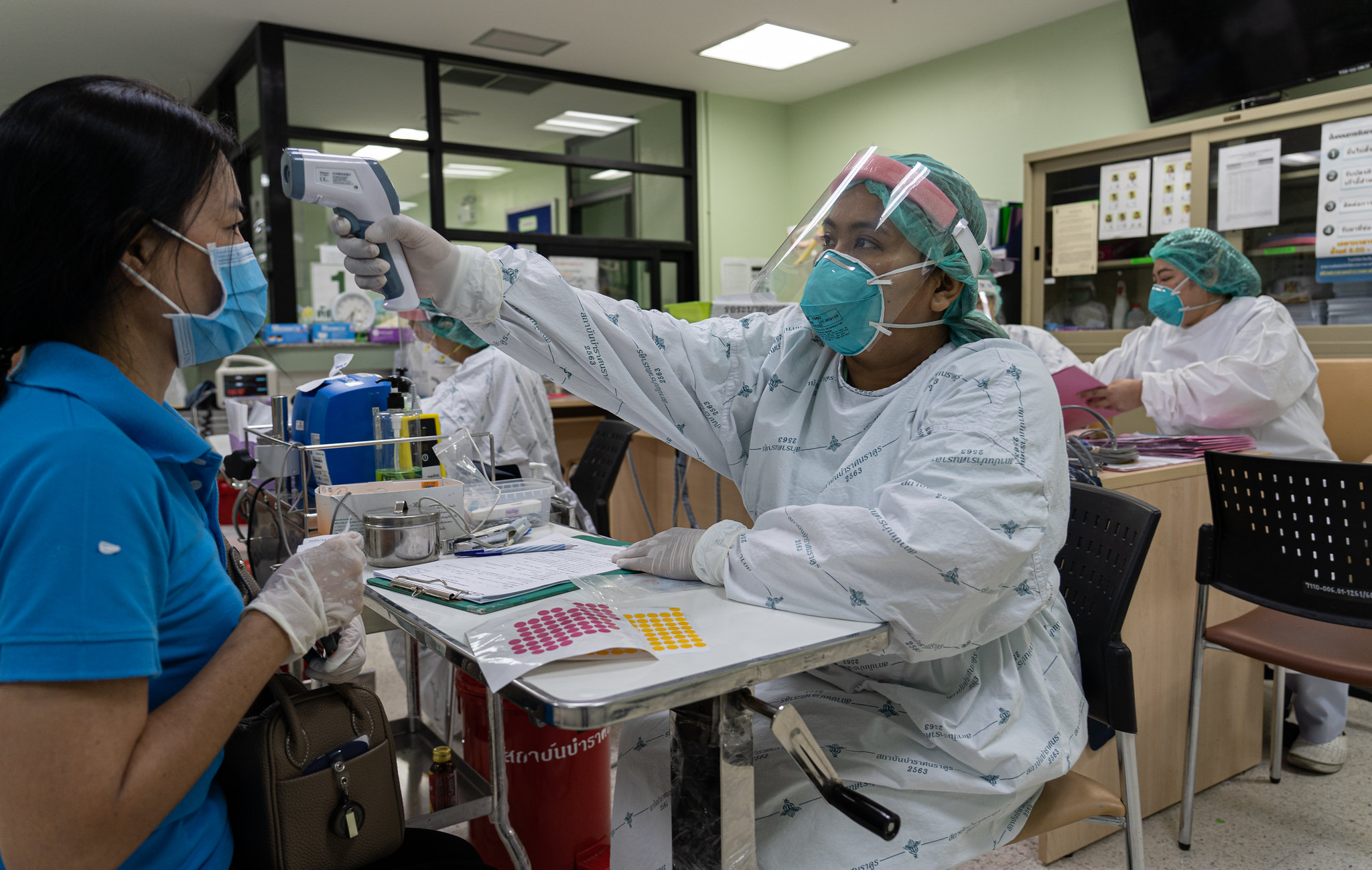
    COVID-19 Frontline health workers. Photo Credit: UN Women Asia and the Pacific

    Wave 1 took place between the following dates: 16.02.2020 – 01.08.2020

    Wave 1 consisted of 436 cases ages 15 and up admitted to ICU with confirmed COVID-19. 69% of cases were male. 80% of all cases during wave 1 had underlying medical conditions and 57% of the underlying health conditions were found to be Chronic heart disease, and hypertension at 37%. 21% of all ICU with COVID died during wave 1.

    Wave 1 being the first meant that hospitals were experiencing something they would never dream of. 

    An impossible task.

    So, the numbers do reflect the situation and is not surprising.

    Wave 2 takes place between the following dates: 02.08.2020 – 21.11.2020

    Wave 2 was by far the least stressful time for hospitals so far. 

    In the three months of wave 2, there were 170 people admitted into ICU. 

    69% of cases were male. 92% of cases were people with underlying health conditions. Hypertension at 52%, chronic heart disease at 46%, chronic respiratory disease at 40%. Finally, diabetes mellitus 36%. 35% of all ICU patients with COVID died during wave 2.

    Wave 2, although the least intense and least stressful time for hospitals so far. However, the percentage of deaths is extraordinarily high during wave 2.

    Wave 3 takes place between the following dates: 22.11.2020 – 26.06.2021

    Throughout wave 3  the worst wave of COVID Ireland was seen.. 972 people with confirmed COVID-19 cases were admitted into ICU beds across the country. The highest amount we have ever seen. 61% of case were male. 90% of cases were people with underlying health conditions. The most commonly reported underlying medical conditions were: hypertension at 50%; chronic heart disease 36%; chronic respiratory disease 33%; and diabetes mellitus 27%. 39% of the admitted into ICU unfortunately died.

    Wave 3 lasted all of spring and summer. This is also around the time the Delta virus started infecting Ireland.

    Wave 4 is the current and most recent wave. The data given is for the duration of: 27.06.2021 – 13.11.2021.

    The amount of people who have been admitted into a hospital during these dates is 476 patients. A massive decrease since wave 3. 

    81% of people who were in ICU had an underlying health condition. 64% have acute respiratory distress syndrome. 

    Wave 4 is still on going and with the recent Omicron variant infecting the people of Ireland. It is imperative to make sure ICU does not get overwhelmed, so we do not have a repeat of wave 3.

  • Do you think we are heading into another lockdown?

    Do you think we are heading into another lockdown?

    By Fantine Carron, Emily Goss Guildea, and Ciara Tyrrell

    Taoiseach Micheal Martin announced new restrictions to be put in place on Tuesday the 7th of December, but we here at TheCity.ie are wondering if people believe we are going into another lockdown anytime soon?

    By Fantine Carron, Emily Goss Guildea, and Ciara Tyrrell

    What are the new restrictions that have been announced you may ask? Well here’s a breakdown of these restrictions:

    According to gov.ie:

    • Visits to private homes should be kept to a maximum of three other households. This hopes to recognise the need for flexibility depending on individual circumstances.
    • Bars and restaurants are required to uphold strict social distancing and this will include hotels. There will be table service only with 6 adults per table, there will be a maximum of 15 people when including children ages 12 and younger with one metre between tables. No multiple bookings will be permitted with midnight remaining to be the closing time for these premises.
    • For indoor entertainment, cultural, community and sporting events, there will be a maximum of 50% capacity at indoor events which must be fully seated. This does not include religious or educational events or normal workplace business activity. Facemasks should be wore at all times unless eating or drinking.
    • COVID pass has been extended for gyms and leisure centres’ and hotel bars and restaurants. There is appropriate exemption for those for whom a hotel setting is their permanent resident. 
    • Nightclubs will not be allowed to open.
    • No changes for weddings or outdoor gatherings.

    As for ‘Economic and Income Supports’ the Minister for Finance is introducing a new scheme for hospitality sector businesses that are subject to the new restrictions. This will adjust the COVID Restrictions Support Scheme to support businesses whose trade is impacted severely through restrictions.

    The Pandemic Unemployment Payment is also opened for a limited period for workers temporarily laid off due to the new public health regulations.

  • Brutal eviction of vacant space in Stoneybatter

    Brutal eviction of vacant space in Stoneybatter

    Reporter Jane Byrne went out on site to document the aftermath of the Stoneybatter eviction. 

    On Wednesday the 23rd of October, a private security firm, attempted to evict housing activists at 23 Prussia Street, Stonebatter. 

    The site has been occupied by housing activists since early September and is known amongst the community as Sunnyvale.

    The activist group known as ‘ThatSocialCentre’ on Instagram, announced on 10 September that they had “occupied an empty corner of Stoneybatter.” 

    They outlined the plans for the space by saying, “we hope to clean up, build infrastructure, host events and workshops, and resist any further eviction attempts.” 

    Since then, the group has hosted environmental workshops, bike fixing days and food drives. 

    On 23 October, the group called out for support at the site on social media. Footage of the private security firm violently evicting activists was quickly shared around and soon, the story had dominated Twitter and Instagram newsfeeds. 

    The McGrath Group, who owns the site, are ‘a privately owned investment and development company operating in Ireland, the U.K. and Germany’ according to their website. Randelswood Construction LTD which is an extension of the McGrath group wishes to demolish the infrastructure currently at 23 Prussia Street and replace it with 166 build-to-rent apartments. This is in accordance with a planning submission considered by An Bord Pleanána, Ireland’s national independent planning body that decides appeals on planning decisions. 

    In a statement given to The Irish Times, The McGrath Group was issued with a High Court order by Dublin City Council, instructing it to remove squatters from the site on Prussia Street. The group was legally required to keep the site vacant because of the council’s concerns about “serious fire and safety risks and the overall poor condition of the existing buildings,” it said. 

    The Guards were present at the eviction. A Garda spokesman told Dublin Live no injuries had been reported during the altercations but they will be carrying out further investigations into the incident. He continued, “Gardaí from the Bridewell attended at a property on Prussia Street Dublin this morning, 27 October 2021, where a property owner, in compliance with a court order, was securing a premises and facilitating access to persons to remove personal items.” 

    Although the group managed to resist the eviction, the area was destroyed. Currently, they are working on rebuilding the space and are calling out for help across their social media platforms. Supplies needed include food, kettles, boilers, and gardening gloves among other things.

    In the video attached, you can see the aftermath to the site. We spoke to Em, one of the activists who wishes to conceal her identity. 

    As this is an ongoing story updates can be found at thatsocialcentre on instagram

    **The McGrath group refused to comment on this matter. 

    The Guards could not be reached for comment.

    All comments in the video are those of activist Em.

  • Social Media platforms fails to protect its users from Covid-19 disinformation

    Social Media platforms fails to protect its users from Covid-19 disinformation

    By Leigha O’Reilly Hughes

    Photo credits: Leigha O’Reilly Hughes

    Mis- and disinformation has always been a big problem for social media, due to how easy it is to spread around. This problem has continued to grow since COVID-19 entered everybody’s world in 2020. Since then, false claims, conspiracy theories and disinformation about the virus remain online.  

    Even though Meta, formally known as Facebook, Twitter and Instagram provide a space to inform people about the virus as well as start up conversations, it also allows fake news and misinformation to spread.  

    The World Health Organisation, which is the United Nations agency that connects nations, partners and people to promote health, keep the world safe and serve the vulnerable so everyone can attain the highest level of health, have also spoken out about the spread of misinformation regarding Covid-19 on social media.  

     “As the world responds to the Covid-19 pandemic, we face the challenge of an overabundance of information related to the virus. Some of this information may be false and potentially harmful,” says the World Health Organisation. (The WHO)

     “Inaccurate information spreads widely and at speed, making it more difficult for the public to identify verified from trusted sources.” 

     More than half of Gen Z and Millennials (59.1%) are extremely aware of false news around COVID-19 and are able to recognise it frequently. However, persuading people to actively resist it, rather than letting it slip, is a difficulty, with many (35.1%) simply ignoring it, according to the WHO.

    Social media platforms are taking it upon themselves to help tackle the spread of misinformation on their sites.  

    Meta has stated that it has since removed over 20 million posts since the beginning of the pandemic and Instagram as they violated rules on Covid-19 misinformation. 

    The company implemented a direct link on any post that mentions Covid-19, vaccines or the pandemic that brings the viewer to the COVID-19 information centre. They have also stated that they are banning repeat offenders who spread the misinformation. 

    Twitter has also put in place guidelines when it comes to spreading information about Covid-19.

    “We’ve observed the emergence of persistent conspiracy theories, alarmist rhetoric unfounded in research or credible reporting, and a wide range of unsubstantiated rumours, which left uncontextualized can prevent the public from making informed decisions regarding their health, and puts individuals, families and communities at risk,” says Twitter.  

     Twitter states that they will label or remove false or misleading information about the virus and the vaccine. 

     However, finding misinformation on social media regarding Covid-19 is not difficult. It is easy to find tweets spreading misinformation that are not flagged or taken down before people can view them.  

    Below are examples of easily found tweets that spread misinformation about Covid-19 and how it can affect people.

     Newsguard, an organisation which monitors internet misinformation, identifies accounts, sites and organisations that were still spreading conspiracy theories and fake news about Covid-19 but were still online to earn thousands of new followers. 

    Newsguard also stated that even though some of these posts included labels offering links to coronavirus information, it did not state to the users whether the post was trustworthy or not.  

     This shows that even though social media platforms like Facebook, Instagram and Twitter have implemented tools to help identify when Covid-19 is talked about and state that they take action towards those posting fake news, they still contribute to the spread as false information is easily found.