Author: The City’s Newshound

  • From likes to learning: Irish university launches new social media ‘influencing’ course 

    From likes to learning: Irish university launches new social media ‘influencing’ course 

    By Leonardo Parada Borda

    A new university course in content creation and social media was introduced last week by the South East Technological University (SETU) for people looking to become ‘influencers’.

    The programme (bachelor of arts content creation and social media) will begin in Carlow next September, with applications opening in November this year. 

    Although courses in social media and content creation already exist in Ireland, this course is slightly different. It is the first full-time bachelor’s degree (NFQ Level 7) course in Ireland, with a course duration of three years. 

    Other courses, like the social media marketing courses at University College Dublin (UCD) or the Atlantic Technological University (ATU), offer part-time courses in which you receive a diploma (not on the NFQ) or a certificate (NFQ Level 6) and runs for a duration of three months. 

    So, what makes it different to other courses like social media marketing or journalism? 

    Dr Eleanor O’Leary, the programme director of the course, said that the programme focuses a lot more on practical skills like creative writing, creative video and audio skills, journalism, and crisis management.  

    “The bachelor in content creation and social media is designed to provide students with a broad education to work in front of and behind the camera in digital environments,” she said. 

    Dr O’Leary mentions that the course intends to develop “students’ creativity and individual aesthetic”. 

    “We are also very focused on preparing students for working online and understanding the risks and challenges of operating in this space and the impact on mental health and wellbeing,” she added. 

    “Influencing has grown, and I think it will continue to grow as a form of marketing.”

    Alan Kelly, Social Media Marketing Coordinator at ATU

    With its ever-changing nature, social media poses another obstacle. Influencers must learn how to adapt to the latest trends within the industry to succeed. It’s a way for them to maintain authenticity and address cultural and societal issues. 

    “We stay up to date by working with industry experts, supporting and undertaking research, co-creating our educational offerings with students and industry leaders and reviewing what we offer every year,” Dr O’Leary said.

    Photo by: Carlos Muza/ unsplash.com

    “Having worked in media education for over a decade, you are attuned to the aspects of media industries that change and those that stay the same. Core skills are often consistent over time, and it’s about paying attention to how audiences respond to, utilise, and communicate through new media technologies,” she added. 

    Mr Alan Kelly, the course coordinator for social media marketing at ATU, mentioned that the new course integrates all aspects of marketing, business, and technology into the programme. 

    “I think the degree itself isn’t focused only on influencing, so I think it’s sustainable because it has many aspects,” Kelly said. 

    “Fair play to them. They’re trying to be seen, and by including the words ‘influencer’, they’ve managed to market the programme really well based on that.” 

    “Influencing has grown, and I think it will continue to grow as a form of marketing,” he added. 

    Kelly said the course has a promising future and will ‘continue to evolve and grow’ if there is more emphasis on marketing and business rather than influencing. 

    “I don’t think there will be that many sustainable jobs, I think a lot of people are already there, but I think the course itself offers a lot more than influencing, which I do think is really important.” 

    “You can go out there and be an influencer without doing a course. If you have some decent technical skills, you can look up a YouTube video, but people don’t know enough about the ethical issues and the legal aspects that come with it.” 

    Kelly mentioned that Meta and the virtual world will also help social media influencers stay active and have an additional platform to market themselves. 

    “It will evolve. New platforms have come out. We can look at Meta and the virtual world as an example. Marketing will migrate there, and so will influencers,” he said. 

    “I think there is still that ethical and legal minefield out there […] There will also be people who want to fight with you on social media, and the way they communicate that with you can be terrible. There are going to be problems going forward.”
  • “A cowardly choice” – Motion to accelerate Eviction Ban Bill fails in Dáil  

    “A cowardly choice” – Motion to accelerate Eviction Ban Bill fails in Dáil  

    By Jake Mc Laughlin

    A motion to accelerate the progress of the People Before Profit (PBP) Solidarity Eviction Ban Bill 2022 has failed to pass in the Dáil following a vote on Wednesday evening.  

    The votes were counted at 52-69 against the motion.   

    The bill moved to the committee stage of the Dáil back in February but has not progressed since, prompting PBP to claim that the Government had purposely delayed the bill by not conducting an examination through the Select Committee on Housing, Local Government and Heritage.  

    The committee stage involves a section-by-section examination of the bill where amendments may be made by both Government and opposition members. 

    Had the motion passed, the bill would have been automatically moved past the committee stage, bringing it a step closer to becoming state law.  

    The bill seeks to amend the Residential Tenancies Act 2004 by reinstating a ban on no-fault evictions for an “emergency period” of 12 months.  

    Debating the motion on Wednesday morning, PBP TD Richard Boyd Barrett said that since the Government lifted the previous temporary eviction ban in March, there has been a large increase in termination notices for tenancies, with 5,735 notices of termination issued from April to June 21, 21% higher than the 4,753 notices of termination in the first quarter of 2023.  

    Mr Boyd Barrett said that current statistics indicated that a large increase in the number of homeless people is likely in the coming winter months, necessitating the urgent reintroduction of an emergency ban.  

    “There is no doubt the Government’s decision to lift the eviction ban has made the situation worse and it is Orwellian that the Government claims this is not the case.” 

    Dáil chart outlining the results of the vote. Source: oireachtas.ie  

    In the same debate, Junior Housing Minister Kieran O’Donnell said that the temporary ban “did not have the desired impact in reducing homelessness numbers”.

    “Any merit in introducing an eviction ban in the short term would be countered in the medium to long term by a significantly reduced housing supply for rent. Landlords would continue to exit the market and the signal would be to avoid any further investment in the sector,” he said.  

    “At the crux of everything we do is the need to increase the supply of housing. Introducing an eviction ban would not do that,” he added. 

    Mr Boyd Barrett said that although people continued to enter homelessness during the temporary ban, “the vast majority of those did so because they had received notice to quit prior to the introduction of the temporary ban”.

    He added that despite Government arguments suggesting an eviction ban would encourage landlords to leave the market, the Central Statistics Office (CSO) had recorded a seven percent increase in privately rented homes between April 2016 and April 2022.  

    CSO statistics were noted to conflict with numbers put forward by the Residential Tenancies Board (RTB) which stated that tenancies registered from 2017 to 2021 fell by almost 12 percent. 

    The RTB has said that differences in data collection methods are a primary reason behind the contrasting statistics, with the CSO adding that census data is generally completed by tenants, whereas RTB registrations are made by the landlord. 

    Considering the conflicting data, Mr Boyd Barrett said that the differing figures are a result of institutional investors and landlords failing to register with the RTB.  

    After the vote, Mr Boyd Barrett took to X, formerly known as Twitter, to protest the result describing it as “A cowardly choice” made by the Government.  

    Source: @RBoydBarrett on X

    As of June 2023, 12,600 individuals were recorded accessing emergency accommodation. Almost 4,000 of those were under the age of 18, according to a report issued by the Department of Housing Local Government and Heritage.  

    Data table supplied by Department of Housing, Local Government and Heritage   

    Sinn Féin TD Eoin Ó Broin claims that current homelessness figures fail to include individuals in domestic violence refuges, direct provision or those sleeping in hostels funded by religious orders.  

    “It does not even begin to contemplate the unknown number of people who are hidden homeless and are forced to sofa surf or sleep in overcrowded, cramped or unsuitable conditions with family and friends,” he said.  

    “Even if you take those initial categories, the real level of adults and children in emergency accommodation tonight is somewhere closer to 18,000.”

  • Student or Worker?

    By Rafaella Spanou

    Phd thesis hardbound cover macro

    Ask the average Dublin worker at any day about their problems and they will revolve around the Housing Crisis, the crazy expensive cost of living in the city and the discussion will probably end up in a pub. That’s ok, if we don’t have some fun during these hard times, how are we supposed to get through sane?

    And yet, there is one group of people in Ireland who haven’t even decided whether they are students or workers to begin with. Or rather, they have decided and now they are fighting to be recognised by the Government. That is why they have formed the Postgraduate Worker Organisation (PWO). Joining me at the city.ie studio, two postgraduate researchers here in Dublin: Claudia Peroni and Mariana Silva talk about the challenges that come with choosing to do a PhD in Ireland and why they are worth so much more…

  • Keeping the Flow

    By Rafaella Spanou

    Brexit backstop cartoon with eu law in northern ireland (Earth map courtesy of NASA http://visibleearth.nasa.gov)

    Besides the worldwide turmoil, Brexit has caused on multiple levels, the most important one has been the reformation of the trade relationship between the two great economies of continental Europe, the UK and the EU. The Republic of Ireland is caught in the middle, as it maintains a soft border with the first and is a member state of the second.

    UK Prime Minister, Rishi Sunak’s Windsor Framework promises to resolve any issues that had arisen up to that point, a sentiment shared by the EU commission and President Ursula Von der Leyen.

    The question is: how is Ireland going to be affected by all of this? With the busy Dublin Port as background and the expertise of Trinity College Professor O’Halloran and the President of the Irish Road Haulage Association – the people responsible for transporting goods all around Ireland – Mr Drennan, I aim to shed some light on this new and uncertain path.

    Report by Rafaella Spanou

    Ireland’s trade relationship with the UK was heavily impacted by Brexit, with 40% of its agricultural exports going to the UK. According to a study by consulting company Copenhagen Economics, funded by the Irish gvmt in 2018, it was estimated that all scenarios of a changed trade relationship between the UK and EU would negatively impact the ROI.

    Before Brexit, Ireland was exporting good worth of €16 billion and services worth of €22 billion annually. While its importing from the UK amounted to €18 billion worth of goods.

    Moreover Ireland is dependent on the UK landbridge, the route of roads and ports that connects ireland with continental Europe trhough Britain.

    The UK also has a strong relation from its end, with exports to Ireland averaging £41.6 billion.

    To avoid a hard border situation between Northern Ireland and the Republic, a protocol would have to be implemented to ensure a continuation of a trade relationship between the two states as smooth as possible. The first-proposed NI protocol by them UK PM Boris Johnson failed to achieve that, thus the newly-proposed Windsor Framework by current UK PM Rishi Sunak was welcomed and quicky adopted by the EU, ROI, UK and USA. Only NI’s DUP is opposing the deal and NI currently has no working government as a result.

    By 2022, according to the ESRI, trade between the UK and EU was reduced by 16% in total, while  imports and exports with Ireland decreased significantly. On the other hand, trading between Northern Ireland and the Republic of Ireland have increased.

  • A New Beginning for The Late Late Show on RTÉ

    By Emily Noone

    After fourteen years in the host chair of the Late Late Show, Ryan Tubridy has announced that he will finish his time on the show at the end of the season. Having taken on the role of host in 2009 succeeding Pat Kenny, Tubridy has become a familiar face to the Irish audience.

    The Late Late Show is a key part of RTÉ One and has been for many years, hosts like Gay Byrne and Pat Kenny have been on Irish televisions across the country with the show running since July of 1962.

    The Late Late shows popularity has decreased in recent years with the loss of Gay Byrne as the shows host in 1999 during a time when one in three people across the country would watch the show every Saturday night.

    The announcement of Tubridy leaving The Late Late show hosting position has become a key talking point for the Irish to wonder who might take up the position and what is to come of the show.

    Ryan on Friday nights St.Patrick’s Day Late Late show opened with a few words of thanks to all who had supported him throughout his time as host, “my gut is based on ‘when you know, you know’. I have been really blown away by so many good wishes over the last few days. I am very heartened, I’m very grateful. I wanted to say thank you to everyone who has been in touch.” Tubridy then went on and happened to hint at who might be next to host the show when he said, ‘whoever she may be,’ he went on to wish them luck.

    The public are now in a flurry of excitement considering who could be taking the host position, many seem to think Claire Byrne is a likely candidate as well as some considering Miriam O’Callaghan and Angela Scanlon high contenders for the position.

    Just today however Miriam O’Callaghan announced that she would not become the host at this time. “Although the speculation about me being one of the favourites to take over the Late Late Show is very flattering, that won’t be happening as I’m not throwing my hat in to the ring to be considered”.

    O’Callaghan currently hosts Prime Time another hugely successful show for RTÉ which delves into current affairs and news across Ireland.

    In 2009 O’Callaghan was also seen as a potential host of the Late Late Show but lost out to Tubridy.

    RTÉ will be leaving the public waiting and wondering about who the next host of the Late Late Show will be as they have said they don’t expect to make an announcement until late in the summer.

  • Going Green: Irish groups mark Earth Day with an inspiring talk and eco-friendly workshops

    by Maysam El khatatbeh

    Photo by Akil Mazumder/Pexels

    Organisations in Ireland are marking Earth Day, celebrated globally on April 22 every year. The new Acropolis international organisation celebrated her day with a free talk on Saturday and a workshop on Sunday that aimed to raise awareness about the importance of nature and its preservation. The conference featured three topics symbols, myths and folklore.

    With a particular focus on the trees and their importance to humanity throughout the ages

    According to Ivona Tomlejenovic, a dedicated volunteer, the organisation is committed to arranging ecological activities that resonate with the concern and sentiments of people in today’s world. The aim is to seek ways of living that align harmoniously With the natural world. This motivation transcends borders and is a global endeavour. Tomlejenovic Further explained that focusing only on trees as a topic was driven by their ability to captivate and inspire individuals. Something is fascinating about the lives of the trees that deeply engage people.

    The hidden wisdom of trees was another topic discussed during the free talk Maria Brennan, one of the participants, said that “the important thing for this Earth Day and each day after is to save our environment and the planet and to ensure increase our voice to save our planet.” The talk aimed to remind people to stay committed to preserving the environment and to take daily actions toward this goal.

    The workshop on Sunday focused on making simple dye-cleaning materials with everyday kitchen ingredients. Alia Murphy, a member of the organisation, emphasised the importance of not harming the environment and the need to take action to save the planet. “We live now, and there are circumstances about the environment and nature. This is because there are misdoings from the people that harm the environment, so our rule is to ensure not to harm and devastate the earth more,” she said.

    In today’s world, where environmental concerns are paramount, the workshop provides a practical way for individuals to contribute to the preservation of the planet actively. The focus on creating dye-cleaning materials using everyday kitchen ingredients served as a tangible example of how small actions can make a significant difference by promoting sustainable practices and raising awareness about the consequences of harmful actions. The workshop sought to inspire participants to adopt environmentally conscious behaviour in their daily lives; the ultimate goal was to foster a deep sense of responsibility and empowerment among individual encouraging them to be stewards of the earth and actively contribute to its well-being, She added.

    Tomlejenovic Explained that combining talks with workshops is essential because it encourages people to act.

    Also, she added that we need policy policies and investments that prioritise Environmental Protection from renewable energy and sustainable agriculture to green transportation and waste reduction. We also need individuals and communities to engage in ongoing dialogue and action to create more sustainable, equitable societies.

    “ It’s important that we can find ways to contribute daily with something small and open up on that was the motivation for this workshop. And the organisation also chose the topic of Irish trees because of their value and bringing people closer to nature,” she said.

    Participants in the events express their concerns for the environment and the planet, reiterating that it is essential to take action to protect them.

    These events and talk enhance our standing of the earth’s importance and the need to protect it. They remind us to stay engaged and committed to preserving our environment.

    Earth Day reminds us that we all have a role in protecting our planet, from reducing our carbon footprint to reducing plastic waste and promoting sustainable forestry practices. We can take many steps to make a difference by working together to create a more sustainable future for ourselves and future generations.

  • What will Ireland’s changed defamation law mean for journalism now? 

    What will Ireland’s changed defamation law mean for journalism now? 

    by Mariam Maroof

    Ireland witnessed a landmark change in the defamation law on the 28th of March that welcomed significant reforms. The amended Defamation Act of 2023 has been approved by the Cabinet, with the hope to bring improvement to a law that is considered the strictest in Europe. 

    The draft legislation, proposed by Minister for Justice, Simon Harris, targeted key issues within the law that posed great difficulty to working journalists.   

    Among the most significant improvements that have been welcomed by journalists is the removal of juries from High Court defamation actions.  

    Eavan Murphy, a full-time lecturer in law at TU Dublin discussed the difficulties surrounding the presence of juries in cases of defamation. According to Murphy: “The difficulty of having juries in these cases was that judges could not give any real direction, as the juries would have to decide whether there was defamation and if there was, then the level of damages to those defamed would be decided. The level of damages is what the concern has been about.” 

    “There have been cases where damages have gone up to a million and up to 10 million in others. While these have been reduced on appeal, it’s the level of damages that got juries a bad reputation. In these cases, judges’ hands have been somewhat tied because they couldn’t really give a quantification and say, ‘this is worth X and that is worth Y.’ Overall, it made the jury system very unpredictable,” says Murphy. 

    Robert Cox, Editor of the Irish Mail on Sunday, and a lecturer at TU Dublin, is happy with the new ruling. “We were involved the discussion of the changes that went into the review,” he says. “The biggest was to get rid of juries and this was designed so that judges would be able to distinguish between arguments as juries tend to be pursued by the emotions of those allegedly defamed. However, there are cases that we know we’re right, and the complaints only come through because they know they can threaten you. Their perspective isn’t backed up by documents, but it might be a case that the jury might see their perspective more than the actual truth of the situation.” 

    According to Cox, abolishing juries was a priority for news brands for many years.  He believes that this move will award more power to judges, whilst also holding them to account. 

    Among other changes, the new act also gives stronger defences to cases of accidental defamation in live broadcasting situations, as well as in the reasonable and fair publication on matters of public interest.  

    Cox said, “We only ever do investigative pieces on matters of public interest and if we get a small mistake and it’s an honest mistake, we ensure to do our part and apologise or mediate. While we hold our reporting to high standards and defend it as well, we are mindful and deal with these issues in the right way. I think there is a real need to recognise that in legislation and that is finally happening.” 

    Along with that, solicitors will now also be required to inform clients about alternate dispute resolution options. According to a press release published by the Department of Justice, the options include ‘mediation before issuing defamation proceedings, and obliging parties to have considered those options.’ 

    With this reform, the hope is that fewer cases will end up in court and in turn, reduce time, money and effort spent by news organisations defending their reporting. However, things are still not completely sorted for journalists. 

    “It takes time away from finding the next story or following up on the same one,” says Cox. “Because of issues like declining revenue, we are incentivised to settle cases that we don’t necessarily want to settle. If we were to take on cases and lose, that would be a significant hit. While I say this, it’s important to note that we still defend our cases, and we don’t settle every case. We’re willing to defend but, more and more people are aware that newspapers are in a tricky situation as far as current defamation laws stand.” 

    “A large part of my time as an editor is devoted to dealing with legal issues. We are also dedicated to ensuring we have proper editorial discussions related to any public interest stuff that we do. If we do something wrong, we offer to correct it quickly – mistakes do happen.” 

    As for what the new act means for journalism in Ireland, Murphy says it will make a difference. “It’s definitely an improvement on what existed once as the previous Defamation Act of 2009 didn’t really take into account a lot of important elements of the defamation law.”  

    There is now more hope and confidence among Irish journalists. Cox concludes that the Defamation Act of 2023 “gives more strength to our legal position to say no, and that we stand by our reporting.” 

  • From Idea to Launch: The Ultimate Guide to Starting Your Own Business in 2023

    by Alla Pavlutska

    Photo by Adeolu Eletu on Unsplash

    Setting up a company can be a lucrative venture for entrepreneurs but also a complex and time-consuming process. From choosing the proper business structure to navigating the legal requirements, many factors must be considered before launching a new business. TheCity will provide you with a step-by-step guide on setting up a company in Ireland in 2023, along with valuable insights into how not to fail.

    “Entrepreneurship can be a very lonely place,” says Sophie Kelly, founder of Ireland’s first children’s clothes library My Little Wardrobe.

    She explains that being a mother of two young children, working full-time, and setting up a business can be incredibly challenging. However, this did not stop her. Ms Kelly says that beginning her start-up was not just a coincidence.

    “My two children have eczema, so I was looking for high-quality, gentle-on-the-skin clothes when they were small. All the organic cotton clothes and ethical brands I used are truly amazing. However, they are very expensive to buy and not accessible to everyone. That’s how the idea of My Little Wardrobe came, offering parents the option to rent high-quality clothes for their fast-growing children.”

    Although Ms Kelly’s business is set to go live soon, the founder is convinced there is still much to do to guarantee a successful launch.

    “I am currently doing market research, gathering feedback on parents’ needs in Ireland, building my website, doing the “Kickstart Your Own Business” course with The Entrepreneurs Academy, and I hope for our official launch on the 1st of June.” 

    Insider Tips on How to Start

    “The first place a person should go to is your Local Enterprise Office,” explains Lorraine Allen, founder of Brand Innovation Ireland and start-up advisor. “They offer lots of support for small businesses, such as 1:1 mentoring, various business courses, and start-up grants. The grants they offer cover things like designing & launching an e-commerce website or testing the feasibility of your idea and creating a prototype. The various LEO grants often cover up to 50% of eligible costs.

    “Mentorship offered by the LEO with seasoned experts is invaluable. Whatever your need – financial, marketing, sales, digital media – they will match you with a mentor.”

    Ms Allen also says that students and academic research scientists have an opportunity to participate in business incubation programs offered by many Irish universities and also funding initiatives from both Enterprise Ireland and the European Commission.

    “If you believe that your research has a commercial application, you can approach the Technology Transfer Office to explore the possibility of licensing your idea or creating a spin-off company once commercialised. Such initiatives are supported by Enterprise Ireland, which works closely with scientific research projects to foster innovation.

    “Moreover, there are numerous funding sources available within the European Commission, which offer grants for scientific research projects that have the potential to generate groundbreaking innovation.”  

    Types of Business 

    The choice of legal structure for your business will vary depending on factors such as the nature of your business, your potential business partners, and your risk tolerance. 

    According to Revenue, a person can set up their business as: 

    • A sole trader
    • A partnership
    • A limited company 

    There are also various company types available in Ireland. The most popular are: 

    • Private Company Limited by Shares (LTD)
    • Company Limited by Guarantee (CLG)
    • Public Limited Company (PLC)
    • Unlimited Company (UC) 

    Ms Allen explains that deciding the type of business you want is a key step before establishing a company because different legal structures entail varying levels of set-up administration, taxation, and operational requirements.   

    “If it is a limited company, for instance, you register with the Companies Registration Office. You can do that yourself or via an agency that charges a fee for that administration work.” 

    Start-up Costs  

    “The legal entity set-up is probably the cheapest part,” says Ms Allen. “You will need money to establish your business. It depends on nature of the start-up, whether you need a property, what promotion and marketing you need to undertake, and inputs and production costs your business requires.  

    “Also, if you want to build a website, you will need to get purchase a domain name. You can buy from a URL provider such as Blacknight for about 5 to 10 euros annually, depending on the domain name.”  

    Customer Needs and Where to Find Them  

    “I’m a huge believer in understanding user needs,” says Ms Allen. She is convinced that every entrepreneur should ask themself some questions.  

    • What’s trends are happening in the market you want to enter?
    • How big is the market, and is it growing?
    • What consumer need is not being met by what’s currently being offered? 
    • What product or service could I develop that would meet that need better than what’s currently on the market?  

    “I’ve recently noticed that libraries in Ireland have access to Mintel [a market research company]. So, if you have a library card, you can access their trends research for free. 

    “Analysing any market that way, you start to understand where the potential opportunities are. If you can couple that with emerging trends in the market, then you are on to a potentially good idea to commercialise and launch, but it needs to be validated with the target market users to further ensure its success.”  

  • Public-only hospital contract: Here’s everything you need to know about it

    by Mariam Maroof

    In late 2022, the government made way for a new consultant contract that challenged the healthcare system of Ireland. The proposed new contract came at a particularly problematic time for the Irish healthcare sector. With s shortage of beds, increasing number of patients, lack of doctors and ruthless working hours, the public-only hospital consultant contract is what is needed to revive the system.


    The need for reform

    The country’s healthcare system has long been a cause for concern. Following the COVID-19 pandemic and with the influx of refugees, the number of people needing medical services has vastly increased. Among the several issues that pertain within the system, one of the most striking issues is that of recruitment and retention. With over 900 consultant positions waiting to be filled, the public healthcare services are simply unable to provide timely assistance.

    According to a report by the DoH, the government has prioritised a public healthcare system whose services are delivered largely by consultants. Consultants’ ability to make quick-decisions that best suit the needs of patients, after years of on-field experience allows for lower emergency admissions, shorter stays in the hospital and better post-discharge care plans.

    Because of this, the focus of the contract, which came into effect in March, lies on work being done in public hospitals that aids in building a system where all patients of public hospitals are dealt with in accordance with their needs.

    What does the contract entail?

    The landmark move, introduced in a collaborative effort by the Department of Health, the Health Service Executive, the Irish Medical Organization, and the Irish Hospital Consultants Association aims to rectify overhaul the Irish healthcare system.

    Payment

    • Consultants will be offered a basic pay of €209,915 – €252,150
    • They will also be receive added bonuses for duties performed on-call and overtime.

    Hours

    • Under the new contract, consultants will work a 37-hour week.
    • Their contracted hours will be 8am to 10pm from Mondays to Fridays, and 8am to 6pm on Saturdays.

    Additional benefits

    • Having fulfilled their public practice contract, consultant may practice privately.
    • Flexible contracts will permit consultants to enjoy varying work patterns such as work sharing, compressed hours, and flexible start and finish times.
    • Consultants will be encouraged to partake in further medical training and research.

    The backlash

    While the contract comes through a collaborative effort through several meetings and discussions, a striking percentage of consultants opposed the idea of the public-only hospital consultant contract.

    The contract faced backlash from a majority of members from the IMO and the IHCA, who voted to reject the contract. The DoH, however, are confident about the efficiency and the results the new contract will bring in.

    As many as 57% of consultants in the IMO have announced that they would not switch over to the new contract. This reveals the lack of faith that consultants have in the new the contract. According to an internal survey carried out by the IHCA, 73% of public contract respondents claimed that they weren’t confident that the contract would address the consultant recruitment and retention crisis.”

    According to Independent.ie, a representative from the IHCA said: “While the employer has moved to talk-up its significance, those of us grappling with the system day-to-day can be forgiven for having reservations. The reality is that there are simply not enough consultants to meet the increasing demands. We are working with 40% less consultants in Ireland compared to the EU average.”

    Like most initiatives, the public-only hospital contract is one that has been announced in good faith. The efficiency or lack of will only become known in the future. Having invested over €23 billion in the health budget, the new contract serves to be among the many efforts being put into reviving the Irish healthcare system.

  • Lost and Left Behind: The Ongoing Struggle with Homelessness in Ireland

    Lost and Left Behind: The Ongoing Struggle with Homelessness in Ireland

    by Alla Pavlutska

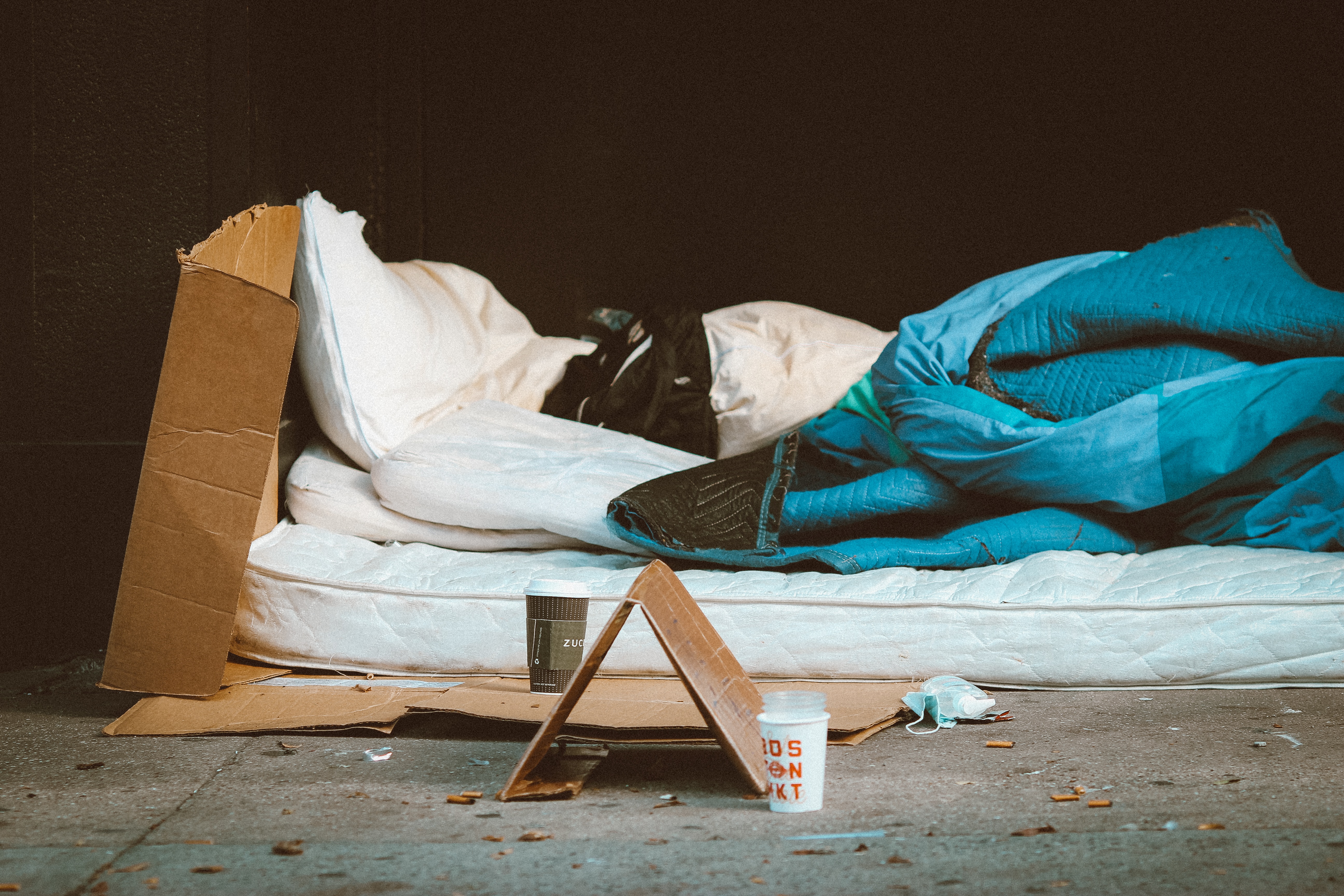
    Photo by Jon Tyson on Unsplash

    Homelessness is an issue that has been plaguing many countries around the world, and Ireland is no exception. Despite efforts by various organisations, the number of people experiencing homelessness in the country has continued to rise. In March 2023, a new report was released that shed light on the current state of homelessness in Ireland. TheCity will explore the key findings of the report, the factors contributing to the issue, and the measures being taken to address it. It will also delve into the lived experiences of those affected by homelessness and the impact it has on their lives.

    According to the latest report from the Department of Housing, the number of people accessing emergency accommodation in the country decreased slightly in February to 11,742 – a drop of 12 individuals compared to the previous month. However, it was a 23% increase over a year – from 9,492 in February 2022. 

    A total of 8,369 adults and 3,373 children were living in emergency accommodation during the week of 20 to 26 February. There were 1,599 families, of which 876 (55 per cent) were headed by single parents.

    The figure includes 5,057 Irish citizens, 1,862 European Economic Area / UK citizens and 1,450 non-EEA citizens. 

    “In Dublin, where over 70% of the homeless population reside, the number of people in emergency accommodation actually increased in February 2023,” says Caoimhe O’Connell, spokesperson for the Dublin Simon Community.

    She explains that the reason for this is a lack of supply. As people continue to fall into homelessness, fewer and fewer are exiting, causing a blockade in the emergency accommodation system.

    “People are spending longer than ever before stuck in emergency accommodation due to the chronic lack of social and affordable housing, which is robbing people of their futures as sustained periods in emergency accommodation negatively impact the physical and mental health,” she says.

    Kenny Eivers, a Secret Street Tours guide who spent a decade living on the streets of Dublin, is convinced that the statistics are inaccurate and that the number of homeless people is higher than reported.

    “The government is not doing much [to solve this problem],” he claims. “They’re building new hotels and offices, but they’re not building apartments that people can afford. You won’t be able to pay three and a half grand a month to rent a two-bedroom apartment. It’s crazy.

    “I think we need to look at Norway and Finland. These countries have a lot better [fight homelessness] strategy. Whereas over here, the rich get richer, and the poor get poorer.”

    Housing for All

    Despite Mr Eivers’ criticism, the Housing for All plan launched in September 2021 reveals that measures have been put in place to deal with the homelessness crisis. The plan aims to ensure that everyone in Ireland has access to a secure and affordable home and has set a target of delivering 300,000 new homes by 2030.

    The latest report shows that over 20,000 new social houses were built for the first three quarters of 2022. Furthermore, the building commenced on almost 21,000 between January and September last year.

    Eviction ban

    An eviction ban was in place during the winter emergency period from 30 October 2022 to 31 March 2023. It had been introduced as a temporary measure to provide relief for renters and homeless services. However, a bill aimed at extending this ban until 31 January 2024 was rejected by the Government.  

    One Man’s Journey to Overcoming Adversity

    Kenny Eivers told TheCity that he had been struggling with addiction for a long time.

    “I started off with alcohol at the age of 11,” he says. “I couldn’t stop, no matter what. If I took drugs, I just took more than everybody else. In my late teens, I found heroin. Eventually, when you’re on heroin, you either end up in homeless services or in prison.”

    Subsequently, the latter happened to him. However, he is sure that it saved his life.

    “If I hadn’t ended up in prison, I would have been dead. That’s how some of us survive. It’s crazy because you don’t really do drugs there. You just eat healthily and go to the gym.”

    There are people, though, who “did not make it to prison”. This is what Mr Eivers remembers about the worst day of his life.

    “It happened around 14 years ago. I was in a hostel. My friend and I bought heroin and used it. Then I woke up, and he didn’t. He overdosed.”

    However, serving time in prison had an unfortunate consequence. Upon his release, Mr Eivers found himself without a place to call home, effectively rendering him homeless.

    “I kept on overdosing all the time, purposely trying to kill myself, and then I kept on being found by paramedics. The last time it happened, I woke up in Beaumont Hospital. There was a guy in the bed next to me, who was dying of cancer. He had a breathing machine. I was left lying there for about six hours. Basically, I was listening to his last breaths, and something inside my head just clicked and said I couldn’t go on like this. It was my rock bottom. I decided there that I would change.”

    It was a long journey for Mr Eivers. He had to recover, put in a lot of effort to improve himself, and practice before he eventually became a guide. Currently, he provides tours, using his own past experiences of being homeless to bring attention to the issue.

    Root Causes of Homelessness

    There are various reasons why people have nowhere to live. According to the Dublin Region Homeless Executive, the most popular are:

    • Shortage of housing supply
    • Low income
    • Unemployment
    • Mental health problems
    • Addiction

    Words You Should Never Say

    “I’ve experienced when people asked me, ‘Why don’t you go out and steal?’” says Mr Eivers. “I’ve spent years robbing and stealing, and I don’t want to go back to prison again.”

    You don’t look homeless

    “I was begging, and a guy came up to me and went, ‘Why are you doing that? You have a pair of €250 runners [Nike Air Max].’ I said these runners were given to me. I didn’t avoid them, and they’re actually fake.”

    Why don’t you stay in a shelter?

    “Sometimes it’s safer on the streets than in a hostel. You can have ten people in a room. Then, you wake up, and your stuff is gone. You get robbed or even beaten up.”  

    Get a job

    “People think we’re all the same. But they don’t know that some people who are homeless were abused as kids and have childhood trauma, addiction, or mental health issues. You can’t just get a job if you have mental health issues. You need to work on yourself. It’s not straightforward.”

    How to Interact with People Experiencing Homelessness

    There are a lot of stereotypes about people affected by homelessness. However, Kenny Eivers says they can be the nicest people you’ve ever met. “Some are very good artists, musicians, painters, rappers,” he says. “You can offer to buy them coffee, tea or cigarettes. If you don’t have money, just be polite. You don’t even have to say words, only acknowledge and smile. A smile makes someone’s day.”