Author: The City’s Newshound

  • “Politics don’t belong in the sport”:  Fighters speak on the IABA’s ‘withdraw if you draw Russia or Belarus’ Policy  

    “Politics don’t belong in the sport”:  Fighters speak on the IABA’s ‘withdraw if you draw Russia or Belarus’ Policy  

    by Diana Lazar

    The Irish boxers going to the European Under-22 Championship were asked to sign a contract by the sport’s governing body stating that they would withdraw from a fight if they drew a Russian or Belarusian opponent. 

    The Irish Athletic Boxing Association (IABA) got this directive from the Irish government. They declined to comment but a representative said, “The IABA’s decision is in recognition of the fact that Ireland is a signatory to four successive Collective Statements on Russia’s war on Ukraine and international sport.”  

    Kian Hedderman was the first boxer to have to forfeit his fight on the opening day of the championship in Budva, Montenegro due to the policy.  

    “I was devastated to be honest. I felt like all my hard training and sacrifices just went towards nothing. It’s a personal dream to box in the Europeans even with taking time off work. If you’re not working, you’re not getting paid, so it was a loss all around, especially coming up to Christmas,” Hedderman said.   

    He stayed at the championship to show support despite his forced withdrawal.  

    “Going home wouldn’t make it any better. As I was team captain, I felt like I had to be there to support the others and one of my good mates was still in the tournament. I know in my heart that I’ll be there again, and the coaches were great to me there. They would do anything they could for you,” he added.  

    Hedderman had the choice to stay in Ireland and do the Irish Elite Championship instead, but he chose to go to the European Championship knowing the risk of what could happen.   

    “I don’t think I’d ever turn down the choice to put the Ireland vest on. My coach was keener on me doing the Irish Elites because he believed that I was gonna win it out, but it was too hard for me to turn down the Europeans.  

    “I have no regrets. I believe everything happens for a reason. I got to see how it runs, how it works and what’s the level that it takes to bring back a medal. This will put fuel in the fire for 2024 as my mental has changed for the better now. I can’t wait to perform in the squared circle and win again,” he added.   

    Image: Unsplash

    Hedderman says that the new rules won’t stop him from pursuing his dreams. Players and coaches have accused the Irish government and IABA for bringing politics into the sport. 

    “Politics don’t belong in the sport. They don’t understand what us young boxers go through. Boxing was an escape for me, and it gave me a purpose. Decisions like this may end a career, but they don’t obviously see that. I’ll be back again and this time, even better and stronger,” he added.  

    Gavin Rafferty was the second Irish fighter who had to withdraw from the championship due to drawing a Belarusian opponent. 

    “I think it’s wrong. I think it’s a political situation that’s been brought into sport and I don’t think it’s right,” said Rafferty’s boxing coach, Philip Keogh.   

    “He’s a very good boxer. He’s been preparing for the last twelve weeks for the European Championships. It was a pity to see Gavin having to withdraw because he missed out on getting the medal. It would have been a lifelong memory to achieve a European medal in boxing,” added Keogh.   

    Rafferty’s boxing club risked sending him to the championship in the hopes that the circumstances would work out in their favour.   

    “We took the chance. We only found out Russia were going in the last few days, and we didn’t know if they were going to send a full team, so we just went with it. It wouldn’t have been right to pull out just a couple of days before. We hoped that they would’ve been knocked out of the tournament in the earlier rounds by other opponents,” added Keogh.  

    Image: Unsplash

    Evelyn Igharo was the third Irish boxer to withdraw after she had already claimed the European bronze medal in the championship, which meant she could not continue competing for the silver.  

    “When I drew the Russian, I was heartbroken. All of us knew before we went over that there was a chance that we had to pull out. I thought it would be sooner on that I would meet my Russian,” Igharo said.   

    “We only brought three bronze medals back to Ireland, but I think it could have been a lot more because we weren’t really prepared for it. We were told we weren’t allowed to enter the Elites. I was the former Elite champion so now my title went to someone else because I couldn’t box and defend my title,” she added.  

    Igharo witnessed the implications that the rules had for Hedderman and her team.  

    “Kian had it really bad because he just went away for a little holiday. He came down and just got told that he wasn’t boxing, but they did arrange spars for him.  

    “I don’t think politics belong in sport because I don’t see how what a country is doing affects the athletes. We’re the only country to send out a team and spend money on transport and then at the end of the day still pull out. They shouldn’t send a team if they were going to do that, it doesn’t really make sense,” she added.  

    She is pessimistic about her future in the sport in Ireland.   

    “At the moment, I’m still going to be training but I don’t think there’s anything in Ireland for boxers. There are great fighters, but they’re not funding it properly. There isn’t any incentive to stay at the amateur game because the IABA isn’t really doing anything for the boxers,” she added.  
  • The F.R.I.E.N.D.S Experience: The One in Dublin 

    The F.R.I.E.N.D.S Experience: The One in Dublin 

    by Diana Lazar

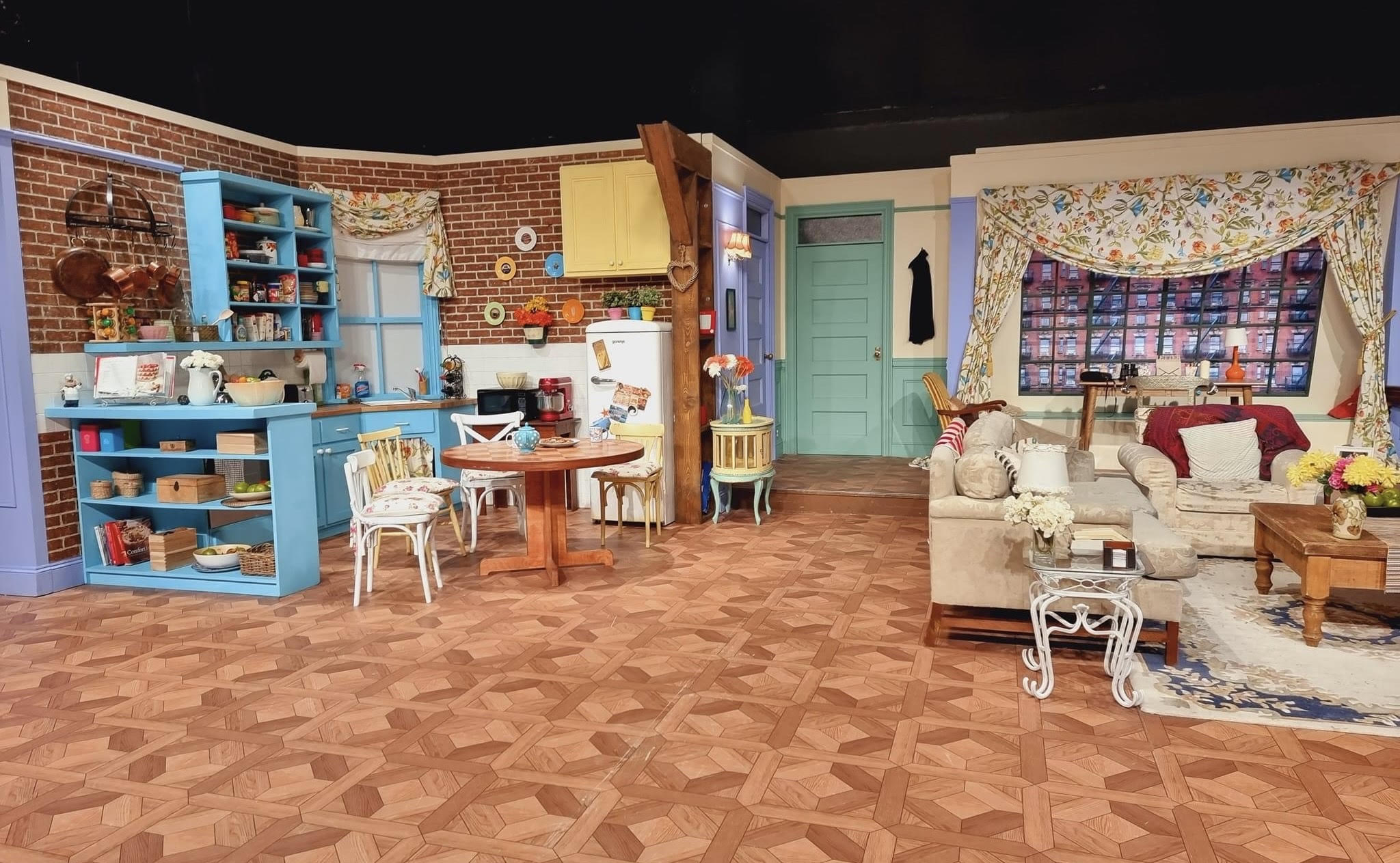
    The F.R.I.E.N.D.S Experience: The One in Dublin has come to our city at the Theatre of Light from October 24th, 2023, to February 25th, 2024. 

    by Diana Lazar
  • ‘It was amazing and infuriating’: Designing Mark Porter’s Life 

    ‘It was amazing and infuriating’: Designing Mark Porter’s Life 

    by Diana Lazar

    Award winning and one of Europe’s most renown editorial designers Mark Porter lived in Scotland until he was six years old, after which he moved and grew up in the south of England.  

    “I love Scotland and I might move back there one day, but I haven’t lived there since I was very small,” Porter said.  

    His father’s engineering background was one of the reasons Porter got interested in art and design.  

    “Before computers, my father used to do engineering drawings at home. He had a drawing board and technical pens. I started doing drawings using his beautiful pens,” Porter said. 

    A technical pen, also known as a Rapidograph pen. Source: Pexels 

    While at school, Porter worked as a labourer on the construction of a motorway near his home. 

    “We were a middle-class household, so I got to meet different people who I normally wouldn’t have met. It’s made me be grateful for being able to make a living doing what I do, knowing people have much tougher jobs than I do. 

    “I tried to keep it quiet, but it came out that I was going to Oxford, and I thought people might resent that, but everyone was lovely and told me that they’re grateful I’m not going to do what they do for the rest my life,’” Porter added. 

    Porter studied modern languages at Oxford University. He lived in Spain for a year as part of his course, teaching teenagers English.  

    “It was a very small town. It wasn’t glamorous. There were no other British people there and I had to speak Spanish all day, every day, so at that time I spoke fluently. I used to dream and think in Spanish. It was weird,” he said.  

    Porter got his first design job on a magazine about wine, selling advertising to Spanish winemakers.  

    “I hated being a salesman, but I was interested in design. It was a very small magazine, and it was pretty badly designed, so I redesigned it, showed it to the editors, and they decided that they liked it better than what they had. That was just enough to get me a job on a proper magazine,” he said. 

    His next job was for Expression which was a magazine for people with American Express cards.  

    “It was a professional setup with good art direction and good budgets to spend on photography and illustration. When I was there, I was conscious that everybody else had been to art college and I hadn’t, so I had a lot of imposter syndrome. I expected people to say, ‘you’re not a proper designer, get out of here. 

    “I learned an enormous amount there and went on to work on a lot of other magazines, which is how I really learned my trade,” Porter added. 

    Source: Pixabay

    Porter had a personal relationship with The Guardian before his redesign of it got named best designed newspaper in the world.  

    “My dad used to read The Guardian and we would do the crosswords together, so when I came to redesign it, it was quite emotional for me because I had the memories of growing up with my father as a Guardian reader,” he said.  

    When he was younger, Porter looked up to the idea of getting a D&AD (Design and Art Direction) Award.   

    “The awards looked like stubby pencils. My art director from Expression had a few of them in his office and I used to think ‘wow he’s really made it.’ When I was still doing The Guardian magazine, before I took over the whole newspaper, I won a D&AD award. A yellow pencil. That was the moment I thought ‘okay, I can really do this’ because that was the symbol to me of what a proper designer was. 

    “When I did The Guardian redesign, I won a black pencil (the most prestigious D&AD award; reserved for ground-breaking work), which was unusual because they only give out one or two a year. Then, I really thought I had made it. That was probably the most important project of my career because it’s what gave me the reputation and profile which enabled me to do other things,” he added.

    Mark Porter in the TuDublin recording studio. Source: Diana Lazar 

    The rise of digital media has changed his career in more than one way.   

    “I enjoy doing digital designs but it’s a very different kind of challenge. Now that you see everybody’s work all over the world, it’s hard to do something new. With almost everything you do; someone can find some project from Brazil or Vietnam that looks a bit like what you did,” Porter said. 

    Porter had a roller-coaster journey working with the late Tibor Kalman.  

    “It was amazing and infuriating. He was quite a temperamental and difficult guy, like a lot of geniuses are, so he drove me crazy. We had a layout in Colors that we ended up doing 17 different ways because he kept saying we could make it better and, in the end, he concluded that the first one I did was the best. 

    “He was full of brilliant ideas. He changed the ways I thought about design, the way that I judged my own work and the purpose of what I was doing,” he added. 

    Porter shared some of his experiences of working with journalists. 

    “It always amazes me how obsessed journalists are with credit. What they care most is about getting their name at the front of a newspaper. When I was working at The Guardian, most of the journalists cared about what the people at The Times thought about what they’re writing, not what the audience thought. Sometimes, I have to remind people that they’re working for the audience, not for themselves,” he said. 

    Porter had some advice for anyone starting out in the creative media industry. 

    “Be as adaptable as you can and go into things with an open mind. When I started off my career, it was all print and I thought it was never going to change. The other thing is to try to work with the best people that you can because that’s how I built my career. I was lucky as a junior designer to work with great creative directors. I didn’t get my design education in college, but I did in business,” he added.  

  • Sickle Cell Disease – Q&A with Lora Ruth Wogu, CEO of Sickle Cell and Thalassaemia Ireland (SCTI) 

    Sickle Cell Disease – Q&A with Lora Ruth Wogu, CEO of Sickle Cell and Thalassaemia Ireland (SCTI) 

    By Elio Bonelli

     
    Image sourced from Facebook with the permission of Lora Ruth Wogu 

    It’s wintertime and many conditions can be exacerbated by the cold and chilling drop in temperatures. One of those conditions is Sickle Cell Disease and thecity.ie had a chat with the founder and CEO of Sickle Cell and Thalassaemia Ireland (SCTI) Lora Ruth Wogu to find out more about the disease.

    SCTI is managed by families impacted by Sickle Cell and Thalassaemia, along with dedicated volunteers. Their mission is to promote awareness and offer support to individuals facing Sickle Cell and Thalassaemia challenges, as well as their loved ones, within Ireland. 

    What is Sickle Cell Disease? 

    “Sickle Cell Disease is a genetic condition that affects red blood cells. It is a condition caused by a mutation in the HBB gene, which provides instructions for making hemoglobin—a protein responsible for carrying oxygen in red blood cells. The mutated gene leads to the production of abnormal hemoglobin known as hemoglobin S (HbS). 

    The presence of such a gene leads to the red blood cells becoming solid and rigid which leads to clogging. The cells end up resembling a C shape or sickle, which is where the name sickle cell comes from.” 

    What are the symptoms of Sickle Cell Disease? 

    “The main symptoms of the condition are pain crises which are periods of intense pain, weakness and fatigue, mental delays, strokes and infections. The weakness and fatigue are caused by anemia which is when the number of red blood cells or levels of hemoglobin within them are much lower than usual. We would also see weakness of the elbow and joints due to the small areas in which the blood vessels are in.” 

    Does Sickle Cell Disease affect certain populations? 

    “Anyone can get it, not just certain demographics. The condition is more predominant amongst patients with African or Carribean backgrounds, but the disease is not exclusive to just that group.” 

    How is Sickle Cell Disease inherited? 

    “The disease can only be inherited if both parents have the genetic mutation. If only one parent has the gene, then the child will not get the disease.” 

    How many people are affected by Sickle Cell Disease in Ireland? 

    “Around 800 people in Ireland are affected by the condition and the vast majority of the patients are based in Dublin.” 

    What are the mortality rates of this condition? 

    “The mortality rates of Sickle Cell in high-income countries are significantly lower than those in lower-income countries. 

    For example, the rate is usually five years in Africa but in the likes of Ireland or the UK, the rate would be 45 – 55 years. I have seen people survive for nearly sixty years with the condition.” 

    How is Sickle Cell Disease treated? 

    “It is usually treated firstly with folic acid and penicillin, but we mostly treat the disease with blood transfusions and blood exchange. There is a big difference between blood transfusions and blood exchange.  

    Blood transfusions involves giving a patient blood to essentially “top up” the patient with good blood cells.  

    A blood exchange involves removing some of the patients’ blood and replacing it with a substitute.  

    Patients are also treated with Hydroxyurea which is a medication that helps to increase the production of fetal hemoglobin, which can reduce the frequency of pain crises and other complications. It is classified as a chemotherapy drug but is dosed differently to what you would see in a cancer patient.” 

    Are there any issues that Sickle Cell Ireland have faced? 

    “Yes. We have faced issues with trying to get supplies of blood. There is currently a shortage of blood for our patients and there is not enough pace in securing the supplies that are badly needed.  

    There are some children with SCD in Crumlin Children’s hospital who have to stay there beyond the age limit of sixteen for treatment. Otherwise, there are not many treatment options available after they leave the hospital.” 

    What about the future? 

    “We hope to have our own designated centre as we have had none since we started in 2015. We would also love to see the introduction of gene therapy which was very recently approved in the UK. Gene therapy involves replacing a faulty HBB gene with a normal, functioning one.  

    The more treatment options that can become available means that there can be less of a strain on supplies of other treatments like blood transfusions.”  

  • The Roads to be Taken    

    The Roads to be Taken    

    A firsthand reflection of the Journalism Awards 2023 and what it means for me – By Elio Bonelli

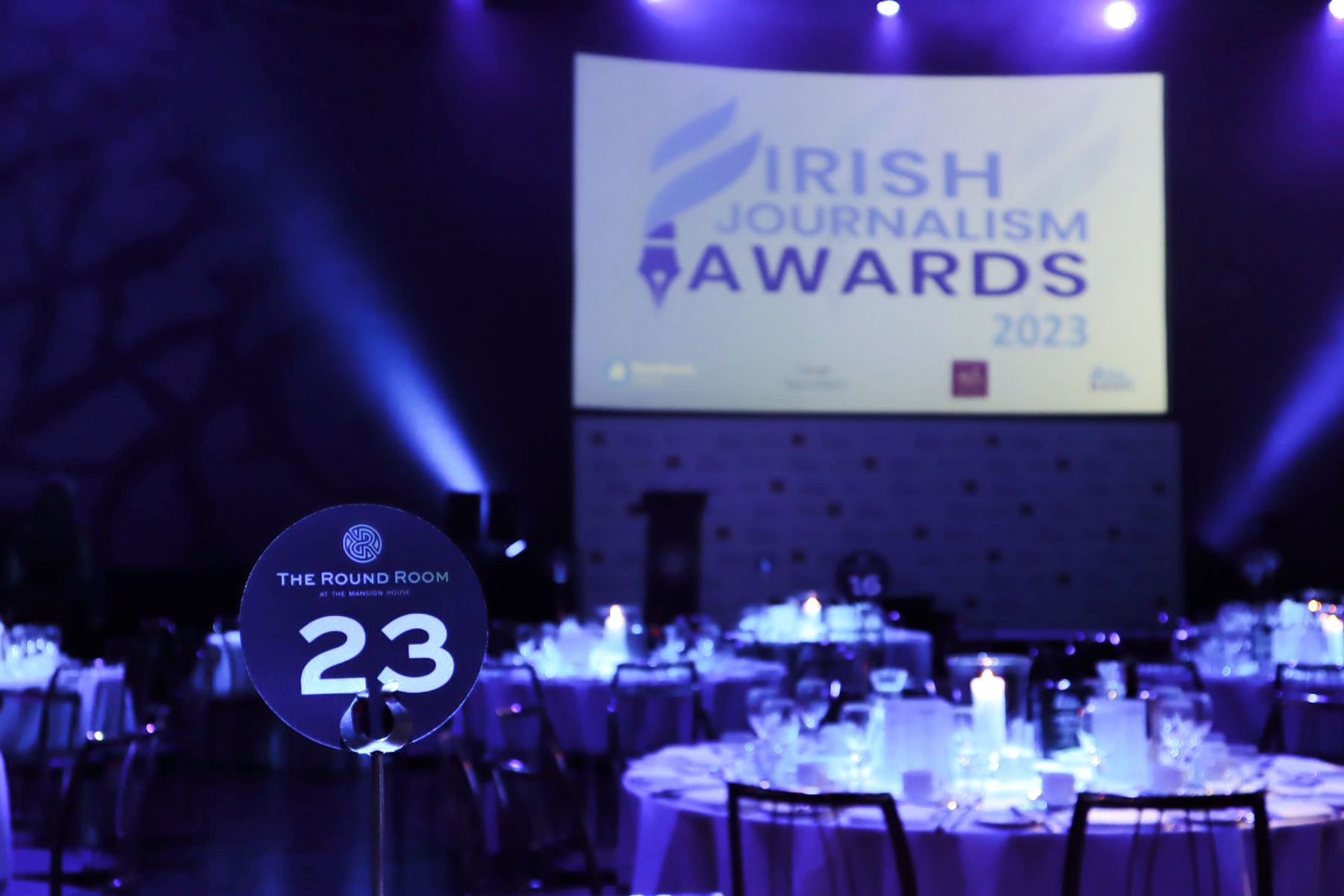
    My future is very much like this image. The background shows what I would love to achieve in my life and career. It appears clear and detailed. There is an end goal of sorts.  

    A well-paid job doing something I absolutely adore. Perhaps getting married, having kids and living a long and fruitful life with people I love. Not live life in extreme stress, as my previous twenty-two years have shown. 

    But just like the foreground of this picture, how I get to that point is extremely unclear and frighteningly uncertain.  

    I am afraid.  

    The journey looks hazy and confusing, but I know that at some point, things just might get better and more convincing. 

    This photo was taken at the Journalism Awards 2023 at the Mansion House in Dublin 2 on the 15th November. It was a celebration of the most influential and inspiring journalists from across the print sector in Ireland.  

    And just like anything I do in life, this image, and even my attendance at the event itself, was not planned or set up. It was “lastminute.com”.  I didn’t even expect to take this kind of picture, but it serves as a perfect analogy for how I feel about journalism and indeed life. 

    There were hundreds of people at this event. Guests, nominees and judges alike. All of us, joined in unison, celebrating the work and particular works of journalists this year. It was truly an occasion of togetherness and a time to connect, laugh and celebrate. I can proudly state “I was there!”. 

    I know it sounds clichéd, but the very fact that I got to meet extremely like-minded people and characters gives me a tiny bit more confidence in what I do.  

    The ethos of journalistic values that I have developed during my three and a half years in university so far – reinforced and reinvigorated by the very community that attracted me to this journalism degree in the first place.  

    The general atmosphere of that day was one of unity. No competition, no divergence of morals and practices, no hierarchy.  

    The only thing that separated us were the tables and the stage. One man stood above the rest of us. Our host, Matt Cooper. (Literally, as he was on the stage most of the time) 

    Amid all the noise and photo-taking throughout the event, I kept thinking to myself, where do I see myself next year, and what is my future? 

    Will I do a Masters? Will I go straight into work? What about an internship? Where should I do it in? Is Ireland the right place for me?

    So many and too many questions. Maybe fear, maybe excitement. I don’t know. 

    I definitely want to stay in journalism. I just want to find something that is profitable for me and to do something that I love. I was talking to a photographer before the awards were handed out. He said that there are simply no jobs for photojournalism. Partly because of social media, but also because media companies don’t want to spend a lot of money, so they use old stock photos as well.  

    What a pity, because photojournalism is definitely something that I want to do in the future. The photographer said that commercial photography is easier and better money because there are more opportunities available. Great. I’ll think about that once I graduate. 

    What about remote work from abroad? That’s what Carl Kinsella of The Journal does. He’s doing a Masters in Amsterdam and works remotely part-time, two days a week. It works for him, maybe it could work for me, you never know. 

    “So much of journalism now, is tangled up in the tech world. I think that so much of journalism in the future will become tangled up with social media,” he said. 

    There’s an idea for opportunities. 

    Not at the event, but for whom I spoke to, over-the-phone after the ceremony, was Tom Cheshire from the Data and Forensics team at Sky News. 

    He said that “misinformation and censorship is an opportunity for journalists to establish reputability for both them and their organisations. What I mean is, that the amount of false information we see online gives us and future journalists an opportunity to really work hard and get to the truth of things. By doing the hard work, we gain reputation and most importantly, trust.” 

    The work of factual reporting and investigation has never been more important. It matters. It makes a difference. There is an opportunity to become something bigger.  

    Journalism will make a huge difference to people’s lives in the future, and I want to be there for that. 

    How I get there remains like the first image. The roads and opportunities are there. You just need to find your way through the mist and believe that the journey you are on, will yield incredible results.  

    Let’s take this one step at a time. 

  • Irish Palestinian woman tells of daily fears as she awaits news from loved ones in Gaza  

    Palestinians in Ireland have described their fear as they sit and wait by the phone for daily updates from their families in Gaza.  Since the Hamas attack on October 7th, the Israeli army has launched a siege on Palestinian grounds. 

    Palestinian officials said 10,569 people have now been killed in Gaza – 40% of them children.  

    United Nations Secretary-General Antonio Guterres said last week that the number of civilians killed on the Gaza strip shows that there is something “clearly wrong” with Israel’s military operations against Palestinian militants.  

    Since the Hamas attack – which took place on October 7th and saw1,400 people killed and 240 hostages taken – Israel has vowed to wipe out Hamas, which rules the Gaza Strip.  

    The strip, which is home to 2.3 million people, has been struck from air and ground invasion by Israeli militants.  


    ← Back

    Thank you for your response. ✨

    Miriam Mofeed, 37, was born in Ireland but returned to Palestine’s West Bank when she was three years of age.  

    She lived with her family in Gaza for over 20 years before returning to Dublin with her husband four years ago.  

    Mofeed has friends and family living in Gaza right now and she tries to contact them on an hourly basis.  

    “Whenever we hear anything in the news I call my family. Sometimes I can get in touch with them and sometimes I can’t. I just have to wait,” said Mofeed.   

    Miriam Mofeed pictured in happier times

    Mofeed has already lost 16 family members. 

    She describes the waiting time as “horrific” as she tries to connect with her two brothers.  

    Her younger brother, along with many Palestinians,has evacuated to a resort in the South and is now sleeping in his car as “this place is not prepared for all the people who have evacuated here,.” said Mofeed.  

    She can only contact him every two days or so, as the resort is often without electricity or network coverage.  

    Mofeed’s older brother, Dr Ahmed El-Molkhallalati is currently working as a plastic surgeon in a hospital in Gaza.  

    He was working in St. Thomas Hospital in London but moved in February this year as he is the only surgeon within his speciality in Gaza and wanted to go and help people there. 

    As a result of the war, he has been working excruciatingly long shifts at Al-Shifa hospital often reaching 16 or more hours on his feet in one night.  

    “They moved four times in one night,” said Mofeed.  

    Dr Ahmed El-Molkhallalati pictured in happier times

    “The building beside them was bombed so they moved because it’s very likely when one building is bombed that the houses around them will be bombed too.” 

    After losing their home, Ahmed and his family, including his pregnant wife and three daughters, took shelter in his office at work. 

    “It’s a sad thing too to think that our family houses are no longer standing. I know this is silly because we are talking about a matter of life or death but it is sad,” she added.  

    On occasions when Mofeed cannot get in contact with her family in Palestine, the only thing to do is wait until the morning breaks when lists with names of those who have lost their lives are published. 

    She says the hardest part of her day is the night. 

    “I spent most of my life in Gaza. I have friends there, and neighbours there so I am always worried when there is anything in the news about attacks or bombings in the area. 

    “In Palestine you know everybody by their four names – their first name, grandfather’s name, father’s name and your family, so I’m going through these lists in the morning of 300 people recognising all these names of friends and neighbours that have died. I grew up with some of them, went to school with them and I’m seeing them listed here as dead, but it is not another one of my family members. 

    “I’m happy that my family are still alive, but very sad for my people. They all deserve a good life,” she added.  
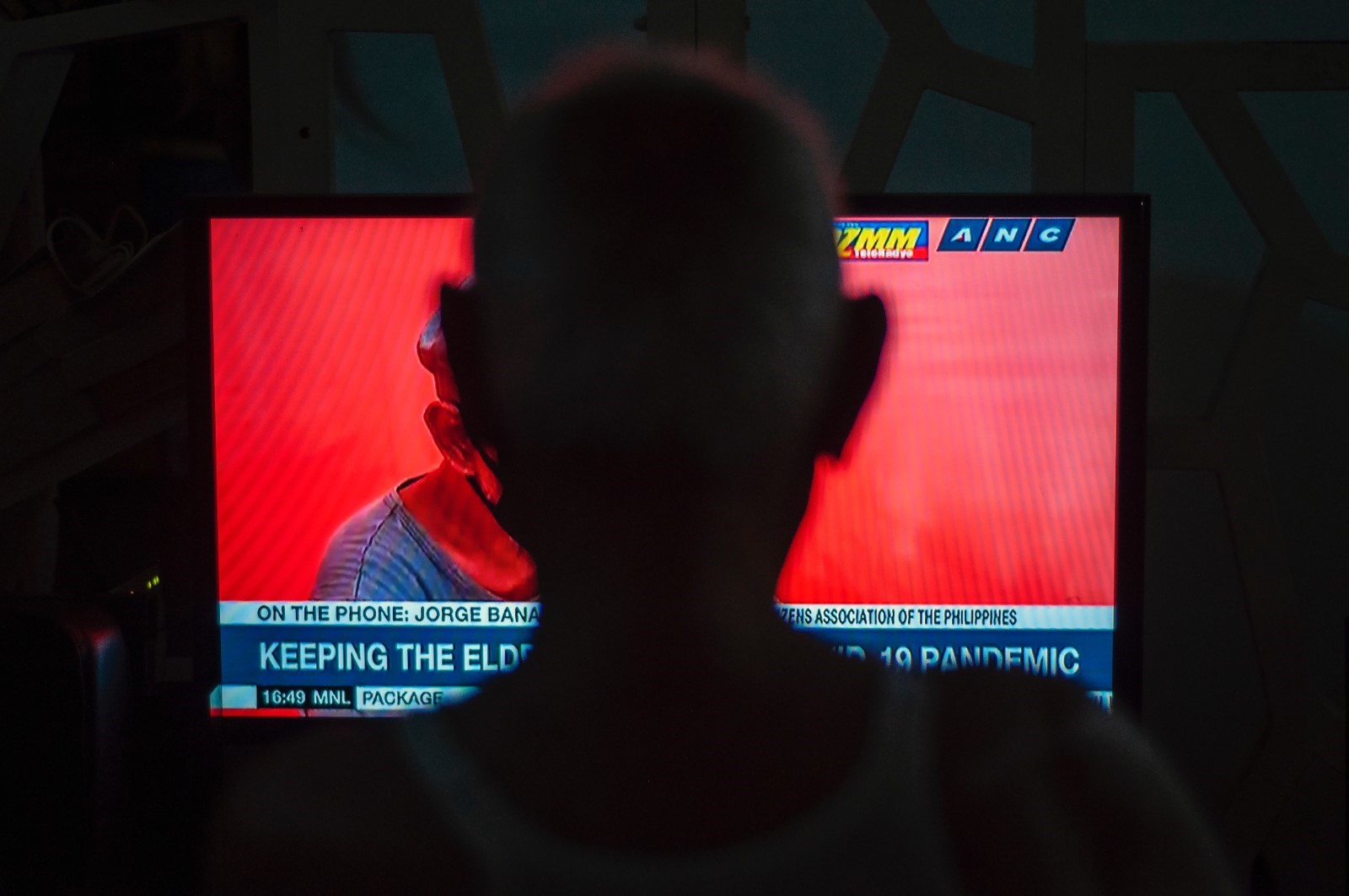
    Mofeed told the city.ie that Dr Ahmed has been harder to contact in recent days and any contact that is made with him has been short and affected by low coverage. 

    During one of their latest conversations, Mofeed describes the background sounds as “harrowing.” 

    “He mentioned that the hospital is surrounded either by bombs or Israeli forces; he wasn’t certain but I could clearly hear continuous bombing in the background.”  

    “After dozens of tries, it seems he finally got a signal on his mobile. I just heard his voice, and then the call dropped. But at least I know he is still alive,” said Mofeed.  

    Ms Mofeed is trying as much as she can to refrain from watching news on their family TV in efforts to shield her two young children.  

    “I get them ready for school, I go to work, I go to the park on the weekends with my children to make my life feel a little normal for them.” 

    Ms Mofeed also said she feels the support from the people of Ireland in not “feeling alone.” 

    She urges people to attend any protests.  

  • Macnas Parade – Photo Collage

    By Elio Bonelli

    The Macnas Parade: Cnámha La Loba took place on the streets of Dublin for the first time since 2019 as part of this year’s Bram Stoker festival. 

    The festival, which is now in its tenth year, celebrates the life and work one of Ireland’s most beloved and iconic writers. 

    This festival was produced by Schweppe Curtis Nunn and brought to life by Dublin City Council. 

    One of the highlights of this festival was the Macnas Parade which drew in thousands of spectators despite the rainy weather. 

    The parade, which was directed by James Riordan, tells the story of La Loba, a wild wolf-woman, who wanders the world collecting bones and preserving that which is in danger of being lost to the world. 

    It is said that, as darkness falls, she prowls the streets along Lough Corrib, singing the bones – or “cnámha” in Irish – back to life by the light of the moon. 

    The parade started at 7pm in Moore Street, turned onto Henry Street and travelled up to Mary Street, then turned right onto Capel Street, then left onto Little Britain Street and left again to finish on Halston Street. The parade lasted just over an hour. 

  • Tech Companies Such as TikTok Keeping Tabs Open On Employees  

    Since the outbreak of Covid in Ireland in January 2020, hybrid work has become the norm for most office workers – the majority of whom spend their working week from home. However, returns to the office have introduced a new norm – being watched in the office.  

    Studies show that employers and employees have very different views about their productivity levels in a hybrid work environment, and tech companies are worried about it.  

    Microsoft workplace survey (2022) said the majority of employees (87%) reported that they are productive at work.  At the same time, 85% of leaders say that the shift to hybrid work has made it challenging to have confidence that employees are being productive. 

    Tech giants TikTok, Google and Facebook are leading the charge in bringing employees back to the office.  

    However, this return to in-person work is accompanied by a growing concern – the use of employee surveillance tools, which privacy advocates and workers are raising eyebrows over. 

    Office perks and incentives such as coffee docks, nap rooms and massage chairs it seems are no longer enough to entice employees into the office, instead, they’re now being watched. 

    TikTok’s watching means by MyRTO, a surveillance tool that collects data on employees’ computer activities and office visits in the United States, has led to heated debates within the company about the fine line between productivity enhancement and intrusive surveillance.  

    The tracker app was introduced into TikTok’s Dublin office two weeks ago and is following the office attendance of all employees through a swipe card system.  

    One Dublin-based TikTok employee said while the tools are in place, not everyone at the office is following the new regime.  

    “The department that works beside me is just not coming in anymore. The team is made up of people from all over the country, and driving up and down every day or even week is just getting too much for them.” 

    Employees at the tech giant are also frustrated at the lack of in-person work that’s completed when in the office, as the majority of meetings and discussions are done online despite office attendance. 

    “I know some people are fed up and refusing to come in because even when they do, most of their calls and meetings are done on Zoom with our international offices, so there’s really no point,” said the employee.  

    In comparison to surveillance levels in the United States, EU laws on data privacy are quite stringent – there are limits to what tech companies can track at the minute.  

    Dublin’s TikTok office is currently watching when employees enter the building to ensure their attendance on ‘office days’. 

    In the US, MyRTO is collecting data on employees’ computer activities, tracking their movements within the office, and even analysing their interactions with colleagues.  

    Privacy advocates and workers’ rights groups are pushing back against this increased surveillance trend. They argue thatwhile the return to the office may be necessary for some task, employers must respect the boundaries of privacy.  

    In a statement released earlier this month, Sarah Johnson, a spokesperson for the Digital Privacy Alliance (DPA),  said :“Wwe understand the need for employers to ensure productivity and security, but employees’ rights to privacy must not be compromised. We need clear and transparent guidelines on how surveillance tools are used and the data collected.” 

    In response to the concerns, tech companies are starting to address the issue. TikTok has announced plans to establish clear guidelines on the use of MyRTO with a focus on data protection and employee privacy.  

    The rise of surveillance technologies raises questions about the future of office work and the balance between efficiency and individual liberties. 

    “I imagine our attendance will be noted in performance reviews but I don’t think people will make more of an effort to come to work. The WFH culture has proved sufficient since the pandemic and for a lot of people, time saved commuting means more time for family or other important personal endevours.” the TikTok employee added.  

    Globally, the hybrid work lifestyle is becoming more common emerging and many European countries have introduced a flexible lifestyle.  

    In the Netherlands, workers can legally request flexible working and the UK is set to introduce the same law by the end of 2024.  

    In Ireland, the Work Life and Miscellaneous Provisions Act 2023 successfully completed its passage through the Oireachtas on 29 of March, and it was signed into law on the 4th of April.  There are still some steps to be taken before it comes into effect, but it will allow employees with more than six months of service to request remote working. 

  • The Future of TV News  

    The Future of TV News  

    By Aoife Daly 

    Despite people’s speculation that print journalism is dying, TV journalism seems to be largely left out from these discussions. The reality is that traditional TV news may be a dying medium. According to Ofcom’s annual media report in the UK, only 54% of people aged between 16-24 watch any live television at all. As streaming has captured the attention of young people, focus has shifted away from organisations like RTÉ.  

    State-sponsored media in particular is in a very delicate position, as it relies directly on the public’s willingness to engage with and fund its productions. In an online poll of 72 young people under the age of 30, 83% responded that they would not be happy to pay for a TV license in the future. 

    “I feel like the general public are just told to pay it and they’re very vague about where the money is going and what it’s being used for” 

    Anonymous

    Many young people today are informed on current affairs news through sites like Instagram, TikTok, and Twitter/X. In a 2022 study in the US by Statista, 50% of Gen Z respondents reported that they primarily used social media for their news information. Whilst these sites can provide crucial first-person perspectives on current issues, they are also rife with misinformation.  

    An article from Science from 2018 revealed that tweets containing false or misleading information were 70% more likely to spread than tweets that were entirely truthful. The need for fact-checkers has only become more urgent with recent developments in AI technology, which has been used to create both false journalistic articles and images.  

    In February of 2023, one Twitter user posted what were supposedly pictures of French rioters and police hugging. However, this image was revealed to be AI generated, as one of the people in the pictures had six fingers.  

    In July, Redditors trolled the gaming news site Zleague, after finding out that many discussion boards on the site were being copied nearly word for word. Users began writing nonsensical posts about their new favourite character “Glorbo,” who did not exist. Soon after, articles about the character appeared on Zleague. 

    Photo source: Unsplash 

    It is clear to see from these examples that there is a need for reliable news media. While it might be easy to dismiss online sources entirely, there is a reason young people are drawn to them. 

    Legacy media is generally understood to be a more reliable source, but these outlets are not without their faults. RTÉ in particular has been heavily criticised for their recent scandal, in which it was revealed that funds within the organisation, largely made up of taxpayer money, had been misused. When compared to online media, which is free to use and easier to access, many young people find the decision an easy one to make. 

    “I believe that people have the right to go online and search for news sources and outlets that provide what they perceive to be a genuine perspective of current affairs and world events” 

    Daragh Birmingham

    Daragh Birmingham, a second year Maynooth student, said “I feel the recent RTÉ scandal has only served to reaffirm my position that traditional television is unreliable, untrustworthy and at risk of becoming severely dated. 

    “As a state-monitored entity, we often look to RTÉ to represent the best of Irish media, but in recent times it has only reflected poorly upon the sorry state of affairs that we’ve come to expect in this country, culminating in this recent scandal,” he continued. 

    Julianna Cooper, a fourth-year student at TU Dublin, also said that RTÉ’s recent scandal contributed to her opinion on the TV license. “Pretty much every household has a TV, but every household is paying the same rate… it’s a bit ridiculous that it’s a flat rate, in my opinion,” she said. 

    She continued that she saw the license as “fraudulent,” particularly due to RTÉ’s misuse of funds.  

    Photo source: Unsplash 

    TU Dublin Student Union’s president Brian Jordan said “I could definitely understand why many other people would not be happy to pay for a TV licence at this point in time. Especially given the current cost of living crisis, and failure of the government to acknowledge it.” 

    “I definitely think we should always have [state sponsored media],” he continued. “I’m a big fan of the government and actually think they should be more involved,” he said.  

    “I think if you make everything completely privatised it’s a disaster… I know in America, it’s way worse, you’ll have [for example], a very republican-centric news channel, and that’s completely biased,” said Jordan. 

    Zara Kane, a recent Maynooth graduate, said that despite getting most of her information from the RTÉ six o’clock news, she would not want to pay for a TV license herself in the future, as she “never really [watches] live TV.” 

    “I feel that on the internet news is often very biased, and not always fact checked, so it’s not as reliable,” she continued.  

    Photo source: Unsplash 

    However, not everyone sees traditional media as such a reliable source of information. Birmingham said that RTÉ “has arguably become just as mistrusted as any of these so called ‘fake news’ outlets online… I believe that people have the right to go online and search for news sources and outlets that provide what they perceive to be a genuine perspective of current affairs and world events.” 

    Cooper also added that she feels RTÉ is very privatised, explaining that this contributed to her mistrust of the organisation. 

    Jordan said he would like more information explaining what exactly is funded by TV licenses. “They fail to argue why we have to pay for it in terms of, you know, what is it funding? … Is it just another hidden tax that people are forced to pay?” 

    This sentiment was echoed by an anonymous fourth year student at TU Dublin, who said that she, like the rest of this article’s interviewees, would be reluctant to pay for a TV license in the future.  

    “I guess it’s because I never really understood it,” she said. “I feel like the general public are just told to pay it and they’re very vague about where the money is going and what it’s being used for.” 

    “It didn’t help seeing the presenter’s earnings from RTÉ every year either, with them making a killing while the majority of people are going through a housing or cost of living crisis,” she continued. 

    “The more transparency, the more that people come to trust it,” Jordan said, in a sentiment that was echoed by many of the other interviewees. In the end, it seems that while young people may trust the content from traditional media to be more trustworthy than what they would find online, they are still sceptical of the organisations themselves. Most seemed to agree that an increased emphasis on transparency would help them to trust traditional media more. RTÉ did not respond to requests for a comment. 

  • Worry spreads among Irish XL bulldog owners – will the UK’s ban on the breed cross overseas? 

    By Taylor Mooney 

    Irish XL bully dog owners express concern over the UK’s ban on the breed following Rishi Sunak’s announcement that the dogs are “a danger to the community.” 

    Image: Megan Pryor

    Concern is growing across Ireland and the UK as the Prime Minister calls for the breed to be banned.  

    The Southeast Inner-City Councillor Mannix Flynn expressed his concerns to the Chief Executive at a Dublin Council meeting earlier this week.  

    He asked the Chief Executive to initiate a review of how many XL Bully dogs are now in the Dublin City Council-administrated areas.  

    “Having clear tabs on the number of XL Bully dogs and owners in an area is one way to manage the breed if people are worried about the threat they pose to a community,” said XL Bully dog owner Megan Pryor.  

    Since Sunak’s announcement, Pryor has taken to the social media platform TikTok to showcase her loving “best friend,” Torvi, a 9-month-old XL Bully, who she fears she might lose in future, as no clear information has been given to XL Bully owners since the ban was first announced.  

    “We haven’t got any information from the government about their plans and what is going to happen to us families with XL Bully dogs.  

    “Hopefully, it will be a case that clear regulations will be put into place – including a registry on who owns these dogs so that the government and our communities can know these breeds are owned and existing.” she said.  

    Chief Executive of Dublin City Council spoke for Dublin saying; “There is currently no database in Dublin to provide figures in any given Local Authority Area other than the register of dogs held at the municipal shelters. Microchips are held by 4 separate organisations making it very difficult to get an overall picture of breeds in any particular area.”  

    Pryor explained how the temperament of these dogs is something every owner should get used to, and that owners should be held responsible for their dogs. 

    “It is the owner’s responsibility to know their dogs and how to properly train them. I’m starting to muzzle-train Torvi and I’ll have her wear a muzzle on walks outside. It would be irresponsible of me if I didn’t.”  

    At the Council Meeting, Councillor Mannix Flynn also called for the Chief Executive to outline the potentially dangerous threats of this breed on a community. 

    “The XL Bully is an extremely powerful dog with a perceived tendency towards aggression and for that reason is defined as a Ban Dog under the S.I. No. 123/1991 – Control of Dogs Regulations.” answered the Chief Executive.  

    Image: Megan Pryor

    The UK’s ban on the breed came after several vicious attacks, including one incident where a man was mauled to death in Walsall last month. Sunak said he “shared the nations horror” and that he was working with experts to define the breed.  

    “My son is 8 months old, and Torvi is 9 months old, and they’re besotted by each other,” said Pryor.  

    “[Torvi] is great with my son and will always cuddle up to him when he’s crying or try to get into his bouncer with him, they’re great,” she added.  

    The ban will be implemented in the UK at the end of the year and will see all domestic and criminal gang-related American XL bully dog owners affected.