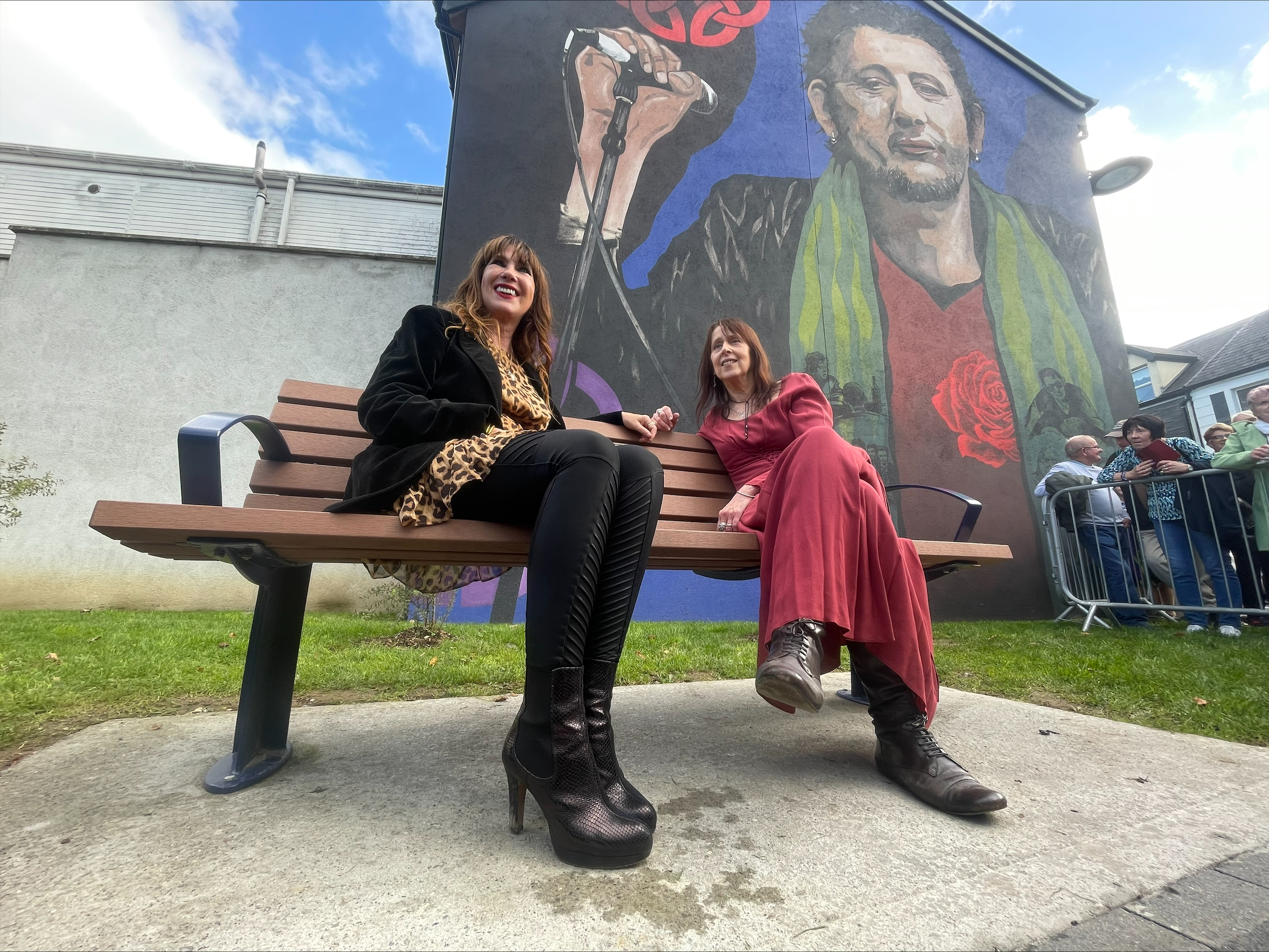
The wait is finally over for locals in the town of Nenagh, Co Tipperary, many of whom have watched and waited for the mural of the late Shane MacGowan to be completed.
The official launch ceremony took place at the gable end of a building at Emmet Place just off Mitchell Street.
Shane’s wife, Victoria Mary Clark and his sister, Siobhan arrived marking the launch with speeches about the famous song writer. The painting of the mural was proposed by members of Tipperary County Council and for artist, Neil O’Dwyer it was the opportunity of a lifetime. We spent the day at the mural event in the “Premier County” and spoke with some familiar faces.
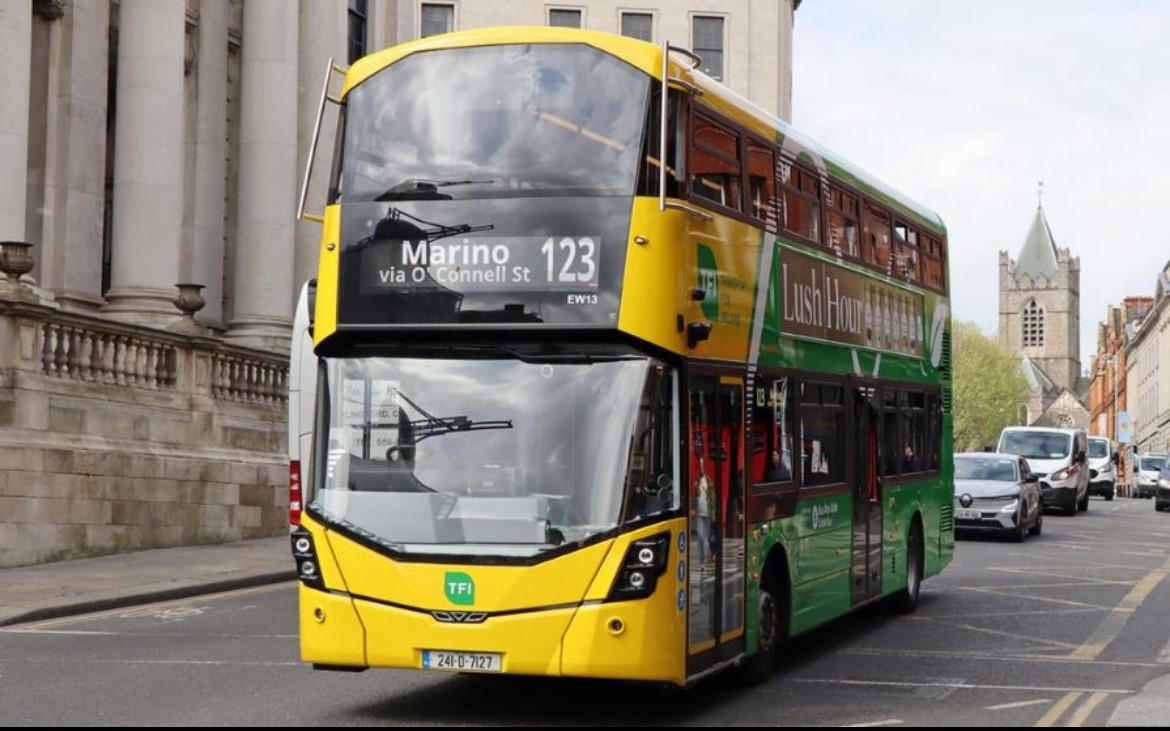
A recent report by the Comptroller and Auditor General found that the Department of Social Protection paid a staggering €92.6 million to cover the costs of free travel.
Via dublinbusnews on Instagram
The report found that there was over one million people recorded as having been entitled to free travel at the end of the last year, an increase of 39% over the last decade.
Around the country one in five free travel cards that are being used have expired but are being accepted by public transport, due to an issue with replacement cards being sent out. Since June 1st 17% of the cards around the country are said to be expired.
The C&AG report revealed that there a system that was established to show how many free travel passengers have been reported by the operators that happened from unannounced inspections.
In terms of spot checks being done within the system to make sure everything is up to standards, since 2021 there hasn’t been a single spot check carried with these cards and in the last eight years only seven spot checks have been conducted.
The last two spot checks were done in 2021 by an anonymous report, two routes were ceased, and the operator was removed from the scheme.
In 2023, 73% of the scheme expenditure – or 67.5 million – was paid to the National Transport Authority and Bus Eireann. This was based on estimated usage of transport by free travel card holders.
Less than 5% of the total scheme expenditure of 92.6 million paid in 2023 was based on actual usage data, according to the report.
The Department of Social Protection got a recommendation from the C&AG which they told them to work with people who use free travel scheme operators.
The recommendation was to make a payment system for these operators based on journeys undertaken by people with public services card holders that have free travel cards for people over the age of 65.
The report conducted by the Comptroller and Auditor General says that the data is outdated in as there hasn’t been a spot check since 2017. Most of the data used in this report is an estimate of the amount of usage of free travel cards. A draft report from the Department of Social Protection on an alternative funding model for free travel operators will hopefully be available before the end of the coming year.
The City.ie spoke to Francis Stynes who is an elderly person who benefits from using the free travel cards on a weekly basis.
“Over the course of the last few years I’m not surprised to see that much money being paid by the social protection with people who use free travel passes. “he said.
Francis says that it’s shocking that so few spot checks have been conducted since 2021. “There should be a minimum of 5 a year when it comes to these situations,” he said.
Francis believes that more cooperation is needed between the Department of Social Protection and the travel operators to ensure more accurate data is available.
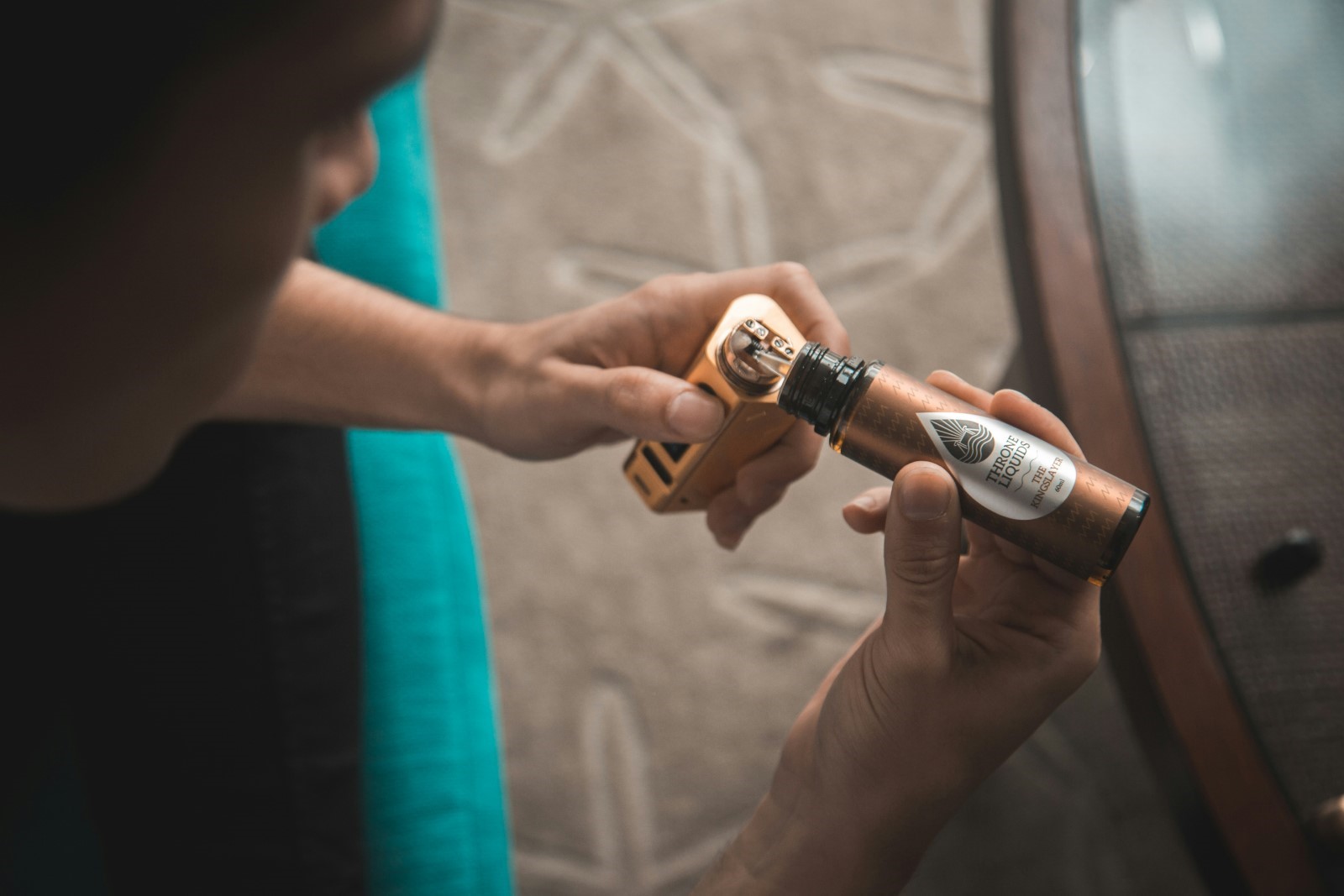
The Government announced during Budget 2025 that e-cigarettes will increase in purchasing due to new taxes being introduced.
The tax will apply to all e-liquids at a rate of 50c per ml of e-liquid. A typical disposable vape contains 2ml of e-liquid and costs in the region of €8.
This new tax will bring the price of such a product to €9.23 including VAT.
The tax will come into effect in the middle of next year.
It is not a surprise that vapes are seeing this new tax being implemented as it can be seen as a way to discourage young people in Ireland from using vapes.
Minister for Finance Jack Chambers told the Dáil he was introducing the tax “on public health grounds as there has been a significant rise in their use”.
The Government believes the tax on vapes is a step in the right direction.
The Government is also working on legislation to ban the sale of disposable vapes on environmental and public health grounds.
If that is achieved there could potentially be a big decline in the smoking industry and shopkeepers that primarily sell vapes could be at risk.
The City.ie was able to sit down with Mohammed, a store owner at Moore Street who sells various items in his store like Prime, keychains, and vapes.
“See my friend, I don’t mind the new tax coming to my store, I will still get my customers why? Because the vapes sell very well, I just do not want the ban of disposable vapes many people come and buy it here and if it is no longer available, I will lose business”.
Vape/Cigarette store on Moore Street, Dublin Photo credit: Mene Agbofodoh
Occupational Therapist Adora Maxell spoke to the City.ie about some of the health risks associated with vaping amongst young people.
“One of the most common effects of vapes is that they are highly addictive due to their nicotine content and with the youth there are multiple flavourings that create this feel of a different taste with each vape”.
“During my internship, I saw cases of EVALI (E-cigarettes Vaping-Associated Lung Injury). This condition has been linked to vaping especially vapes that contain THC, it can cause serious lung damage, with symptoms like difficulty breathing, coughing, chest pain, and even hospitalization or and it more severe cases in death fortunately I have not experience to that level.
“The chemicals within vapes are possibly the worst things about them, they contain very harsh substances like formaldehyde, acrolein, and diacetyl which are damaging to the body when inhaled. Some of the substances can be responsible for what is commonly known as ‘popcorn lungs’ which is another way of saying bronchiolitis,” said Maxell.
The City.ie also took to the streets of Dublin to ask the general public how they felt about the new taxes being put in place on the vapes.
“Honestly, I think it is a good incentive going forward, it helps younger and older people alike the question of whether they should be spending their money on vapes right now or use it for something beneficial for themselves”. said Lee Mullen from O’Connell Street.
Jane,19 from Cork, also spoke to The City.ie on the issues of vapes.
“As a young person who buys the occasional vape on a night out or whenever I need to calm myself down it feels unfair going forward, I’ll have to spend even more to do now”.
“I feel the Government should focus more on helping younger people in other areas like education and housing instead of stuff like this honestly, at least the tax isn’t coming into effect until next year, so I’ll probably stock up or something I don’t know”.
Last weekend, Bayer Leverkusen took on newly promoted Holstein Kiel in the side’s first ever league meeting, in what was expected to be a strong win for the home side.
Leverkusen fan takes part in passionate pre-match anthem – Photo: Ethan McDonagh
Holstein are playing their first top division German soccer since before the second World War and were expected to be beaten heavily.
However, Holstein had other ideas and despite being two goals down after eight minutes, they fought back to earn a draw.
Die Werkself came flying out at the start of the game, with Nigerian international Victor Boniface opening the scoring after just four minutes by placing a low driven shot past the keeper, whose touch wasn’t enough to prevent it from going in.
Things got even better for Leverkusen manager Xabi Alonso’s team in the eighth minute, with winger Jonas Hoffmann doubling the advantage with an accurate strike into the bottom left corner – after Holstein failed to properly clear the ball from a Boniface effort on target.
It looked like the game was going to be out of sight for the weekend in the 26th minute, when Boniface put another shot past Timon Weiner in goal – only for his effort to be ruled out for offside by the Video Assistant Referee.
At this point, it seemed like it was only a matter of time before Leverkusen scored more and would secure an easy victory. However, the Holstein players managed to improve their defending and keep Leverkusen’s chances to a minimum.
Then, just before half-time, the away side had a rare venture into the champion’s half and managed to get a goal back, with Max Geschwill powering the ball home with his shoulder following an excellent corner delivery by Lewis Holtby.
The pattern of play that saw Leverkusen as the team holding possession of the ball continued into the second half, as the hosts tried everything to break down the compact defending from the visitors.
A major shock occurred in the 68th minute, when Armin Gigovic managed to break past the Leverkusen defenders into the box and was brought down for a penalty by Jeremie Frimpong, who mistimed his challenge.
Jann-Fiete Arp kept his composure from the resulting spot-kick and sent Lukas Hradecky the wrong way, to bring The Storks back on level terms.
The remaining 25 or so minutes of the match was spent with Leverkusen in possession of the ball outside of Kiel’s box, as they desperately tried to retake the lead.
Try as they might, they were unable to breach the compact defence and were only able to go close on few occasions.
The Holstein players used every trick in the book to see out the result, from feigning an injury, to keeping the ball in the corner of the pitch for the remainder of the game.
They rewarded their excellent travelling away fans who were loud all game, with just their second point of the season as they try to avoid immediate relegation back to the second tier of German football.
Holstein have now conceded 19 goals in just 6 matches and will need to improve their defensive record if they are to have any chance of surviving in the topflight of German football.
Leverkusen on the other hand, have had quite a mixed start to their defence of the Bundesliga title season – having taken just 11 points from the opening six games, with three wins, two draws and one defeat.
They have however, already won the German Super Cup against Stuttgart and are perfect in the Champions League, having won their opening two fixtures against Feyenoord and Milan.
The atmosphere at the game was exceptional, with both sets of fans doing German soccer justice and living up to being some of the most passionate sports fans from across the globe.
Here’s a short video of some footage to capture the experience
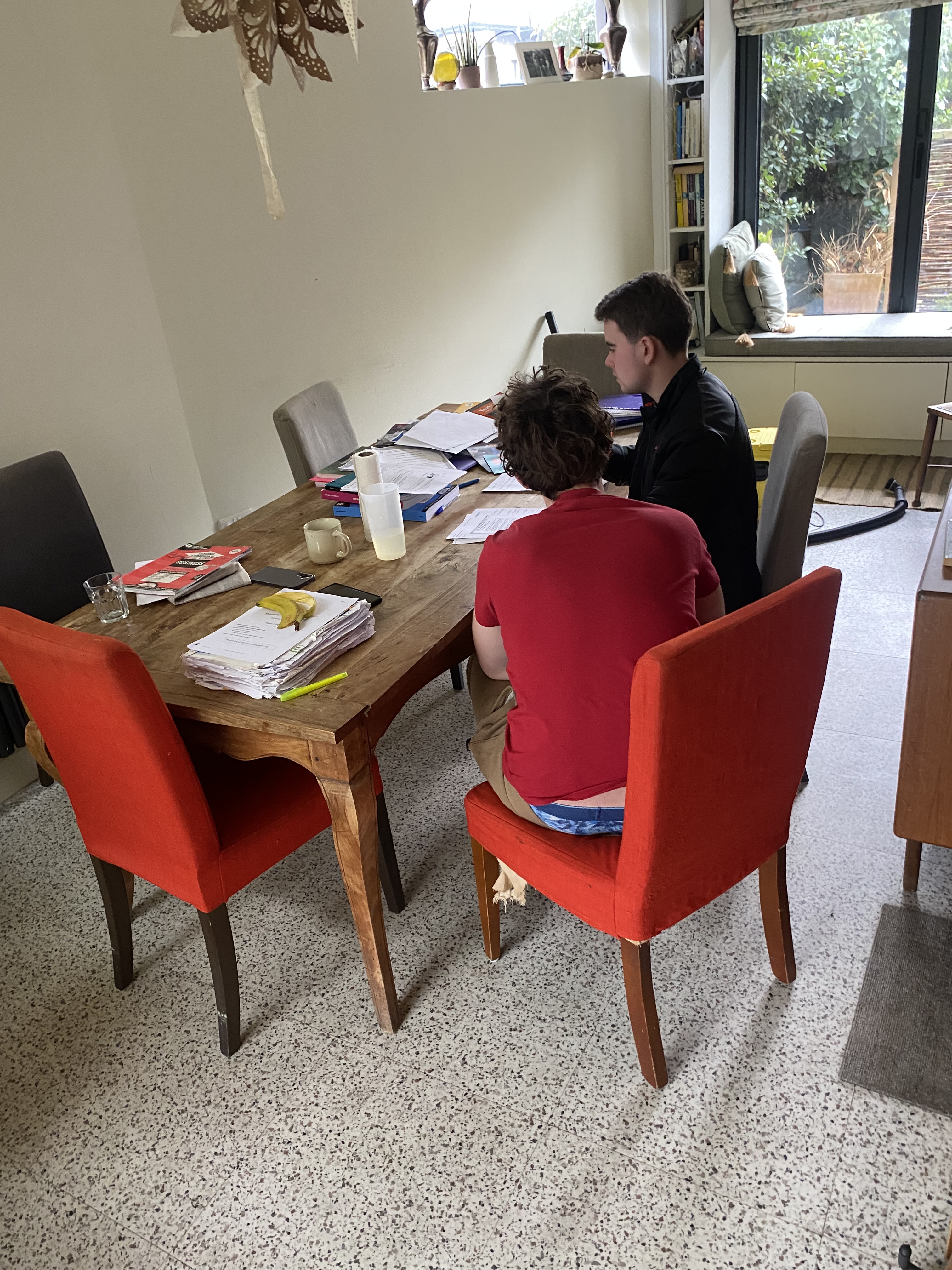
Today’s episode dives into a topic that is relevant to many people, but often goes under the radar—taking the Leaving Certificate outside of the traditional school setting.
Did you know that every year, around 5 to 10% of the 60,000 students sitting the Leaving Cert in Ireland are adult learners or external candidates? That means approximately 3,000 to 6,000 people are taking these important exams after leaving the conventional school system. Many do it through alternative pathways, like the Back to Education Initiative or Vocational Training Opportunities Scheme, but some, like our guest today, are navigating this journey independently.
Joining me is Séamus O’ Riordan, a 19-year-old who has decided to take on the Leaving Cert outside of school. We’ll be hearing about his motivations, the challenges he’s faced, and his unique perspective on preparing for such a significant exam without the traditional classroom structure.
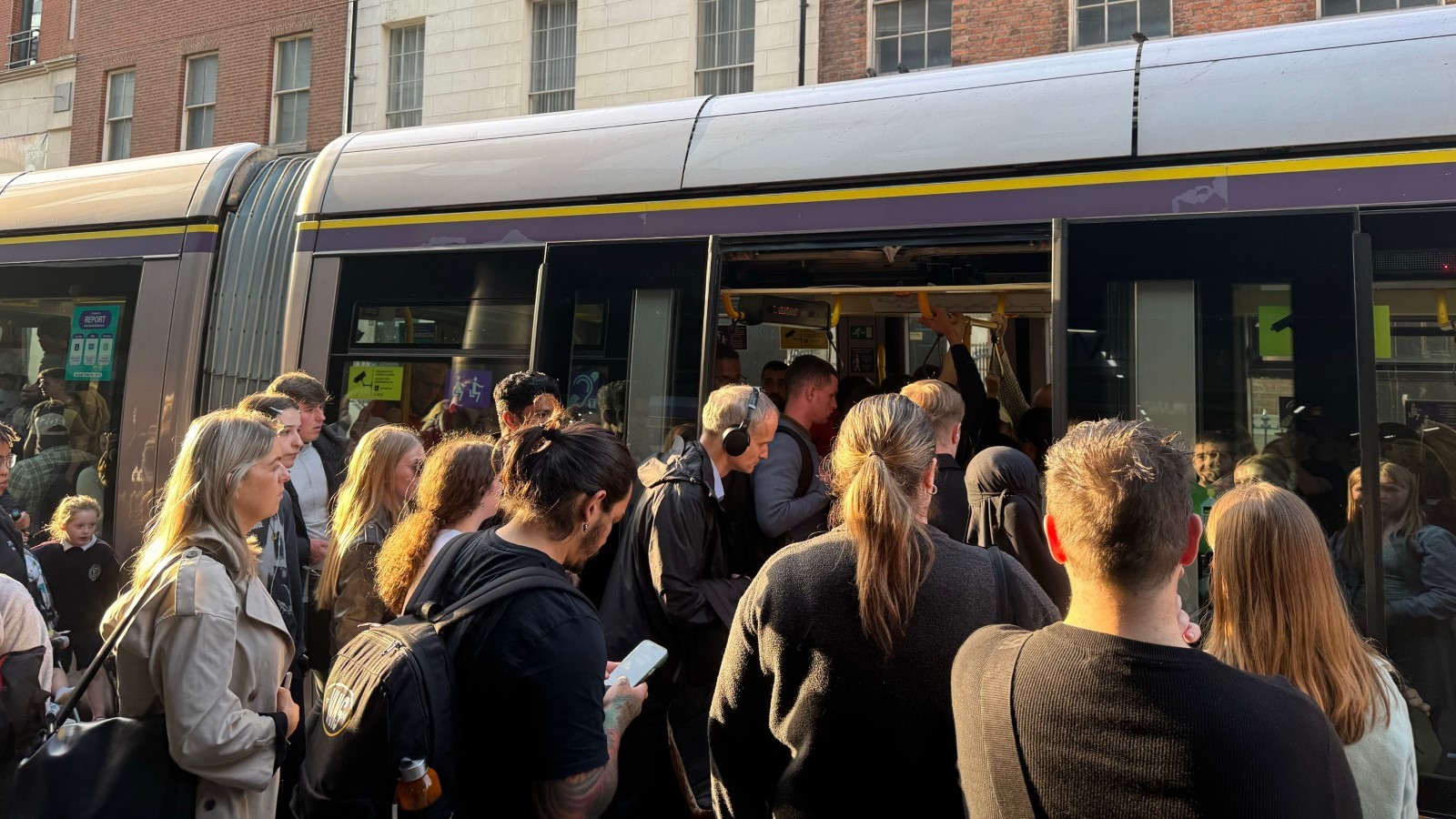
A display of photos from the point of view of a commuter using public transport in Dublin. Examples of overcrowding can be seen here on Dublin Bus, Luas and Irish Rail services in densely populated or heavily visited areas in Ireland’s capital – in which the photos below were taken during peak times of travel, on-board and at stops and stations.
Nevertheless, the photos pose the question: Do Dublin commuters need more frequent services of existing public transport, or do they need more modes of public transport? Or both?
Whether the answer is a swift underground metro system, or more frequency on existing services – or both, the population is growing and commuting access in and around Dublin is becoming more of an issue and needs urgent attention.
All photos present the same problem – Dublin’s public transport system is overwhelmed.
The photos also present how this overcrowding issue can prove difficult for accessibility on public transport for wheelchair users, mobility aid users and parents with children. Even in busy times, not everyone can just squeeze on and stand. People are inevitably being left behind – hoping that the next bus, train or tram will have room.
Commuters joining a lengthy queue for Blanchardstown Shopping Centre’s busiest bus route to Dublin City Centre, the 39a – hoping to get on as it fills very fast. The standard sight at this shopping centre bus stop at peak morning and evening times, as commuters fight for a spot on the 39a service. The 39a route journeys down the Navan Road, in which sections of the journey lack bus corridors in both directions, leaving passengers stuck in traffic at peak times. Meanwhile at the Jervis Luas stop in Dublin City Centre, peak times result in commuters pushing themselves on-board to very packed carriages, with just about enough room to stand, for the few at the busy stop that manage to squeeze on. Finished work and want to hop on the Luas Red Line home? You’re not the only one – and that’s not even including commuters already on-board. A Luas has arrived, and the carriages are evidently full. With some commuters possibly disembarking, maybe there will be room for some intending to board. “Oh my God, let us get off first,” said a young woman as commuters tried to get off while commuters on the platform scurry towards the doors for a spot on the mostly full Luas carriages. “Oh, there’s another one coming in three minutes, maybe we’ll get on that one,” said one woman as disgruntled commuters accepted not being able to get on-board – but hopeful they remained, as another Luas was due in a few short minutes. The next Luas has arrived at the Jervis Luas stop and like the previous one, it’s almost full and the next round of commuters on the platform attempt to get a spot on-board. Three Luas trams later and the platform begins to clear as the Luas carriages begin to have more space than the previous trams – but was there space for commuters who have accessibility issues? How many trams must pass for there to be room for a person in a wheelchair or with a mobility aid, or a person with a baby pram to board comfortably and safely?
Getting on a train at peak times is no different. Commuters at Broombridge Station queue at every door, wondering if they will fit on-board as the train arrives full from the city centre – in which it will remain like that until it reaches the outskirts of Dublin.
If a commuter manages to squeeze on-board, there is only room to stand, and it gets quite uncomfortable. Like the Luas, accessibility issues are present here. Dublin’s only service that has flow is Irish Rail, due to no road traffic, but commuters experience peak times with traffic by foot – if you stay on-board until disembarking in a Dublin suburb. Traffic standstill mayhem: The need for more efficient modes of public transport is hiding in plain sight here. Modes of transport that aren’t subjected to peak time road traffic. Commuters using an underground metro system around Dublin would go from A to B in an instant, in comparison to this.A bus stop and rain: Commuters already report it to be a struggle to get on-board popular routes, but adding bad weather to the equation does not make for a comfortable experience – when all a person wants to do is start their day commuting with ease or commute home swiftly, after a long day.
Everyone understands that peak times will always be busy for public transport users, that’s why it’s referred to as ‘peak times’ – but that doesn’t mean it’s acceptable for Ireland’s capital city and its surrounding areas’ public transport network to be severely overwhelmed, at a constant.
In a day and age where people are being encouraged to use public transport instead of private transport, as a means of reducing carbon emissions through minimising their individual carbon footprint – it’s worth noting that the correct infrastructure is vital for that to be sustainable, otherwise, people who can won’t use public transport, if it becomes more and more overcrowded, uncomfortable and unreliable.
A popular route having frequency in its service isn’t good enough, as it can be seen in the photos above that the demand is too high at peak times for ‘frequency’ to be enough. Ireland’s capital needs an expansion of public transport services across the board, not statements to brush the issues under the mat.
Dublin’s public transport congestion is clearly failing people with accessibility issues, despite the designated accessible areas on-board services – as abled people are filling up the designated areas at peak times.
Dublin needs more efficient public transport that facilitates everyone, and these photos are prime examples why improvement is needed – the only question now is, when will anything be done?
Since June of last year, popular taxi app ‘Bolt’ has extended their services to provide the people of Bray Co. Wicklow with electric bicycles.
These bikes have been a massive success across the town among people of all ages due to their cheap costs and easy accessibility.
Green Party Councillor for Bray East, Erika Doyle, was one of those involved in getting the scheme up and running in the town.
“With the introduction of the bikes, there has definitely been a modal shift, which is great because in a town like Bray we have a congestion problem. It’s very hilly as well, so with the pedal assist it has become much more accessible for people that otherwise maybe wouldn’t have used a push bike,” Doyle explained.
“It’s been a really positive thing for the town, and data from Bolt shows that these are being used even during winter months, because originally, there was a suspicion that they might only be used during the summer, but people are clearly just dressing for the weather and using them regardless which is great.”
The success of this scheme is partly due to just how easy the bikes are for people to use. Users simply download the Bolt app, scan the barcode on the bike, and they will then be charged 18 cent per minute.
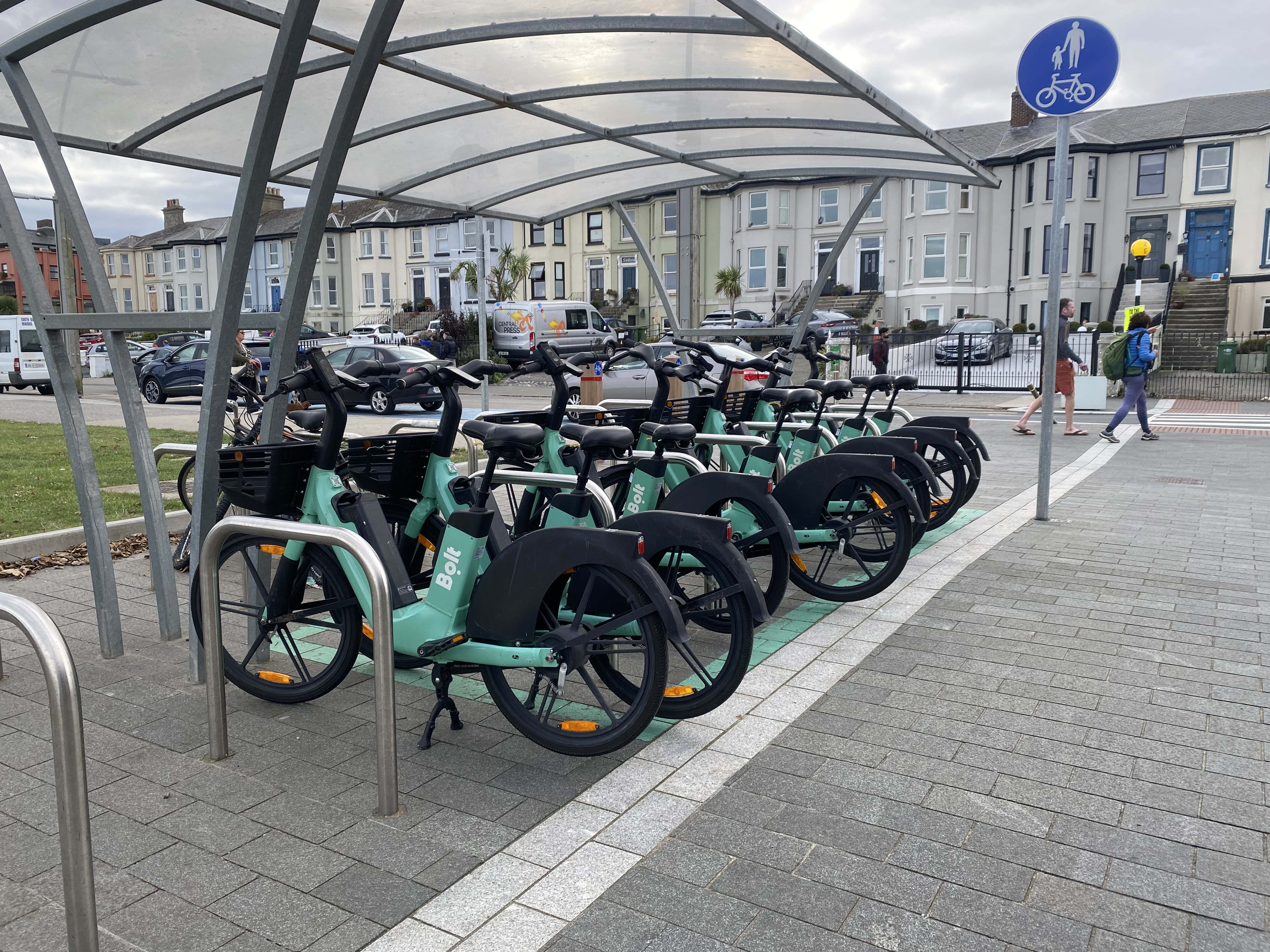
Once the user completes their journey, they park the bike in one of the ‘park zones’ that can be found on the app or can be identified by a green square on the ground and bike racks.
Along with a pay as you use option, there are also a variety of subscription passes available to users too, such as a day pass, weekly passes, monthly passes and ‘unlimited unlocks for 30 days’.
The bikes go up to 25 kilometres per hour, but can be capped at 15 kilometres per hours if users wish.
Bolt Bikes at Little Bray ’Parking Bay’ – Photo Credit: Jamie Ryan
Sinn Féin Councillor for Bray West, Dermot O’Brien, speaks highly of the impact that the bikes have had in Bray.
“I would say overall there has been a very positive impact from the introduction of Bolt bikes in Bray. The user numbers are a good reflection of this, and the feedback from local people who see them as an alternative to the car, or as an easy option for getting around the town,” he said.
“I particularly notice the variety of local users, young and old, as well as tourists and exchange students who benefit from an easy and accessible option to move around the area.”
“On a personal level, I would use Bolt bikes very often, and they are a wonderful asset to someone who lives on the edge of being on time for meetings, as I bounce from one venue to another around the town.”
The bikes are easily maintainable due to there being no shock absorbers in their frames, and the tyres not containing air.
However, although there has been a plethora of extremely positive experiences from Bolt bike users, there have been issues with bikes being damaged, defaced or suffering from wear and tear.
Councillor O’Brien himself has fallen victim to this, he explained.
“In recent weeks, I changed my bike four times because of malfunctioning and ultimately, I just walked home which was frustrating,” he said.
Adam Byrne, 20, regularly uses Bolt bikes to get around the town.
“The bikes have made such a difference for me. Getting to and from work has become so much handier and it only costs me maximum €3 per journey which is much better than spending it on petrol – not to mention not having to sit in traffic the whole time,” Byrne said.
Bolt Bike at Bray Harbour with graffiti at the rear mud guard – Photo Credit: Jamie Ryan
“Of course, like anyone else who uses them regularly I’ve had one or two issues, but nothing crazy, more so just maybe a lack of maintenance with the brakes and minor damage to the pedals, but overall, I really can’t say any bad about them. I hope they stay around for a long time.”
The contract between Bolt and Bray Municipal Council has recently been extended for a further year, for locals to enjoy and utilise.
The Organic Centre in Rossinver Co. Leitrim hosted its Apple Day-Harvest Festival on 29 September and The City went to check it out.
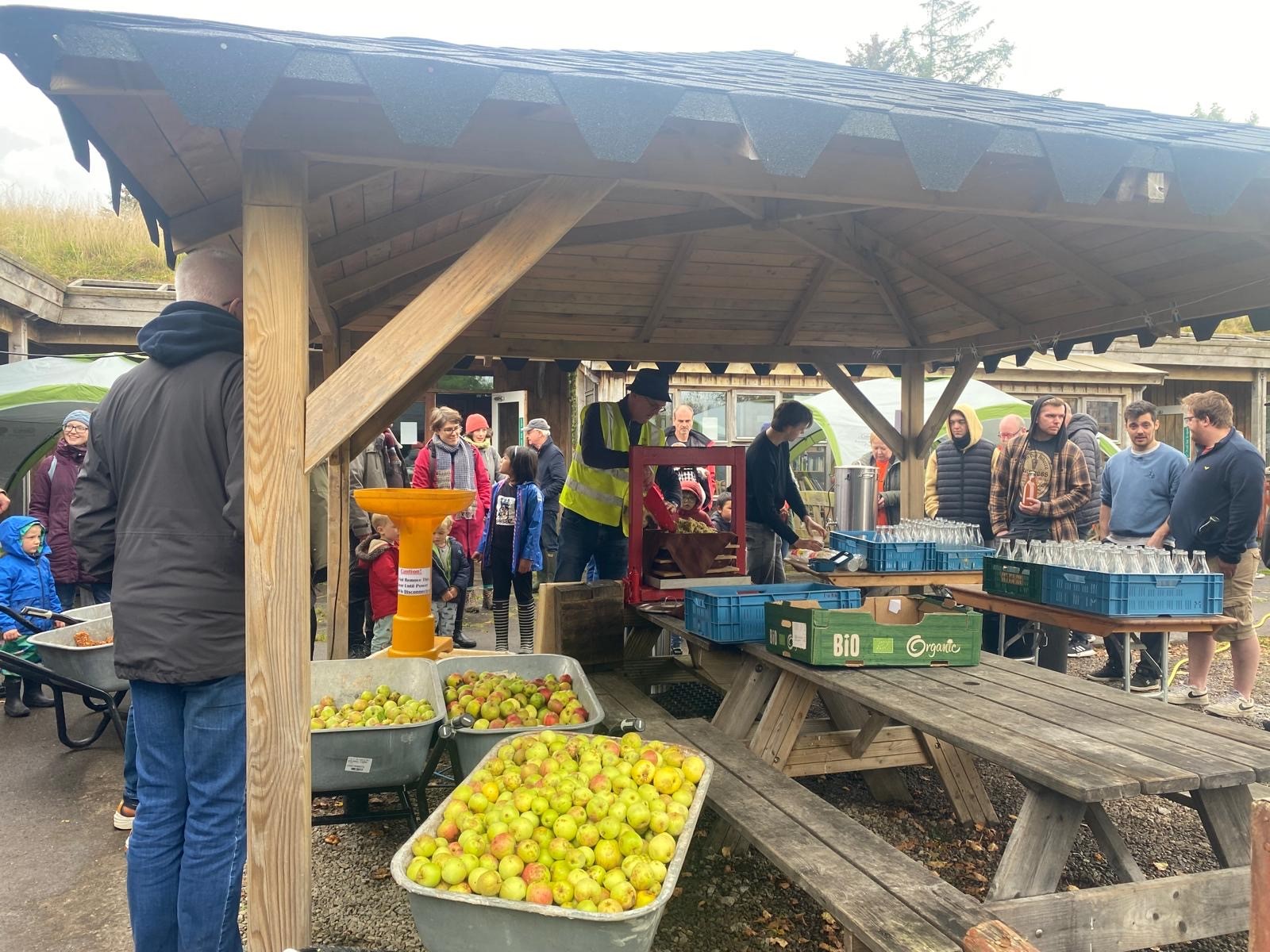
The festival had a great turnout with lots of activities and stalls for the visitors. The highlight of the day was the apple pressing, where festival goers were shown how apple juice was made and could sample the finished product.
The stalls were full of sustainable crafts both inside and outside the building. There were craft demos, stone carving, weaving and wool spinning to keep the crowds entertained.
Talks and tours were on throughout the day by experts including The Organic Centre’s resident apple expert Phil Wheal and Botanist Maria Cullen. The Grass Roof Cafe provided all diverse kinds of apple tastes for the people to enjoy.
All photos by Luke Hurson
The crowds were shown apple pressing techniquesThe grass-roofed Organic CentreThe Apple Day Harvest festival drew good numbersThe greenhouses were full of organically-grown fruit and vegetablesThe inside of one of the greenhousesThe craft tent was a popular attractionThe Grass Roots Cafe kept the visitors going throughout the dayA different angle of the apple pressing where pressure is put on the apples to squeeze the juice out of themSome beautiful wildlife paintings were on displayOne of the many craft stalls with handcrafted goods
Ireland has officially implemented a ban on XL Bully dogs, which came into effect on October 1st, 2024. The ban was introduced by Minister for Rural and Community Development Heather Humphreys in response to a series of high-profile attacks involving the breed.
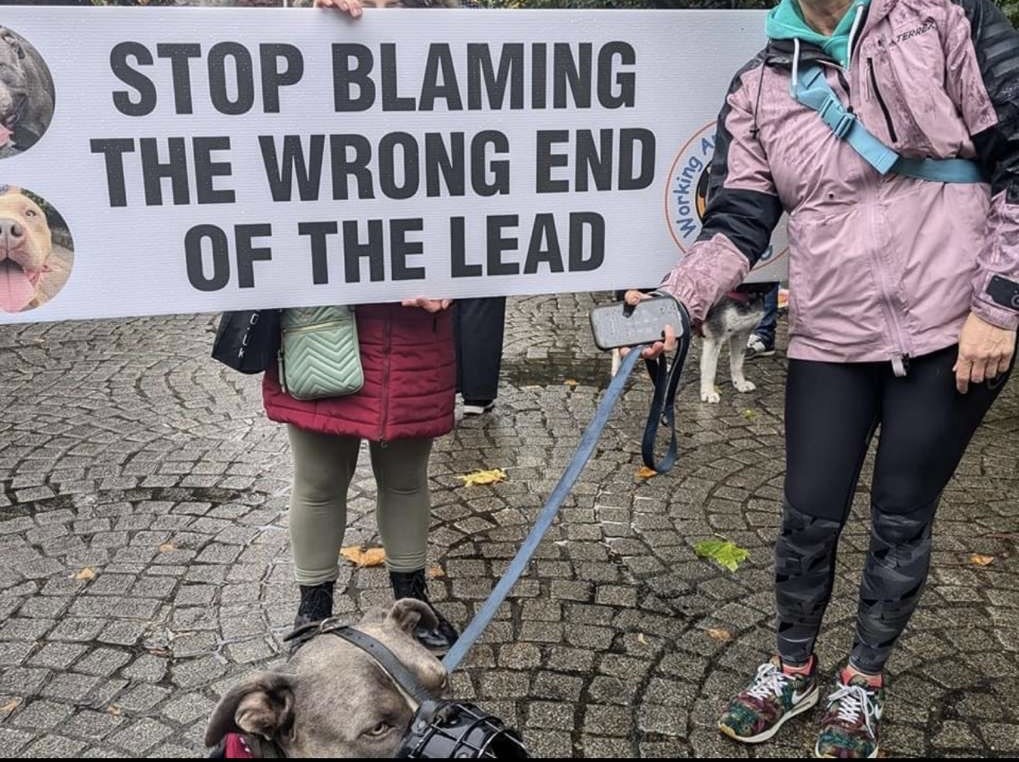
Banners at XL Bully ban protest. Photo by Sandra Dudkiewicz
The ban will be enforced in two phases. As of October 1, 2024, it is illegal to import, breed, sell, or rehome XL Bully dogs. From February 1, 2025, it will also become illegal to own an XL Bully unless the owner has obtained a ‘Certificate of Exemption’.
This certificate will allow owners to keep their current XL Bully dogs, provided they meet certain criteria such as licensing, neutering, and microchipping the animal.
A deadline of February 2025 has been set for animal welfare groups and shelters to rehome or export XL Bullies already in their care.
The decision has generated debate, with some supporting the move as a necessary measure for public safety, while others, including animal rights groups, express concerns about the future of these dogs and the impact on shelters
A joint statement published by Dogs Trust Ireland, Irish Blue Cross, MADRA, and the ISPCA states that they will continue to urge the government to prioritize enforcing and adequately funding existing laws that address the root causes of dog aggression across all breeds and types of dogs.
This includes cracking down on unscrupulous breeders who prioritize profit over dog welfare and public safety, penalizing irresponsible owners of dangerously out-of-control dogs, and educating and empowering responsible dog owners.
“While we are disappointed with the approach the government is taking, we remain committed to continuing our work to advocate and ensure that the welfare of all dogs is protected,” the statement said.
Sister of Nicole Morey who was tragically killed by an XL Bully earlier in June this year spoke to RTE news and expressed that the ban is not enough and fears that there will be more accidents linked to the breed.
“I think there should be a stricter law brought in. They’re dangerous dogs. They’re not small little puppies. They’re not dogs that you could just mess around with. They can just switch in two seconds,” she said.
Earlier in September almost 200 people attended a protest at Stephans Green in Dublin following the news of the new regulations related to the breed.
XL Bully owner and attendee Wiktoria Kumorek spoke to The City. “It truly breaks my heart it is unfair that these dogs are being judged solely on their appearance. My dog is gentle, and affectionate and with proper training and care, they are no more dangerous than any other large dogs.”
“The problem is not the breed, it is irresponsible ownership just like with any other dog or animal,” she added.
XL Bully ban protests in September in Trinty Point. Photo by Sandra Dudkiewicz
‘Don’t be rude, have a drink with me’, ‘You deserve a drink, after the week you’ve had’, ‘It’s tradition, you have to’ – these are just a few phrases you may hear around the table while having a few drinks.
Drinking as a social activity is quite common between friends and family across Ireland.
Stereotypes surrounding Irish people and drinking are deeply ingrained in popular culture, often exaggerating or misrepresenting the role of drinking in Irish society – whether that be heavy drinking or holding our liquor well.
But how much truth is behind them? If you read between the lines, you could argue that Ireland may have a few underlying issues with drinking that may have been swept under the rug.
As figures rise, an increasing worry is brewing regarding the effects of drinking, shifting how Irish people view their drinking habits.
But how much do we really drink in Ireland?
When experts talk about the dire health implications linked to excessive alcohol use, people tend to assume that it’s directed at individuals who have an alcohol use disorder – but health risks from drinking can come from moderate consumption as well.
In 2023, alcohol consumption was 9.9 liters of pure alcohol per capita over the age of 15 years. This shows a fall of 10% since the passage of the Public Health (Alcohol) Act in 2018.
Alcohol consumption per capita has reduced in recent years from its historically high point, in the early 2000s. We are now drinking at a level of just under 10 liters per capita.
According to |Alcohol Action Ireland per capita consumption in Ireland in 2023 equated to 284 cans of beer, 12 bottles of spirits, 43 bottles of wine, and 35 cans of cider.
“If the whole of the country was drinking within the HSE lower risk drinking guidelines, we would be consuming about 40% less,” said Dr. Sheila Gilheany, CEO of Alcohol Action Ireland.
“We have very high levels of ‘binge drinking’. Ireland is the 8th highest within OECD countries,” she added.
About 70% of the population consume alcohol. Over half of all drinkers do so in a manner that is considered hazardous. About 20% of the drinking population have an alcohol use disorder.
Consumption and affordability
“Consumption patterns are driven by price, marketing and availability. You can see the changes in consumption in the graph above. In recent years, drops in consumption are usually linked to changes in alcohol taxation. Alcohol remains very affordable, despite industry protests,” said Dr Sheila Gilheany.
The price of alcohol in shops today is essentially the same as it was 20 years ago.
The Organization for Economic Co-operation and Development (OECD) found that Ireland has the second most affordable alcohol across OECD countries.
The Irish alcohol business spends a minimum of €115 million a year promoting its goods. This excludes sponsorship agreements like those for Guinness Six Nations.
Ireland ranks the 3rd highest in the world for the number of pubs per head, and three-in-four people live within walking distance of a premises licensed to sell alcohol.
“The term ‘responsible drinking’ is very much an industry term which has no public health meaning – i.e. it is not defined,” said Dr. Sheila Gilheany.
The HSE has guidelines on lower risk drinking, although, as these are now in the process of being revised, it likely will decrease in common with other jurisdictions which have examined this recently in Canada.
Finance and office manager Jennifer Bergin at Drinkaware said, “Anybody wanting to change up their drinking habits and are looking for information can access our 2023 barometer research paper and consumption page available on our website.”
It’s likely that the majority of people have encountered someone who has struggled with their alcohol intake. Excessive drinking is a widespread problem in Ireland that affects not only the individual, but also those around them. Alcoholism can affect a drinker’s emotional, financial, and physical well-being, which can be harmful to those around them as well.
According to Alcohol Action Ireland, Ireland’s drinking culture is evolving towards more mindful consumption, with health becoming a priority.
The impact of these changes on the country’s drinking culture remains uncertain.














You must be logged in to post a comment.