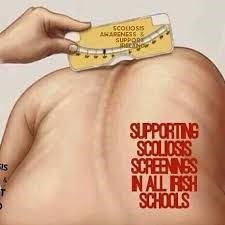
Many children are still facing long waiting times for diagnosis and treatment for scoliosis in Ireland, according to Scoliosis Awareness & Support Ireland.
When Taoiseach Simon Harris was minister for health in 2017, he said that no child would wait longer than four months for scoliosis surgery.
However, campaigners say that seven years on, surgery is still a long way away for many.
“As of September 2024, we continue to face significant challenges in addressing the backlog of scoliosis waiting lists for children,” said Elaine Kelly from Scoliosis Awareness & Support Ireland.
Kelly explained that the demand for spinal procedures often outpaces the available capacity within the healthcare system despite the efforts to improve the situation.
“Over the past 10 years efforts to improve the issue have included, allocating additional funding, an increased investment in healthcare and an increase in infrastructure and personnel to expand surgical capacity. Despite these efforts, many children and their families continue to experience significant delays in accessing necessary surgery,” Elaine Kelly said.
Source: CHI website, Children’s Hospital Temple Street
Aoibhínn Dunne, 20, from Dublin has been waiting over a year for spinal surgery with private healthcare.
Due to the cut in scoliosis screening in primary schools Dunne found out very late in life that she had scoliosis.
Dunne’s scoliosis causes her severe back pain, and because her scoliosis is in the shape of an ‘S’ it means her spine is pulling in different directions. This puts a lot of stress on her lungs and eventually her heart, as her ribs are pressing in against her lungs.
This is especially difficult for her as she studies drama in university and it affects her movement for acting on stage and breathing for singing.
Since being diagnosed with scoliosis at the age of 18, Dunne has had immense difficulty in getting on waiting lists for surgeries as “children often get prioritised,” Dunne said.
“By the time you are 18 there is a certain cutoff point for the number of degrees in the curvature of the spine; if you’re under a certain number then it probably won’t keep getting worse. However, mine is double the cutoff point, so I do have to get surgery, it’s just so hard, especially for me because I’m not a child anymore,” she explained.
“We appreciate that no politician can wave a magic wand and solve this overnight, but this has been going on now since 2009,” said Elaine Kelly.
“Even the emergency wait lists are over three months long,” Dunne said.
Kelly explained how past warnings have fallen on deaf ears and that the “response has been unacceptable from the Government. This is the last chance to get it right.”
“The waiting list for spinal surgery has increased in recent months, this is due to the backlog of children waiting for a first appointment with a consultant,” Kelly said.
According to Kelly, it’s not just physical pain that affects patients with scoliosis. Anxiety and stress associated with the delays in care can also have a negative impact on the mental health of children and families.
Kelly advises families to reach out for help. “Give families support groups contact details and information on their child’s diagnosis. Research- knowledge is power,” she said.
A brand new one day festival, District X came to Palmerstown House, Co Kildare. It was a techno and house music fans dream.
The festival saw Irish artists like blk. and Kettama perform throughout the day. Other international artists that performed were Chris Stussy, Hannah Laing and Pawsa.
The event was an enormous success, a sold-out event with people searching for tickets right up to outside the venue just before it started.
The event had high security, medical tents, and transportation organized for people arriving and leaving the festival. However, there was no service which made ordering a taxi a little difficult if people wanted to leave earlier than planned.
There were after parties scattered across Dublin city center after the festival, with some of the Dj’s playing in different nightclubs.
The City sent some of our photographers into the festival to capture the energy throughout the day.
Tents were placed close together, enabling festival goers to move with ease from one place to another. This allowed people to see multiple acts and as many as possible, as there were crossovers with some artists’ set times.
There were carnival rides, which cost around 10 euro per person. Despite the price there were people queuing up throughout the day.
Kerri Chandler drew an enormous crowd at the District X stage. Many people were pushing to the front forone of his most popular songs ‘You are in my system.’
Elena Gatica, 22, an attendee who has traveled to popular rave destinations like Ibiza and Berlin. She was most excited to see Dj Heartstring.
People were feeling the love duringSkepta’s set. The backstage section was packed with people.
As it got darker the lights placed around the venue started to light the way for the crowd trying to find their next stage.
“I am most excited to see BLK, I met him once and it makes me proud that he’s from Ireland.” Orla Shortt, 21, from Meath.
Despite the fun being had, it was a long day for some. Rodney Jones, 22, from Dublin, had been there since 1:00pm and his bus home was not scheduled till 11:30pm that night.
Some visuals during Chris Stussy’s set who later guest appeared during Ketama’sset.
As the event ended the lights from the rides and ‘X’ statue became more vibrant and led to the long walk back to the car park.
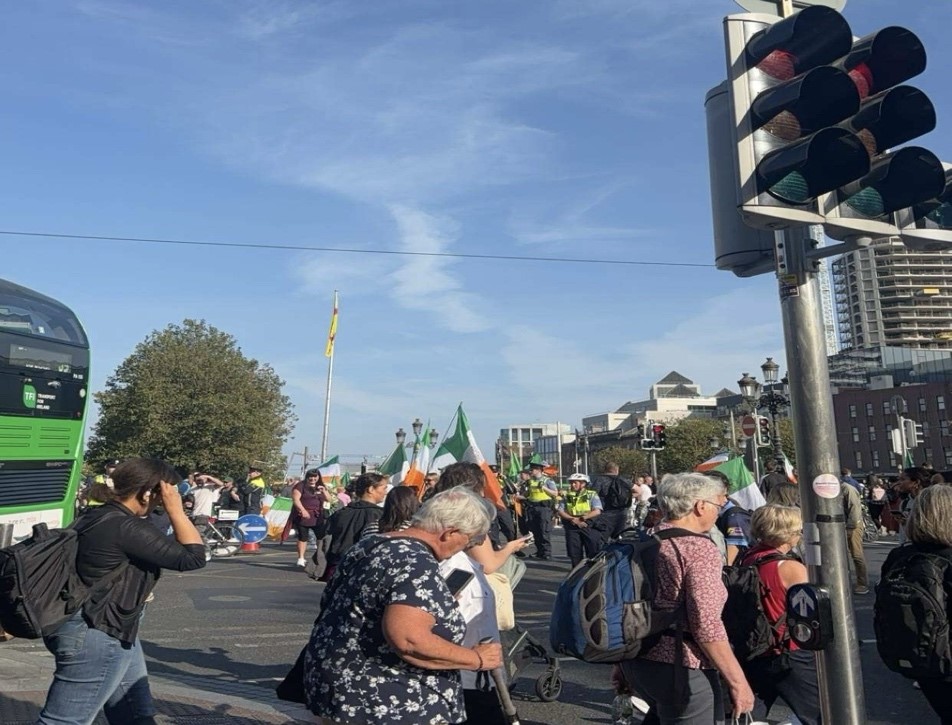
On Thursday September 19th , Dublin witnessed a sharp division as anti-immigration protests were met with vocal opposition from counter protesters, displaying deepening divisions over the country’s immigration policies.
Source: TheBurkeanIE on X
The protest resulted in considerable disturbance for the public and multiple arrests. Groups against Ireland’s immigration laws organised the march, which began in front of the General Post Office (GPO) on O’Connell Street.
Protesters expressed their disproval of the country’s immigration and asylum seekers laws. During the demonstration chants like “Get them out” and “Irish Lives Matter” could be heard.
Lorraine Vallessca, originally from the Philippines, who has lived in Ireland for nearly 16 years, described how she felt walking past the protest.
“I was on my way to work when I first saw the protest – as an immigrant myself who’s lived here basically my whole life, for the first time I felt scared”, she said
Irish flags and banners with anti- immigrant messages were held by the protesters and upon arriving at Leinster house, the marchers retreated to O’Connell bridge where they staged a sit-down protest that blocked important roadways. This led to significant delays in Dublin City Centre, stopping the Luas and other public transportation systems causing extensive disruption.
“Close the borders” and “foreigners” were just some chants screamed at passerby’s during the march.
“Hearing the chants and anger in their voices was uncomfortable when I finally got to work, I thought I’d feel relieved, but I was anxious my whole shift” explained Lorraine.
Source: Aine McKeon
The Gardaí dispatched public order units in reaction to the crowds’ unwillingness to disperse on top of the increasing tensions.
Nineteen people were taken into custody for defying Gardaí instructions and causing disruption to the public. Investigations into the event are still ongoing. No injuries were recorded.
A short distance away, at the bottom of Grafton Street, a small anti- racism organistaion staged a counter protest, chanting “refugees are welcome here”. Gardaí were stationed to prevent clashes between the two groups.
The protests have generated a lot of discord. Numerous civil rights and community organisations have organised counter demonstrations to promote diversity and inclusion. The Irish Refugee Council and MAS (Movement of Asylum Seekers in Ireland) have denounced the anti-immigration discourse whilst highlighting Ireland’s longstanding status as a haven for refugees.
This protest follows a rising trend of far-right and anti-immigration protests in Ireland in recent years.
One of the onlookers of the protests who asked to remain anonymous said, “it is upsetting to see this happening in our country – Dublin hasn’t felt like a safe place in a very long time, it’s just not the same.”
The individual who claimed to have lived in Dublin for over 20 years, emphasised that the protest’s driving force was dissatisfaction with the way the immigration system is being run, not hatred.
Anti- immigration protests have been more frequent over the past year, which is reflective of the growing dissatisfaction among a minority of people with how the government is managing immigration and asylum policies. The highly publicised demonstrations have sparked a national conversation on Irelands Immigration laws, ranging from nonviolent marches to more aggressive riots.
Source: TheBurkeanIE on X
Over the past year, there has been a noticeable increase in the number of refugees and asylum seekers in Dublin’s inner-city areas, such as Ballymun, East Wall and Finglas. Anti-immigration sentiments have been concentrated in certain places, where locals have expressed discontent about the increasing demand for healthcare and housing provided by the influx of people.
Tensions in Ballymun escalated due to demonstrations at a shelter for asylum seekers, citing rising homelessness and stretched public resources. Nonviolent protests included vandalism and police clashes.
On November 23rd, 2023, after a stabbing attack that left three children and one adult injured, rioting broke out in Dublin. Rumors of the attacker’s immigration status contributed to the incidents anti-immigration riot. A few hundred people gathered in the throng, who at first expressed protest but soon turned aggressive. Buses, Gardaí vehicles and businesses vandalised and set on fire by rioters, Dublin’s city Centre was also looted, resulting in extensive damage.
While Ireland adjusts to the reality of its shifting demographic despite the polarising nature of the protests. The government has previously discussed enhancing efforts and discuss concerns between immigrant communities and Irish citizens.
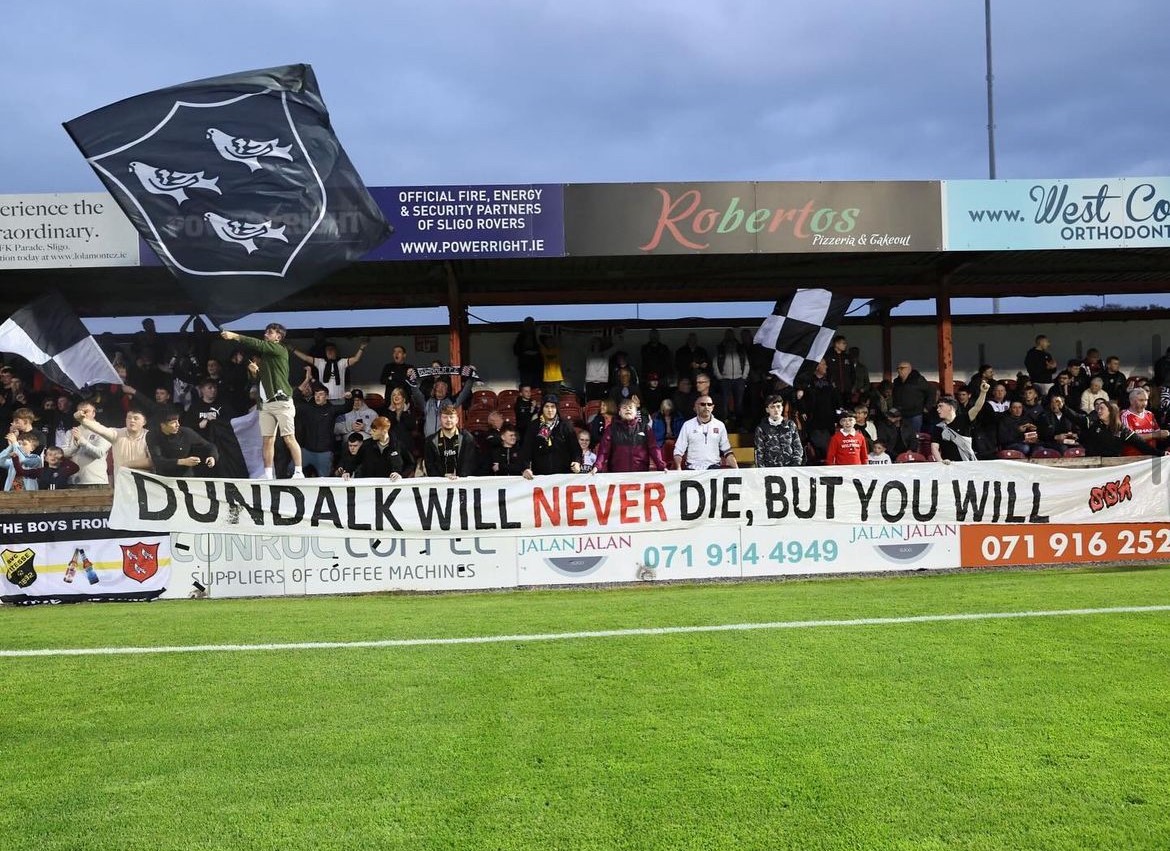
One of Ireland’s most successful clubs found themselves a couple of hours away from potential liquidation.
The club has struggled this season on the pitch as manager, Jon Daly’s side find themselves at the bottom of the league, as relegation to the first division looms over the club for next season. With six games remaining having suffered a 2-1 loss on the weekend to Sligo Rovers the club needs a big turnaround to try and stay up for another season in the premier division.
The last few years finances at Dundalk,show that out of the last six years at the club there has been only one season (2020) in which the club made a marginable profit of just €108,386. Over the course of these years, the club has lost a total of €4.9 million.
Statistics via James Rogers on X
In terms of player wages there has been a significant increase after losing some key players like Patrick Hoban who is the club’s all time top goal scorer in history, along with some key players who contributed to the success of the club such as Daniel Kelly, John Martin and Greg Sloggett. Even with these players departing, the wage bill still went up a staggering €100,000 between 2022 to 2023.
The club confirmed over the past week that they had been taken over by a consortium led by Dundalk native John Temple, after he bought an 80% purchase of the club from Brian Ainscough who only acquired the club in December of 2023.
A statement from the club after the takeover was announced read that they have agreed to underwrite the players current wages until the end of the season and will examine the viability of the club and its facilities going forward. (“TAKEOVER AGREED WITH JOHN TEMPLE – Dundalk Football Club)
Dundalk aren’t the first club to struggle financially in Ireland as in recent years, every club has struggled, including Shamrock Rovers, St. Patricks Athletic, and Bohemians.
Local league of Ireland fan, Shannon Lester, said; “I personally don’t think the league gets enough from the likes of the government. Other sports in the country even get more air time, which I don’t think is right.
“I don’t think there is enough backing from the FAI, I think they’re a shambles and to be honest I feel like they only get involved when things are already too far gone,” Lester said.
“It was sad to see with what had gone on with Dundalk, but I do think that something should be done as if it was the likes of Rovers or Bohs and there would be more fuss over the situation,” she said.
She continued, “I think the last few years the clubs have gotten way more fans through the gates, and you can see it every week in the stadiums. I just feel that without the support of the FAI or even the media coverage, you will see these teams like UCD or Drogheda who don’t have a massive stadium so they wouldn’t get as many home fans as the bigger clubs in this country and won’t take in as much money due to this.”
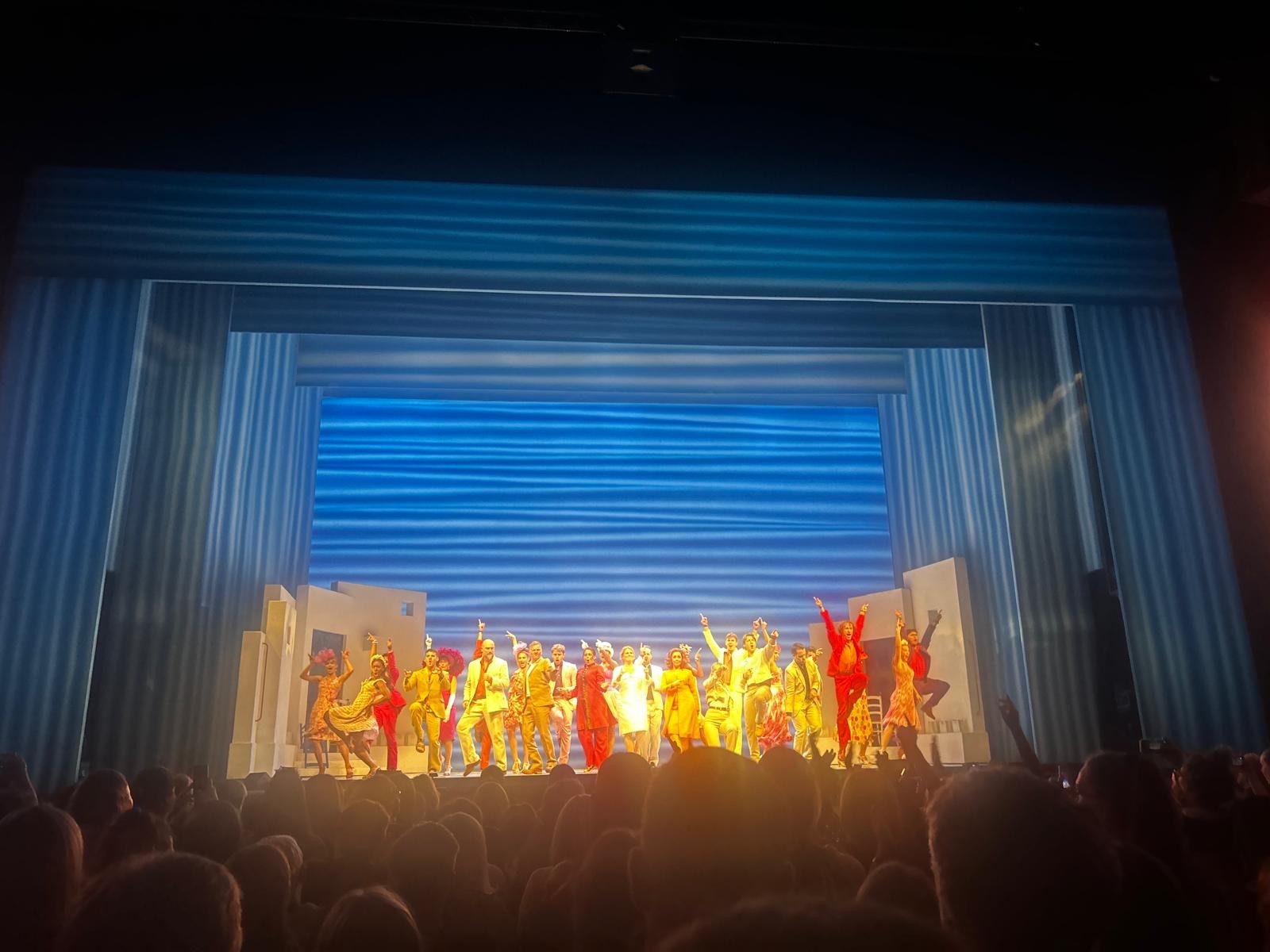
The Dublin city centre traffic almost stole the show on the opening night production of ‘MAMMA MIA!’ in the 3Arena on Wednesday, September 25.
Cast performing on the opening night of MAMMA MIA! Photo by Katie Shadlow
Since the musical’s last performance in the Bord Gáis Theatre in Dublin, in 2019, its return has been welcomed with open arms – with all seven performances from September 25-29 selling out, and additional tickets being released for three dates, due to demand.
The widely popular production has been seen by over 65 million people worldwide since its 1999 debut, and has grossed $4 billion, leaving it unsurprising that the demand for tickets was so high.
The musical, set on the fictional Greek Island of Kalokairi, follows the story of a young bride trying to figure out who her father is, and the story, in the meantime has touched many people’s hearts and become a household staple all over the globe.
Emma Byrne from Blessington, Co. Wicklow, who attended the opening night of the production, said that the performance from the cast was “captivating”.
“I’ve been such a huge ‘Mamma Mia’ fan since I was a child – seeing the musical live felt like seeing it for the first time again, it was a great experience.”
“There was a great sense of comfort as well – everyone was singing along,” Emma said.
Cast members Steph Perry, Nicky Swift and Sarah Earnshaw on stage, Photo by Katie Shadlow
However, singing in the right key was not the only “quay” that ‘MAMMA MIA!’ fans had to worry about that night.
The traffic plan that came into place on August 25, 2024, had an unforeseen knock-on effect on accessibility to the 3Arena for musical goers.
The traffic plan introduced included blocking off vehicular traffic access along parts of the quays in Dublin city centre; restricting access from Bachelor’s Walk to Eden Quay from 7am to 7pm.
This left the journey for eager fans a lot longer than anticipated, due to the volume of traffic, after the introduction of these changes – as they attempted to make it in time for the show’s 7:30pm start time.
A woman attending the musical, who wished to remain anonymous, said her usual hour-long journey into the city centre from Kildare turned into a nightmare of 2 hours and 40 minutes to arrive at the 3Arena.
“I’ve never experienced traffic like that in town – it’s never taken me as long to get in.”
“At one point, it took us 12 minutes to get 1 kilometer closer, the cars were bumper to bumper,” she said, “I can understand wanting to promote walking and cycling in the city, but I don’t think it was thought through what would happen when there’s big events on and more traffic than usual,” the woman said.
The woman said she eventually got seated in the 3arena at 7:45pm, where luckily, the production was yet to start.
“People were still piling into the place even after we had gotten there – we assumed they might have actually pushed back the start time to accommodate the amount of people who were late because of the traffic, but it’s hard to know.”
“Either way we were so glad it got delayed because it was well worth waiting in traffic for,” she said.
End of show, Photo by Katie Shadlow
While there are no upcoming ‘MAMMA MIA!’ tour dates for Ireland in 2025, the 3Arena is jam packed with events into the new year, which we can only hope is not affected by the new city centre traffic regulations, in the future.
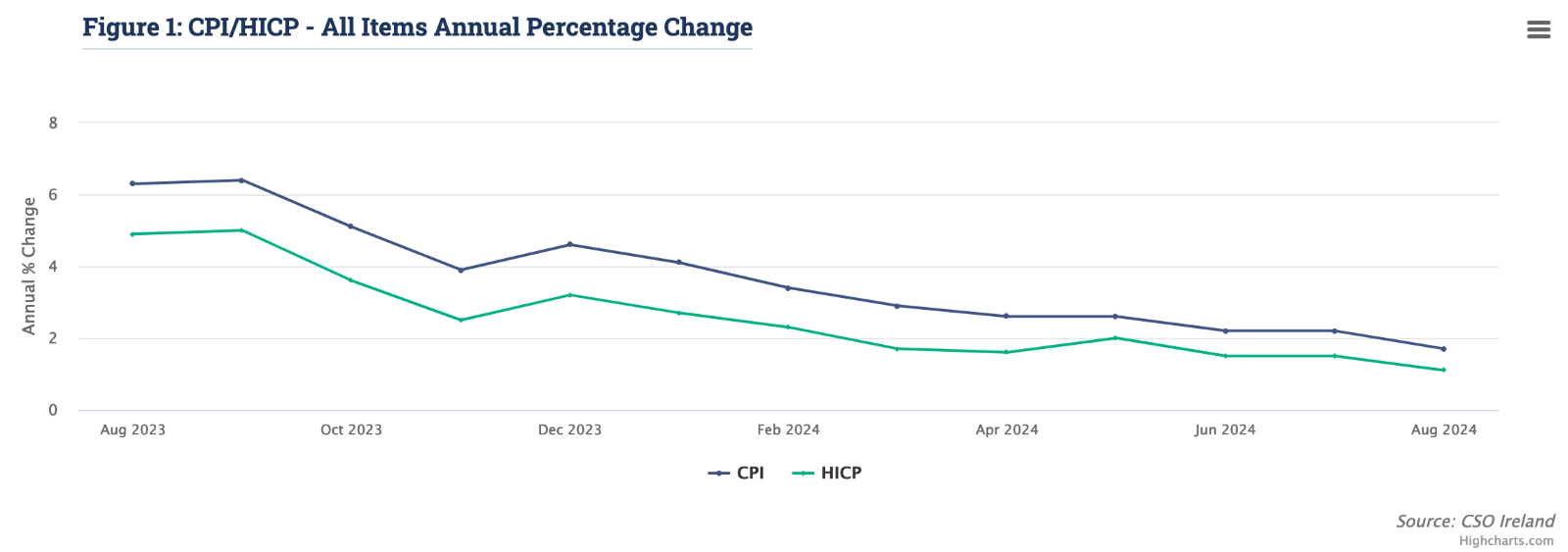
The latest statistics show that the Consumer Price Index (CPI) rose by 1.7% between August 2023 and August 2024, down from July’s increase of 2.2% from last year.
Commenting on the report Anthony Dawson a Statistician in the prices division said, “Today’s publication of the CPI shows that prices for consumer goods and services in August 2024 rose by 1.7% on average when compared with August 2023. This is the first time since June 2021 that the CPI, Ireland’s official measure of inflation, has been below 2.0%.”
Source: CSO Ireland
The biggest drop in pricing was found in clothing and footwear, which went down by 6%, and a drop of 2% in utility prices such as fuel, water and electricity.
When asked about the effect these drops have on consumers Maeve Ahern, an author on the report stated: “We’re looking at a positive downward trend for households in terms of their utility bills and clothing costs mostly due to providers cutting their rates by about 3%.”
Alcohol and tobacco saw a rise of nearly 4% as did transport costs, the highest increases in comparison to last year were found in restaurants and hotels at 4.5% which according to Ahern is a direct result of alcohol becoming more expensive this year.” The national average price for a pint of larger now sits at €6.25.
Transport has gone up “primarily thanks to an increase in petrol and diesel, alongside airfares getting more expensive as well,” says Ahern.
The CPI also stated that “Miscellaneous Goods & Services” have risen by 4%. This would be items such as health and motor insurance, or personal grooming services such as salons and barbers, according to Ahern.
According to the EU Harmonised Index of Consumer Prices (HICP), which measures the average inflation rates across the EU, prices on average went up by 1%.
Alongside the CPI the National Average Price table was released. This measures the average prices for select goods and services across the country.
Source: CSO Ireland.
Other notable items include a decrease in the cost of a slice pan on average, cheese and spaghetti, with a 2 litre carton of milk remaining the same price.
Dawson added: “It’s important to remember that this is only a flash estimate and not the final HICP which is released in January of next year, so full quality control can’t be guaranteed, these flash estimates are a useful indicator to see the type of trajectory we’re on however.”
“I’ve definitely been spending more the last few shops, I think things are just getting pricier everywhere, especially food,” said Mary Donnelly (36), a primary school teacher when asked about her shopping habits.
When asked about her thoughts on Ireland’s inflation rate dropping, she said, “I can’t say I have much a grasp on that, but if things don’t change soon, we’re all going to be making major changes to our lives, especially with the cost of rent on top of all this.”
John Scally, a senior economist with the Central Bank commented that, “we’re getting closer to our target of 2% annual inflation by 2025, 2% is an important target to hit for Ireland for the creation of conditions that will lead to sustainable growth for both households and for businesses as well.”
According to Scally, “inflation has become much harder to parse in recent years thanks to the ongoing war in Ukraine affecting prices of things like gas and even crop plants and of course the Covid 19 pandemic which completely threw off the world economy never mind just Ireland’s.”
“Ireland has always been at the whim of external inflation since we’re an open economy, and thankfully the shocks are beginning to subside, as of now we’re looking into inflation for next year and for two years ahead of that to keep our estimates as accurate as possible.”
“We’re looking into ways to further improve our accuracy by looking at implementing new tools like machine learning and AI which should help not only with the accuracy of our reports but also the speed we can get them finished at.”
In the digital age, politicians and the public have never been more accessible to one another. While social media can make it easier for politicians to reach potential voters, platforms such as ‘X’ and ‘Facebook’ have become breeding grounds for trolling and online harassment.
A report by UCD found that 73% of the Oireachtas members are experiencing abuse on social media regularly.
While politicians of every gender identity and background receive hate online, female politicians in particular are targeted the most by sexist and derogatory harassment.
It has been argued by academics such as Daphne Joanna Van der Pas and Loes Aaldering that the difference in the way male and female politicians are framed in the media is a contributing factor for the harassment women are subjected to online.
Research conducted by Utah State University found that media coverage of female politicians is primarily “focused on their background, family life and personality. Media tended to emphasise women candidates’ lack of viability, focusing more attention on the “horse race” or outcome-predicting aspects of their campaigns.”
The study also found that of the articles sampled, 13.6% of them contained reference to female candidates’ physical appearance – such as clothing, age, makeup and weight.
A 2019 study by Amanda Haraldsson and Lena Wängnerud notes that, “The media agenda follows male candidates’ political agendas more than female candidates and is more likely to question the chances women have of winning. Media frames, including trivialisation framing, and type of media attention – tabloid outlets for women and broadsheets for men – contributed to the media bias against female candidates.”
On the type of online abuse female politicians receive, Social Democrat councillor for Leixlip, Nuala Killeen said that “women are targeted about their looks and their age, it generally has nothing to do with our politics and more to do with misogyny.”
When it comes to male politicians, Councillor Killeen states that “they [men] are criticised for their politics and policies, not their appearance.”
Although she is “thick skinned” and rarely fazed by cruel comments, Killeen notes that negative media coverage as well as the personal nature of online harassment experienced by female politicians has led to women feeling discouraged about getting into politics or rerunning for election. “Women who are confident in their political experience and knowledge, who feel they can make a difference in their communities have seen the abuse other women have been subjected to and second guess if they really want to ensure the same thing.”
People Before Profit Councillor for Ballyfermot-Drimnagh, Hazel de Nortúin, has said that the rise in online misinformation and harassment will “make it very difficult for us to find female candidates willing to run in the future, particularly women of colour and from different backgrounds.”
De Nortúin added that councillors are “lacking resources when it comes to tackling online abuse” and are often subjected to “harassment about governmental issues which are out of our hand. People are angry at the government, which I understand, but we [councillors] in local politics have no say in what goes on in Leinster House… they are letting their frustration out on us.”
The type of political violence faced by Irish politicians based on gender. Source: Chr. Michelsen Institute
Research conducted by the Chr. Michelsen Institute found that female politicians are more prone to being subject to degrading talk and false rumours; in fact, they are 2.3 times more likely to experience this than men. Additionally, the false rumours that female politicians face are more likely to be of a sexual nature.
While male and female politicians across the political landscape experience trolling and abuse online, there has been a rise in incidents of verbal and physical face-to-face harassment taking place in Ireland.
Independent councillor for Fingal, Tania Doyle and her husband, were the victims of a violent attack by a member of the far right whilst out canvassing in their constituency. Doyle was punched in the head whilst trying to shield her husband, who was beaten to the ground and left bloodied and bruised after being kicked repeatedly.
Since the incident, Councillor Doyle has stated that she doesn’t know if she will stay in politics after the attack and has been questioning her decision to run.
With the increase in online and public abuse faced by politicians, a taskforce chaired by the former Garda Commissioner Nóirín O’Sullivan on safe participation in political life has been established to make recommendations about changes that can be made to ensure the safety of politicians, with a particular focus on protecting female politicians.
These recommendations include personalised security training and advice, and an opt-in social media monitoring service for political figures. Additionally, the taskforce also recommends that election candidates should not have to publish their home address due to safety concerns.
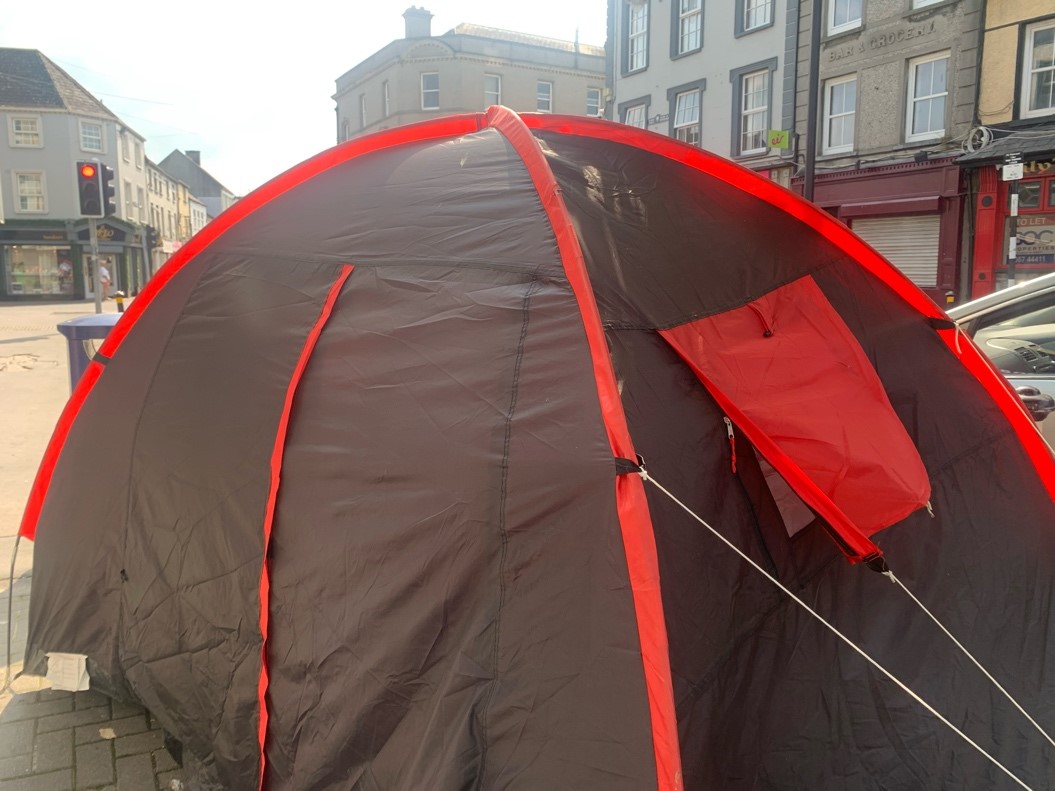
The plight of homelessness has been brought glaringly home to the people of Nenagh with a destitute man living in a tent on the town’s main street for two years.
The man’s tent located on Pearse Street Nenagh.
Photo: Jason Quigley
The man, in his early 50’s, who agreed to speak under the condition of anonymity, said that he has no hope left and will eventually end up dying on the street.
The man, originally from Ballinasloe in Co Galway, became homeless over ten years ago and arrived in Nenagh in 2022. He has been sleeping rough ever since, alongside his small dog, in a tent located in the town centre.
“I’ve been in emergency accommodation, it’s all overcrowded and I need somewhere safe,” he said.
“At my age, I don’t want to be dumped into homeless accommodation where there could be drugs and fights – I’m not going to be associated with that behaviour.”
The man has claimed that Tipperary County Council told him to move the tent off the street. However, he says he’s staying put. “I’m going to get a mattress and lay outside the front door of the council building until I’m listened to.
“There’s a few others in the same situation like myself,” he said.
He stated that the town of Ballinasloe is not safe for homeless people and he feels “safer in Nenagh”. The man said, “I don’t sleep at nighttime and go to bed at five in morning when everyone is waking up and the birds start whistling.
“I haven’t experienced any hassle from anyone, no one really bothers me.”
“I’ve no hope anymore, I’ve been doing this for ten years and can’t get anywhere. You give up believing when you’re in my situation, I won’t keep my hopes up,” he said.
Local homelessness volunteer, Maura Finn, believes more needs to be done to help this “vulnerable man” and people should not be worried about the man’s dog who is “everything to him.”
“They won’t allow him to enter any sort of accommodation with his dog. The dog is his only companion and protects him at night on the street,” she said.
Nenagh Sinn Féin representative Damian O’Donoghue has described the alarming increase of homelessness in Co Tipperary as a “worrying and dire situation”.
Mr O Donoghue believes that the crisis needs to be treated as a “national emergency” and that the situation is “worse than it’s ever been”. He went on to say that the noticeable sightings of tents across Nenagh and North Tipperary was unacceptable and grim.
“The biggest problem with this situation over the last few months has been eviction notices from landlords,” said Mr O Donoghue.
“People are then put into a situation where they can’t find alternative accommodation in their area. Couples who are on relatively good incomes are struggling to find anything – this is placing many people into stressful and extremely difficult situations.”
Mr O Donoghue added: “I’m dealing with up to ten families now who have an eviction notice hanging over their heads, other councillors and politicians in the region are dealing with much higher numbers.
“There’s also many people who are too afraid to come forward to seek emergency accommodation services in the county.”
He said that, ” we haven’t been building houses properly for the last few decades – which is a systematic failure from the government.”
However, Mr O Donoghue believes that Tipperary County Council aren’t receiving enough state funding from the government. “There’s a number of vacant council homes in Borrisokane and the surrounding areas which are currently being redeveloped, but there needs to be a faster approach from the council to these renovations.
“There’s so many derelict houses in every town in Tipperary and they all need to be urgently identified and tackled by the council. The cost of living is making it harder for couples to put down a deposit for a house, which then causes a massive domino effect on the situation. The homeless crisis in the area will unfortunately continue to degrade for another while longer. But we need houses built urgently and we need them built now,” Mr O Donoghue concluded.
The sell-out ‘Who Do You Think You Are? I am!’ tour saw the Irish-Italian comedian bring his humour to UK and Irish cities with 68 gigs between January and May 2024.
Angelone announced on Instagram earlier this year that he was extending his tour into the Autumn with “loads of new places” and “loads of old favourites” across the UK and Ireland.
His upcoming Irish leg of the extended tour commencing in Dublin on November 3 will mark his second solo gig this year in the Irish capital’s Thomas Street comedy house – as he hosted one of his tour’s original 68 gigs here on March 22, this year.
Angelone also hosted a fundraiser show ‘Gig For Palestine’ in Vicar Street with fellow comedian Mike Rice on September 1, this year, for NGO Medical Aid for Palestinians.
The Dublin stop is one of 13 in Ireland for his extended tour’s dates.
The City reached out to Vittorio Angelone for a comment regarding the 13 Irish dates for his extended tour in which he said, “Ireland isn’t full but my tour shows will be. Get your tickets now!”
November stops on the tour in Ireland after his Dublin gig include – Cork on November 4 (The Everyman), Ballymena on November 8 (The Braid), Coleraine on November 9 (Riverside Theatre), Belfast on November 11 (Ulster Hall), Derry on November 12 (Millennium Forum), Bangor on November 15 (Court House), Killarney on November 16 (INEC Club), and Sligo on November 17 (Hawk’s Well).
Running into December, his Irish stops conclude with Westport on December 7 (Town Hall), Galway on December 8 (Kings Head), Dundalk on December 12 (Spirit Store) and Kilkenny on December 14 (Watergate Theatre).
The City spoke to avid fan of Angelone, Terri-Ann McNally, who said, “I used to see clips of him on social media all the time, so I ended up going to see him earlier this year, which he was truly unreal!”
“I’m going to one of his shows again now in November. I mean, he’s just gas with what he comes out with. It’s going to be a great laugh,” she said.
Growing up in Belfast, the comedian, both of Irish and Italian heritage moved to London to train as a classical musician before diverting towards a career as a funny man.
Angelone has made several TV appearances since his career in stand-up began and has also supported several huge names including Russell Howard, Jason Manford, Adam Rowe, Shane Todd, and Dan Nightingale.
In 2022, his debut run at the Edinburgh Fringe Festival was a sell-out and earned him the award for Best Newcomer at the Dave’s Edinburgh Comedy Awards.
Vittorio Angelone at the Dave’s Edinburgh Comedy Awards in 2022. Photo: @vittorioangelone
In 2023, Angelone toured his solo-show ‘Translations’ after his 2022 debut during the Edinburgh Fringe Festival and released the full special on YouTube in September of the same year.
English stand-up comedian Adam Rowe, who Angelone has been a supporting act for, called Angelone “so much better than he has any right to be at this stage of his career.”
“If you’ve already seen Translations don’t worry, I’m touring a brand new hour of great and funny stuff very soon,” Angelone said on his website of his debut tour and what’s to come.
Angelone is one half of the podcast ‘Mike and Vittorio’s Guide to Parenting’ with regular collaborator and comedian Mike Rice – and their podcast is available to listen to on YouTube and streaming platforms.
You can keep up with everything Vittorio Angelone by visiting his website, here.
Tickets prices for ‘Who Do You Think You Are? I Am!’ range from €20-€30 depending on the venue and additional ticket vendor booking fees apply.
For centuries, Catholicism has been the leading religion in Ireland. While it still leads by far, no one can deny the steady decline of Catholic identification and church attendance numbers in the past few decades.
According to the Census 2022, there has been a 10% decrease from 79% to 69% of the population who identify as Catholic since the previous Census six years ago.
Evangelical churches such as the Pentecostal and Presbyterian churches have been noticeably growing due to inward migration, particularly from Africa, Asia, South America, and certain eastern European countries. They tend to be more conservative in their theology and social beliefs than other branches of Christianity.
Maria Pop grew up in the Pentecostal church community, “I attended church regularly every Sunday, and occasionally on other days of the week,” she said. “Parents in the church are told that since the first few years of a child’s life are the main formative years and the framework for the rest of the child’s life, it is imperative to expose the child as much as possible to the church.”
She took part in many of the church activities as a child.
“My main experiences as a young child in the church are mostly positive. I would attend Sunday school with other children my age. We’d read books and comics, watch movies, play games, and occasionally prepare songs to sing in front of the rest of the church.
“Of course, all these activities were Christianity presented in a child-friendly manner. That is until you reach ‘older child’ status and suddenly the Sunday school teachers are talking about alcohol, sins, lust, purity, Satan, spiritual warfare, and the rapture. At this point, my church attendance had trailed off. I tried to push away some of the ideas they were putting on us,” Pop said.
After her attendance started to drop, things were not the same for her anymore.
“When I did attend, it was nice to catch up with my church friends, but the heavy, seemingly philosophical topics covered in Sunday school were always a source of unease. It felt like anytime someone would mention the evil world, they would be referring to people like me, who weren’t completely engrossed in the church,” she said.
For Pop, being a part of a community did come with positive aspects.
“The church has been a consistent source of community my whole life. They were alwaysthere, and they continue to always be there. We were taught how to play instruments, we’d go on trips locally, and abroad. We’d go Christmas carolling with our families. It was a positive experience to grow up with the sight of the church adults carrying out charity events and travelling to areas of poverty to support people in need. The church raises money and transports necessities to impoverished areas every Christmas,” she said.
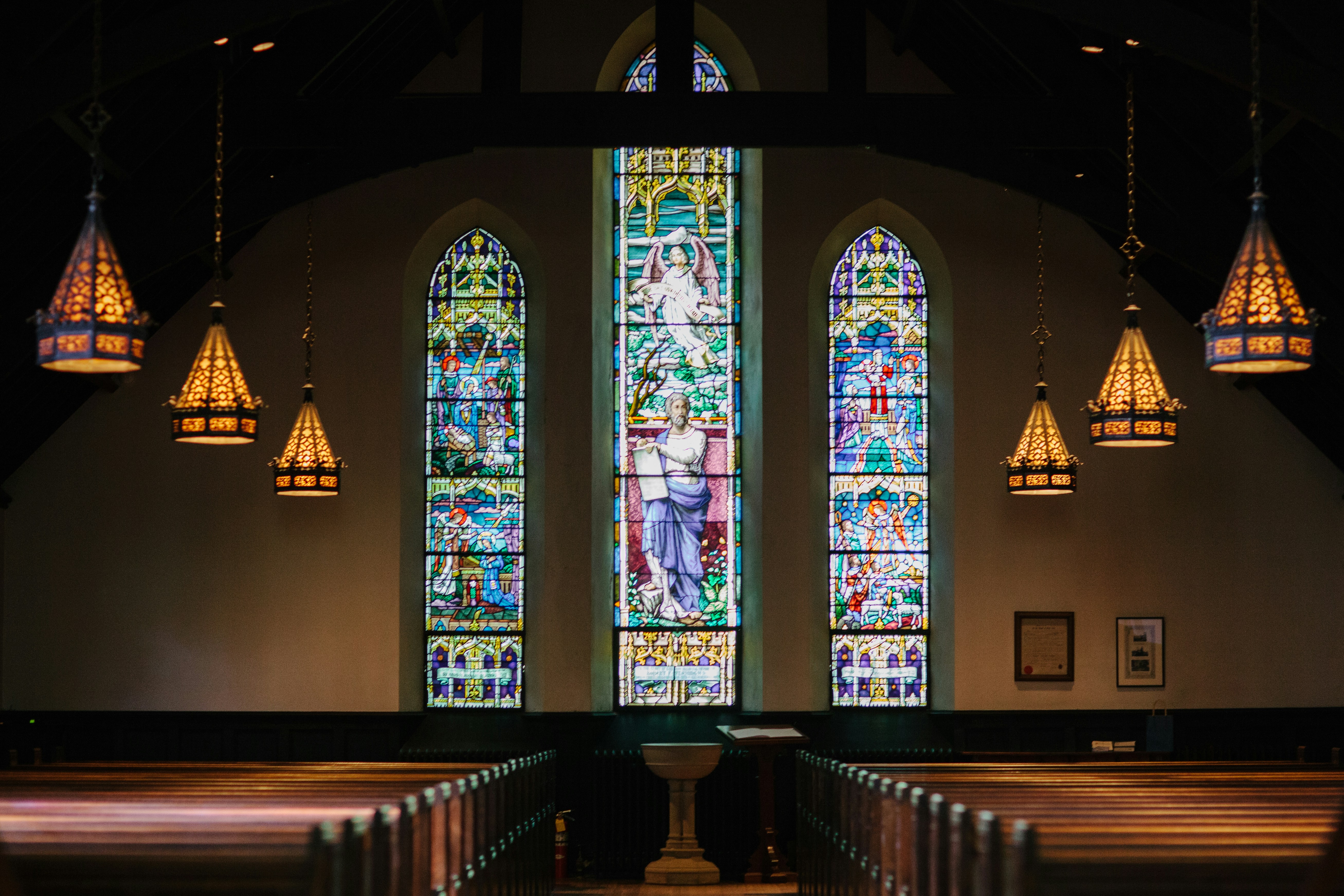
Image: Unsplash
Pop does not agree with some of the ideologies shared in the church, however.
“Most of the churchgoers are simple, humble people with good intentions, but they’ve just been raised to see the world as this horrifying monster that wants to break apart their families and corrupt their kids. Some of the ideas that have been passed down through the generations are damaging, and they continue to be passed down, despite the progressive century we are in.
“Not unexpectedly, most of the churchgoers, including women themselves, are prejudiced against women. Frequently during church services, the pastor, or the men in leadership will preach about women’s faults. How women lead men to perversion by wearing skirts that are too short, or too tight. How women of today need to learn how to listen to men, because God made men rational, but women emotional. Often, they will list things that women in the church are not allowed to do like paint their nails, get Botox, wear jewellery or heavy makeup,” she added.
Judgement fell upon her from her community as she grew older.
“Throughout my adolescent years, my church friends, and other church adults found my posture, my humour, my lack of style, and my aspiring career goals distasteful. It is a commonly accepted idea that women need to be meek and kind, always dress nicely, and they must always assume a mature motherly persona, even from a young age. Yet, the men in the church are allowed to make crude jokes, be loud, attend Sunday service in jeans, lack basic manners, and most of all, have dreams bigger than just a wife and children,” she said.
The women are expected to start a family as soon as possible.
“If a woman is unmarried in her mid-twenties, people begin to wonder what is wrong with her. But if a man is thirty and unmarried, nobody bats an eyelid. There isn’t much of a concept of a woman wanting anything other than a husband and as many children as the Lord gives her. College is just something we’re supposed to do while we wait to get married. Once we’re married, we’ll forget about everything that we’ve learnt, and start giving our husband children.
“The concept of submission is taken very seriously in the church, and the nineteen-year-old girls who get married are expected to fully submit to their husband’s wishes and wait on them hand and foot. This submission can be from something as minor as permission for a new hairdo, to something as major as their career choice or number of children to have,” Pop added.
Image: Unsplash
The church places a great deal of focus on the Biblical Book of Revelation’s ‘End Times’ which is an ideology about the rapture coming to Earth soon. The belief is that all repented Christians will get brought to heaven, while everyone else gets left behind to suffer.
“In my personal experience, it was a great way to introduce an abundance of anxiety into a nine-year-old child. I would constantly ask my parents for reassurance that I was good enough to be saved. Innocuous thunderstorms, flight turbulence, news of wars and environmental disasters, all seemed, to my fragile mind, as signs that the end was possibly occurring, or just about to occur,” she said.
The idea of some people not being saved in the apocalypse created a division between Pop and others.
“Mentally, I saw myself and my church friends as completely cut off from the world. We were different, and we were going to go to Heaven. All the other kids were sinners and would go to hell. Many churchgoers, even as adults, have adopted this divide between themselves and the ‘unholy’ world. Their interactions are superficial with people of different beliefs, including other denominations.
“Being raised in the church gave me a sense of superiority as a child, but as I became a teenager and distanced myself from the church, I realised how alienating it is to think that way. All humans are brought onto the same earth, we all have the same fundamental needs, and we are much more similar than we are different, even down to a genetic level,” she said.
Her drift from religious belief strained her relationship with her family.
“This is a common occurrence for anyone who slightly strays away from the church. It is baffling how families that would express excitement for the birth of their child, and that nothing else matters except that their baby is healthy, are the same families who are willing to cut off their grown-up child, all because they no longer share the same beliefs.
“Many are under the illusion that having a child means that the child will only ever be an extension of themselves, rather than a person with independent beliefs and wishes. So, they do not accept when the child deviates away from the good Christian soldier-for-Christ script. It is easier for them to reject their child and lose their emotional connection to them because if they are unbelievers, they are going to eternally suffer in Hell, and that reality would be too difficult to bear,” she added.


















You must be logged in to post a comment.