Author: The City’s Newshound

  • Does social media affect body image?

    Does social media affect body image?

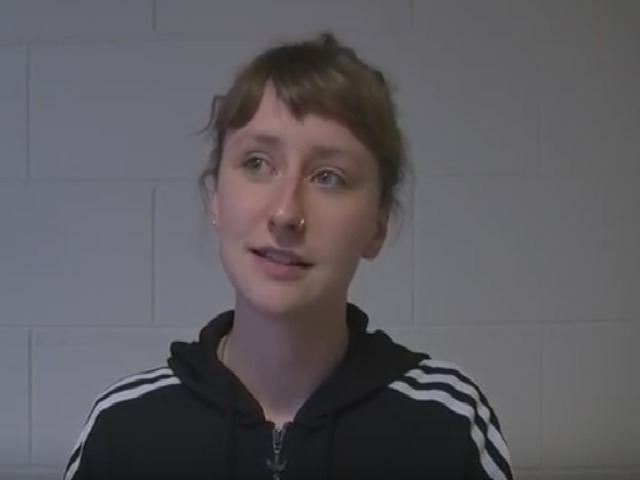
    According to a new study carried out by the National Women’s Council of Ireland, an astonishing 41% of Irish women are unhappy with their appearance compared to just 21% of men.

    The presence of social media has also heightened our desire to change how we see ourselves.

    The City explores the streets of Dublin to see what the public makes of the impact of social media on body image.

    By Niamh O’Donoghue, Nicola Kirwan and Marie Cogan

  • How does Dublin feel about Great Britain bombing Syria?

    How does Dublin feel about Great Britain bombing Syria?

    Just hours after parliament in London approved Prime Minister David Cameron’s plan to strike at Islamic State militants in Syria, British Tornado bombers conducted their first air strikes.

    The Tornados from the Royal Air Force targeted the IS-controlled Omar oil fields in eastern Syria. The oil fields are used to fund the Islamic State, also known as ISIS or ISIL.

    As the fight moves closer to home, we asked the people of Dublin how they felt about it.

    Follow us on twitter at @NiamhHaskins, @MichelleDardis_ and @StephenFLarkin.

    By Michelle Dardis, Niamh Haskins and Stephen Larkin


  • Luas accidents down in 2015

    Luas accidents down in 2015

    Luas accidents have decreased this year as Gardaí have targeted drivers breaking red lights. To date in 2015, 14 incidents of Luas trams colliding with cars have been recorded.

    Some five collisions between pedestrians and Luas trams also took place. The vast majority of these incidents have been minor with few injuries recorded.

    The figures are far lower than those for similar light rail systems in other parts of the world. The main cause of accidents and Luas collisions is vehicles breaking red lights.

    The majority of accidents are concentrated in the city centre, where the tram lines are situated closer to traffic and higher numbers of pedestrians.

    There is a statistically higher concentration of incidents on the Red line, which runs from Saggart to The Point. The biggest hotspot for accidents is the junction between Benburb Street and Queen Street.

    A new initiative began at the junction earlier this year which consisted of the installation of traffic cameras around Blackhall Place which picks out and photographs cars breaking red lights. These photographs are then passed on to Gardaí. This initiative, along with a hugely successful YouTube campaign released last year, has been heralded as the main cause of the decrease.

    “The Luas is one of the safest transports systems of its kind, and one of the safest ways to travel, and accidents and road traffic collisions are statistically extremely unlikely,” said Dervla Brophy, Communications Manager for Transdev, the company responsible for the Luas.

    Some 32.4 million people used the Luas system in 2014, and Luas operators expect to see an increase to this when the 2015 figures are released.

    This along with the hugely successful YouTube campaign released last year has been attributed to the decrease.

    There have been four fatal incidents involving the Luas since its launch in 2004.

  • Setting Dublin alight

    Setting Dublin alight

    Christmas is here and we are super excited to say the least!

    The lights, the music, family and friends, there’s nothing more magical than the month of December. However, for some the festive season can start a little earlier.

    Preparations for the festive period come about in mid-November for Dublin City Council. We went behind the scenes to find out how the city Christmas lights go up.

    By Nicola Kirwan and Aisling Rafferty

  • A catch up with Pan Cooke

    A catch up with Pan Cooke

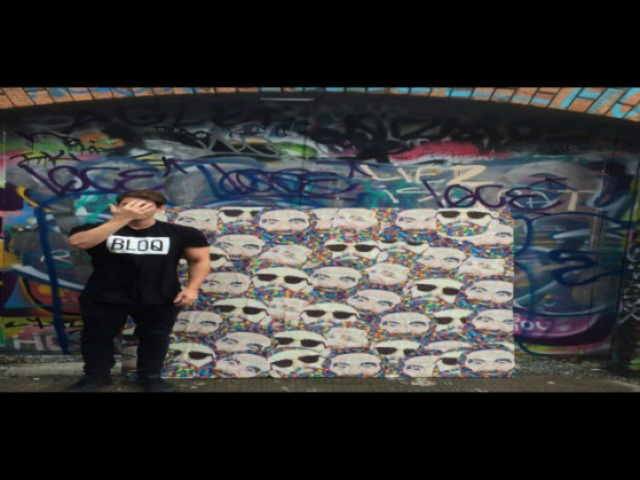
    Pan Cooke is a 25-year-old freelance artist working and living in South Dublin. The City’s Laura Larkin nabbed five minutes with the busy painter to chat about how a strange twist of fate caused him to stumble onto his new career.

    Robin Williams re

    Can you introduce people, briefly, to your work?

    At the moment I’m doing black and white portrait paintings which are my main thing at the minute. I also do street art stickers, but that’s more of a promotional tool rather than being my main job. My main outlet is Instagram – people contact me through that. Pretty much all of the paintings I do are commissions, except for the odd ones I do for myself which I’ll usually sell too.

    Is Instagram something of a new frontier for artists?

    It is. I don’ have to worry about setting up a shop or anything like that. I can pretty much do everything from my phone and I still get a steady stream of commissions. I don’t even have to do a website. It’s a brilliant tool for artists, for promotion and for selling.

    You do have a show once a year?

    Coming up to Christmas we do a show that is kind of like a pop-up shop. A friend of mine works closely with the Irish rep for Billabong clothing so we sell that clothing and do an art show. We did it for one night last year, but this time it ran for a week.

    How did you get into art?

    It grew organically for me. I did business in college but I was always messing around with art. I was doing the street art paste-ups and when the Robin Williams thing happened, it was a huge thing. I had the portrait done before he died and a good few people heard about me through that so that gave me a platform. I was then able to move into painting and use the audience from that. I just built from there I suppose.

    The Robin Williams poster, which coincided with his death, was a real turning point for you, how did you find the attention?

    It was kind of strange because the main thing about that was that I had a huge poster [of Robin Williams] and I had it ready to go that night. It was about midnight when I heard that he died and I went straight out to get it up. The image came up so quickly. I then recycled that image a bit, if people were going away during the summer I sent packets of stickers to them. I got a lot of pictures of them going up all over the world – in Asia and Australia.

    What’s next for you and your business?

    I don’t know how sustainable it will be, I’m hoping to grow it more and more. At the moment it’s kind of happening naturally without me having to plan it out. If it keeps going at the rate it is and I can build up, I’m hoping to move away from the portraits eventually and branch out into more ‘artsy’ stuff using the audience I’ve built so far. The goal is to move into experimental art but I think that’s a while down the road anyway.

    Do you feel pressure to have a clear plan?

    There’s a bit of pressure because you’re not working five days a week with set hours. There can be some weeks where I’m inundated with commissions and sometimes I don’t have any. It’s quite episodic, rather than a secure job but if you’re doing something you love you have to take that risk. Now is the best time for me to go for it anyway.

    You can find Pan Cooke on Instagram at therealpan.


  • Gerry’s Cafe – a local favourite thirty years in the making

    Gerry’s Cafe – a local favourite thirty years in the making

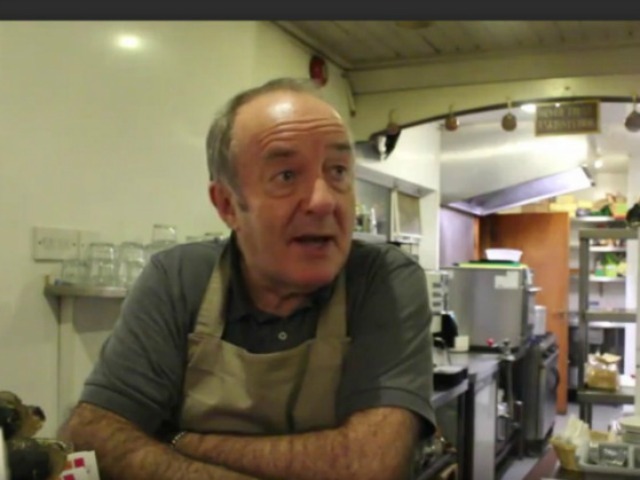
    Businessman Gerry Horgan opened his doors more than thirty years ago on Camden Street.

    In the three decades that he has been serving coffee on the street, he has witnessed Camden Street undergoing a dramatic change.

    Once a quiet market street, it is now a bustling extension of Dublin’s bar and restaurant scene.

    He is one of the few businesses to have survived throughout the changes and Gerry spoke to The City about the benefits that these developments have brought to the street.

    By Ben Finnegan and Laura Larkin


  • Craving Irish treats when living abroad? Now there’s a solution!

    Craving Irish treats when living abroad? Now there’s a solution!

    A new website has recently been launched … and for any Irish person living abroad, it can be the closest thing to doing your food shop at home.

    A Slice of Home sends Irish treats to people all over the world so you can either surprise a friend with their favourite Cadbury bar abroad, or stock up on some Barry’s Tea for yourself if you can’t stand the tea where you’re living.

    The website has a wide selection of Cadbury chocolate, Tayto and King Crisps, as well as Lyons and Barry’s Tea. And of course, they’re all big sized versions to last the typical Irish person a while.

    All the delivery prices are set by the An Post postal service and the website guarantee that they do not gain profit from the delivery end of things as they believe it can be expensive enough.

    So if you’re looking to buy some Irish treats for that homesick friend of yours, check out the website here.

    We here at The City took to the corridors of Dublin Institute of Technology to see what food some of the students missed most when they were living abroad.

    Also, check out The City’s interview with A Slice of Home founder here.

    You can follow Rachael on Twitter @rachieobrien.

    By Rachael O’Brien and Ronan Smyth


  • Greater awareness is the next step to tackling Female Genital Mutilation in Ireland

    Greater awareness is the next step to tackling Female Genital Mutilation in Ireland

    It is estimated that some 3,780 women and girls, aged between 15 and 44, in Ireland have been subject to female genital mutilation (FGM).

    FGM involves the full or partial removal of a woman’s outer genital organs. There are both short and long term health consequences for women who have endured the procedure.

    A recent study from the European Institute for Gender Equality estimates that between up to 11% of the almost 14,600 girls aged under eighteen in Ireland whose parents originate from FGM-practicing countries could be at risk of the procedure

    Ireland outlawed FGM in 2012 and although there are no known prosecutions under the law, Aine Travers of the Irish Family Planning Association (IFPA) said that it sends a strong signal.

    “The legislation sends a very powerful message, that FGM is a serious crime with serious sanctions, but it’s also a support to parents who may feel under pressure to have the procedure done to their girls,” she said.

    “All women who access our specialised service have been aware of the legislation. They’ve all known that it is a serious crime in Ireland.”

    According to the latest statistics in the IFPA’s annual report, ten women accessed the FGM treatment service last year, since it first opened in May 2014.

    The free service provides medical treatment for affected women, psychological support and it also offers sexual health and reproductive services.

    There are both long and short-term risks associated with FGM. Infection, haemorrhage and HIV are among the problems associated with the procedure – which can often be carried out by someone who has no medical training.

    Long term, women who have the procedure can be faced with painful periods, infertility, potential trauma during childbirth and psychological trauma.

    “Part of our plan is sustained outreach, we’re constantly trying to spread awareness about the clinic to women in communities who are possibly affected by the procedure,” Ms Travers explained.

    “They don’t have to be referred through a doctor, they can self-refer. We want to facilitate as many women as possible to access it in a way that is most comfortable for them,” she added.

    Meanwhile at a policy level there has been something of a shift recently.

    The Government signed the Istanbul Convention on Friday November 5, following extensive lobbying from advocacy groups, including Amnesty International.

    The Council of Europe Convention on Preventing and Combating Violence against Women and Domestic Violence (Istanbul Convention) marks the first time that Ireland has agreed to a legally binding instrument in the area of preventing violence against women.

    Signing it has now put an onus on the government to ensure that legislation is effective and also that the prevention of violence against women is seriously pursued.

    Ireland was, in the words of Amnesty Ireland’s director Colm O’Gorman, “late to the table” in ratifying the convention.

    In the intervening months, Mr O’Gorman had called on the government to sign up to the convention to strengthen their position when it came to stamping out FGM in Ireland.

    “While we welcome Ireland’s enacting legislation in 2012 to criminalise FGM, legislation alone is not enough. Ireland needs to adopt a domestic FGM action plan. Ratifying the Istanbul Convention would aid Ireland in sharing best practice in effectively preventing FGM,” he said at the time.

    Now that it has been signed, Ms Travers points out that only time will tell of its effectiveness.

    “While it’s a very positive signal that the government have signed the Istanbul Convention, it’s really too early to say what impact it will have,” she said.

    “It does highlight the importance of the area of prevention and protection, as well as prosecution, very clearly and so that would tie in with what we would like to see coming out of our advocacy work.

    “For the second National Action Plan we are looking at more systematic training among the relevant professionals (medical staff, teachers, social workers), more awareness raising and education initiatives in communities where FGM is prevalent,” she explained.

    “Our colleagues in Akidwa have produced a guide for education professionals looking at how to identify risk of FGM and how to deal with it in a sensitive way,” she added.

    The second National Action Plan for tacking FGM is due to be published in 2016.

    More information about the free FGM treatment service can be found here.

    You can also phone or text 0858771342.
  • The City asks Dubliners what they would change about the capital

    The City asks Dubliners what they would change about the capital

    Dublin is home to more than a million people and thousands of visitors wander the streets daily. The city is regularly touted as one of the best places in the world to visit.

    But what about for those who live, work and study here? What would Dubliners change about their city if they could change just one thing?

    The City took to the streets to find out and the results might surprise you…

    By Laura Larkin and Ben Finnegan

  • Has Christmas come too early?

    Has Christmas come too early?

    As Christmas preparation is in full swing across the city, retailers are expecting the biggest Christmas splurge since 2008.

    We hit Dublin’s busiest streets to find out what the city thinks on the countdown to Christmas.


    Follow us on twitter at @NiamhHaskins, @MichelleDardis_ and @StephenFLarkin


    By Niamh Haskins, Stephen Larkin and Michelle Dardis