Author: The City’s Newshound

  • A catch up with Long Island Sound

    A catch up with Long Island Sound

    Dublin is home to a number of low key DJs who are steadily becoming more popular. Having played in top venues such as The Twisted Pepper and District 8, Long Island Sound are definitely one to watch. Hailing from the capital, Timmy Nolan, aged 22, and Rob Roche, aged 21, are quickly becoming Dublin’s up and coming DJ duo. I caught up with them to find out a little bit more about their love of music:

    Firstly, how did you come up with the name, ‘Long Island Sound’?

    Tim: “Basically, we were in the middle of trying to find a suitable name and at the same time, I was reading The Great Gatsby. Gatsby lives in a place called Long Island Sound and we thought that sounded really cool so we went with that.”

    How long have you been DJing together for?

    Tim: “We’ve been DJing together for about a year and a half now. We started making some music together in the summer of 2014 and have been playing at parties together since then. Separately, I have been DJing for about 5 years and Rob has been DJing for 4.”

    What has been your favourite gig so far?

    Tim: “My favourite party was one of our recent gigs at District 8 with Soundstream, Fintan Lawlor and Jeremy Underground. It was an honour to be on the same lineup as those guys. Soundstream is one of my favourite producers and Jeremy is an unreal DJ. Both of them turned out to be very nice people too. We also got the chance to use Jeremy’s rotary mixer which was sick!”

    Rob: “Yeah I have to agree with Tim, District 8 a few weeks back was one to remember. Getting to play before Soundstream and Jeremy Underground was unreal, and Jeremy’s rotary mixer is really something else”.

    Do you consider DJing a job or a hobby?
    Tim: “Definitely a hobby. Pretty much any money I make from playing at parties is spent on records or other musical equipment.”

    Rob: “A hobby definitely, the money is a bonus though.”

    What’s been the highlight of your time DJing?
    Tim: “It’s actually very hard to choose one highlight. Definitely playing the main room at District 8 last year was a great buzz. Also, pretty much any time we’ve got to play in the Twisted Pepper basement was good fun.”

    Rob: “It’s very hard to pick one thing, but as Tim said getting to play in the Twisted Pepper was always really good craic.”

    Where do you see yourselves in five years?
    Tim: “I have no idea. Definitely still making music and DJing, who knows where though.”

    Rob: “I really don’t know, but I definitely don’t plan to stop producing or DJing.”

    What advice do you have for any aspiring DJs out there?
    Tim: “I don’t consider myself to be an expert, but one thing I would recommend is to do whatever you want. As long as you enjoy listening to the music that you are playing then that’s all that matters. Support your local DJs too – it’s unreal how many good DJs that are from Dublin alone and they deserve support.”

    Rob: “Definitely to not just play the same DJ sets as everyone else, and to play music that you really like instead of playing something for the sake of it.”

    When and where’s your next gig?

    Rob: “Our next gig is on December 5th in a very cool and retro location; the Leisureplex in Bray. We’re releasing a track on Editorial Records in December and also have a record coming out with Roots For Bloom Colour Records, which features two tracks by Jamie Trench and two by us – the vinyl should be out early next year.”

    If you want to find out more information about the lads or listen to some of Long Island Sound’s beats, then head over to some of their social media accounts which are linked below.

    If you like the sounds of these guys, why not check them out on Facebook or Soundcloud.


  • The Meeting House launch their new brunch menu

    The Meeting House launch their new brunch menu

    Appetites were thoroughly pleased at The Meeting House this week where special guests were invited to celebrate the launch of their new Burmese brunch menu.

    download

    The Meeting House is a contemporary eatery situated in the heart of the city in Dublin’s cultural quarter.

    This quirky gem is relatively new and is home to popular club night ‘Church’. Upon arrival the atmosphere was evident: music was provided by the beautiful and talented Jess Kav who provided soulful tunes for the already packed venue, while the staff prepared endless amounts of delicious cocktails.

    What caught my eye first was the brilliant décor: beautiful art adorned the walls, and even individual chairs and tables had original pieces of art painted onto them – definitely a thumbs up from me.

    The entire ground floor was packed with guests who included Louise McSharry, Nirina Plunkett of Killer Fashion, Eric Davidson of District Mag and Leanne Woodfull of Thunder & Threads.

    The event kicked off with fresh juices, bespoke salads and a special ‘breakfast cocktail’ (which included an unusual blend of gin and marmalade – but was devilishly delicious nonetheless)

    Brunch 1

    While food was being prepared, an accommodating member of staff delivered cocktails to each guest; explaining the intricate list of ingredients and concept behind the drink.

    My favourite was the vodka, milk and banana combo which was smooth, light and full of flavour.

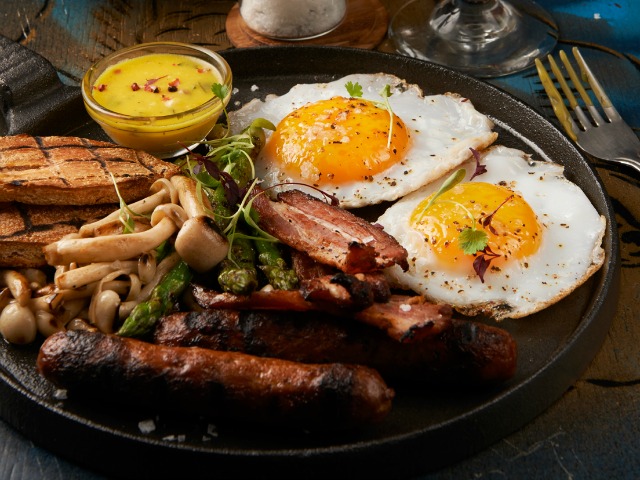
    My favourite dish of the day was the glazed pork belly. Smoky and crispy pork lay sandwiched in-between a steamed coconut bun and a delicate soft-poached duck egg, teamed with special TMH smoked Hollandaise sauce. It was a tasty and authentic twist on a classic dish and I would definitely go back for this dish alone.

    I was really impressed by the quality of the food versus the price of the food. Dishes are priced at €9.99 and are designed to share with friends. I often find myself paying more than I should for basic meals that are just ‘okay’ in terms of standard, but I found that TMH delivered with their food, drinks, and enjoyable atmosphere.

    The new Burmese Brunch is now available every Saturday and Sunday from noon.

    You can book a table at TMH via their website at themeetinghusedublin.com, or connect with them on Twitter @meetinghousedub .

  • What would injecting centres in Dublin look like?

    What would injecting centres in Dublin look like?

    Minister for Drugs Aodhán Ó’Riordáin has pledged that the first medically supervised injection centres (MSICs) will be open in Ireland next year.

    The centres form part of his radical strategy to change the drug landscape in Ireland, a strategy that has garnered coverage across the globe.

    If opened in Ireland, the centres will see somewhere that people can inject illicit drugs under the supervision of trained medical staff who will be on hand to intervene in the case of an overdose.

    Once the legal restrictions around operating such centres are unblocked, drug service provider the Ana Liffey drug project hopes to run the service.

    The group first proposed that they could staff and run an MSIC in Ireland, once it was legal to do so, in 2012.
    Director of the Ana Liffey project Tony Duffin spoke to The City about what comes next and to dispel some concerns around the centres.

    Rather than legitimising heroin or other intravenous drug-taking, the centres will ease the pressure on emergency services, save lives and provide a clinical space where those drug users who are the most marginalised can access a range of medical services, he said.

    Location
    One of the main concerns people have about the MSICs is where exactly they will be located.

    It is still too early to decide where the centres will, or could, be located until the legislation is published. The possibility of a mobile injecting unit is also still on the table.

    “One of the concerns people have is the idea of nimbyism or ‘not in my back yard’ about this, and some ‘note-sim’ ‘not over there either’ – some people are just fundamentally opposed to the idea,” he said.

    “That discussion [about location] is still premature because it’s still illegal, but the simple answer is you put them where you’ve got a problem.

    “When you start to pull away at that you see that you have the problem right across the city centre, so you have to put them in the optimum place.”

    The key concern with using a mobile unit Mr Duffin said is that space for service users is limited and there could be an issue with people accessing the service consistently.

    “While all this is going on don’t forget that public injecting is still a very big problem, people are at still at huge risk injecting,” Mr Duffin said.

    “Businesses and communities still have problems with drug paraphernalia discarded across the city. The gardai are still trying to police the situation. At the moment the problem is being passed from pillar to post.”

    Dublin’s drug culture is not to be underestimated he pointed out.

    “We have a very significant problem in Dublin, people take copious amounts of drugs every day,” the drugs worker said.

    Overdose
    On top of preventing fatal overdoses – nobody has ever died in any of the eighty or so MSICs around the world – the centres have the ability to intervene in overdoses that may have otherwise been missed.

    In an MSIC, an oximeter is placed on the client’s finger and it measures the level of oxygen in their blood. If the level drops below 95 they are technically overdosing and they can be treated with oxygen.

    Ireland’s MSIC is likely to be based on the Sydney model where a centre was opened in 2001 in the King’s Cross area of the city – a suburb that was notorious for public drug use.

    “The centre reduced ambulance call outs by 80pc because the client base are known as ‘super-utilisers’ of emergency medical services and A&Es,” said Mr Duffin.

    “What does Dublin have a huge problem with at the moment? Overcrowding in A&Es, this will take some of that pressure off. You start to save money then in mainstream services.”

    While consultation continues and government officials draw up the heads of a new Misuse of Drugs bill, the public conversation will continue.

    “People realise that we have a problem, no one is happy about the situation. We need to do something that works if we want to improve Dublin for everybody,” said Mr Duffin.

    “This is one way of improving things for people who inject drugs, businesses, families, visitors. It has a positive impact and it’s far reaching.”

  • Dublin Book Festival: a novel idea

    Dublin Book Festival: a novel idea

    Dublin Book Festival took over the city last night, with the launch of Winter Pages, Ireland’s new annual arts anthology. 

    The festival is in its eighth year and aims to “showcase, support and develop Irish Publishing by programming, publicising and selling Irish published books, their authors, editors and contributors all in an entertaining, festive, friendly and accessible environment”.

    There will be over fifty events taking place and over one hundred authors present at the festival until Sunday. Best of all, most of the events are completely free.

    Highlights of the festival include walking tours with Pat Liddy, which will explore spots around the city which inspired some of our greatest authors and works of literature. The 25th anniversary of ‘Under the Hawthorn Tree’ by Marita Colon-McKenna will be celebrated in a live discussion with the author.

    RTÉ Radio 1’s popular Arena show will be broadcast live from the Smock Alley Theatre, Temple Bar, while host Sean Rocks will hold a discussion with Reggie Chamberlain-King, on his new book ‘Weird Dublin’. Kate Dempsey of the Poetry Divas Collective will read from her debut poetry collection ‘The Space Between’, while ‘The Healing’ and ‘The Matthews’ will also perform.

    The festival will see the launch of a number of new Irish titles such as ‘Waterford Whispers: News Takes Over the World’ by Colm Williamson (Blackstaff Press) and ‘The Uninvited’ by Dorothy Macardle (Tramp Press)

    Writing workshops will take place across the weekend including writing for children and young people featuring Eoin Colfer, author of the world famous ‘Artemis Fowl’ series.

    Events across the weekend will offer an insight into the world of Irish publishing and provide opportunities for small, independent Irish publishers to network and connect with authors, editors and readers.

    The festival also has a separate programme of events for schools, which proves hugely popular with many of the events already sold out.

    For more information and tickets visit dublinbookfestival.com.

  • Top Three For Free

    Top Three For Free

    Looking for something to do this weekend that won’t break your bank account? Here are our top three events on this weekend that are free and for all ages.

    Dublin’s rave market

    With Christmas around the corner there’s bound to be a lot of markets. Why not go for something a little different with Dublin’s rave market.

    Camden Street will be home to this unusual event on Saturday at the Palace venue. The market which is inspired by the eccentric Madrid summertime rave markets will bring shopping to a whole new level.

    The market is on from 10am to 6pm with a great mix of stalls perfect for all interests. Stalls that are to be there include: the vintage kilo sale, gelato ice-cream bar, yoga, artisan coffee, live graffiti, fire-cooked tapas, a craft whiskey storehouse and much more.

    Dublin Book Festival

    Dublin Book Festival is running all this weekend with a vast variety of events taking place, most of which are free.

    The events take place in Dublin’s Temple Bar district from the 12th of November to the 15th. Friday’s events include a book launch of ‘Waterford Whispers News’ in Smock Alley at 5.30 pm, to RTÉ Radio 1’s Arena live show on in the main theatre at 7.

    Other events throughout Saturday and Sunday include: Under the Hawthorn Tree 25th anniversary celebration in the Winter Garden Saturday evening at 7.45pm, and on Sunday afternoon at 4.30pm “The Art of the Book Review with Martin Doyle, Ian Sansom, Juliette Saumande and Eithne Shortall in conversation with Paula Shields”.

    For more information on what’s on visit http://www.dublinbookfestival.com.

    Grafton Street Christmas Lights

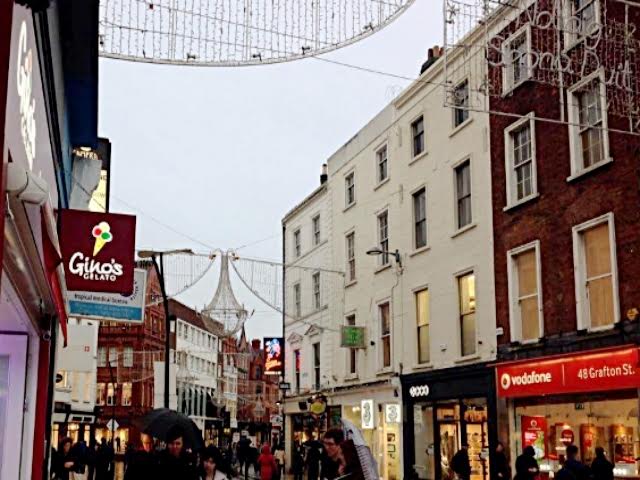
    It’s definitely that time of the year again. This Sunday sees the Grafton Street Christmas lights turned on. This annual event kick starts Grafton Street’s Christmas shopping.

    The family friendly event will start from 4pm with a special guest to turn on the lights. The Highkings will perform on the evening, with Zena Donnelly also singing on the night.

    Although this free event sees the lights along the street being turned on, we will have to wait another while to see the Christmas tree put up and its lights twinkling.

  • 1916 Freedom Tour

    1916 Freedom Tour

    The 1916 Freedom tour is one of the most recent tourist attractions to start up in Dublin.

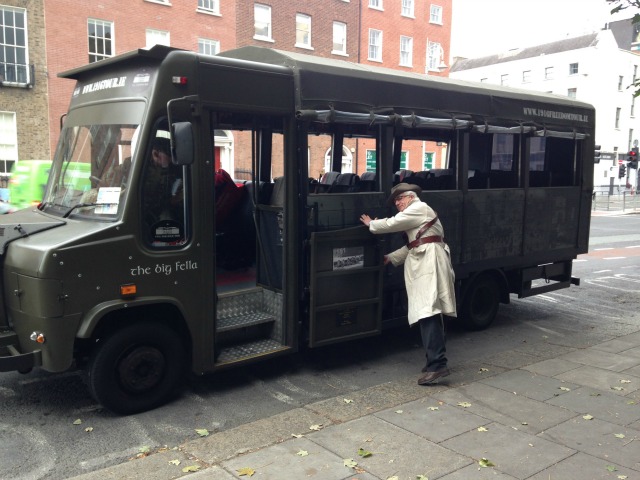
    The tour, which begins at Merrion Square West, drives through the streets of the city while Bernard Birmingham, the man behind the idea, narrates the story of Easter Week 1916.

    Paying particular attention to the human aspect of the conflict rather than the political side, Bernard gives a detailed and unbiased account of one of the most important periods of Irish history.

    “Everyone has a passion for something and mine was always history. I would have made a very boring boyfriend when I was younger,” Bernard said.

    The hour long trip begins with a demonstration of the weaponry used during the rebellion and while Bernard tells his carefully researched rendition of the revolution, the driver Mick Shivnan weaves through the streets in a military style vehicle.

    The tour takes its passengers around St Stephen’s Green, Dublin Castle, past Trinity College and on to O’Connell Street, before returning to Merrion Square.

    After the tour Bernard explains that the most special part of the experience for him has come as an unexpected surprise.

    “We obviously thought the tour would be an attraction to people all over the world, but we didn’t take into account the amount of Irish people that have a family connection to The Rising. I mention characters during the tour in passing and more often than not there’s someone on the bus whose family member it was. It really was just a happy accident.”

    To find out more about the tour, make sure to watch our video below!

    By Rosemary Haughey and Aisling Rafferty

  • A snapshot of prison life

    A snapshot of prison life

    The Irish Prison Service (IPS) accommodates more than 3,500 prisoners across seven prisons. The IPS compiles data on a daily basis, which when looked at altogether paints a comprehensive picture of life in Ireland’s prisons.

    Access to a private toilet at all times is considered a basic right under best practice standards, but in Ireland not everyone has access to one due to upgrades needed in prisons and because of over-crowding.

    The following chart shows the number of people who don’t have access to a private toilet at all times. The problem is worst in Cloverhill, a remand prison in Clondalkin where more than 50% of inmates must use a toilet in front of others.

    In addition, some 312 prisoners were still ‘slopping out’ their cells in Portlaoise, Limerick and Cork prisons. Compensation claims are expected to be lodged by former prisoners who were subject to this practice, after similar cases in Scotland were brought to a successful conclusion for the claimants.

    Capture
    Access to a private toilet 24 hours a day

    Work is underway to eliminate, where possible, the need for prisoners to share cells. Due to increasing capacity numbers just under a third of prisoners are now in shared cells.

    In a recent parliamentary question on the subject of shared cells Minister for Justice Frances Fitzgerald pointed out that not everyone in the system wishes to be housed in a single cell.

    “It should be borne in mind that in certain cases prisoners are housed together for reasons other than lack of capacity. Family members and friends often elect or are assigned a shared cell,” she said in response to a question tabled by Labour TD Ciarán Lynch.

    “Shared cell accommodation can be very beneficial from a management point of view particularly for those who are vulnerable and at risk of self-harm. There will always be a need for certain prisoners to be accommodated together.”

    Cell sizes
    Type of cell accommodation

    Under new rules introduced by former Minister for Justice Alan Shatter in 2012, prisoners have the ability to lodge complaints against prison authorities. The most serious of these are investigated by an independent body. In Dublin prisons last year 631 complaints were lodged by prisoners.

    Staff in Cloverhill Prison in Dublin had the highest number of complaints made against them by prisoners, with 257 grievances filed.

    Some 44 ‘category A’ complaints, which deal with the most serious allegations, were lodged by Cloverhill prisoners last year.

    However the IPS said that 24 of these complaints related to one incident and were not upheld after investigation.

    Prisoner complaints are divided into six categories, the most serious of which deals with alleged “assault or use of excessive force” as well as “ill treatment, racial abuse and discrimination”.

    This category also covers “intimidation and threats” and complaints of this nature are dealt with outside of the prison services due to the gravity of the allegations.

    Mountjoy and Wheatfield prisons in the capital were the second and third most likely place for serious complaints to be lodged. Mountjoy prisoners submitted 19 complaints of this type, while in Wheatfield there was 18.

    Meanwhile another 109 complaints were lodged in Irish prisons for other serious issues including “verbal abuse of prisoners by staff” or “inappropriate searches”.

    Again, Cloverhill was subject to the most complaints under this heading, with 41 lodged.

    The Clondalkin prison has a higher turnover than most other Irish prisons which could account for its high level of complaints, a spokesman for the IPS said.

    The most common complaints among the Irish prisoner population however, were for basic service level issues.

    They lodged 490 complaints in Dublin prisons under this category in 2014, with the Midlands topping the list at 254 complaints.

    These cover issues such as “complaints about visits, phone calls, reception issues, missing clothes, not getting post on time, not getting appropriate exercise” according to official guidelines.

    Number of complaints per prison

    “The fact that prisoners are submitting complaints through the system is evidence that prisoners have a confidence in the system and that any issues they raise will be listened to and addressed by prison management,” a spokesman for the IPS said.

    By Laura Larkin and Niamh Geoghegan

  • Dublin City Council receive over 200 calls in one week with bonfire complaints

    Dublin City Council receive over 200 calls in one week with bonfire complaints

    Dublin City Council (DCC) has received over 200 calls in one week from people reporting the hoarding of bonfire materials.

    Brian Hanney, head of street cleaning at DCC, said: “The last few weeks have been very busy for our clean up crews, especially this week [when] we have received over 200 calls, which is a huge amount.”

    Mr Hanney says the number of bonfire hoards DCC have cleared this year has fallen from previous years, but they are still a major issue.

    “Every year we spend three quarters of a million euro on the removal of bonfire materials. This is a huge amount and money we would obviously like to spend elsewhere,” he said.

    Bonfires, especially in built up urban areas, pose huge environmental and social risk.

    Dublin City Council removed approximately 1,500 tyres and 750 tonnes of bonfire material last year.

    The area of the city with the most bonfire complaints is the North Central district which includes Coolock, Artane, Drumcondra and Donaghmede.

    Second was the South Central district, which contains the Liberties, Kilmainham and Ballyfermot areas of the city.

    “This week we confiscated 90 tyres which were part of a bonfire hoard from the South Central area of the city. As you can imagine, burning 90 tyres in a built up residential area could have disastrous consequences,” Mr Hanney explained.

    “We have run a number of initiatives and events in communities around the city which will give people a safe, family orientated alternative to unsupervised bonfires.”

    Along with the hugely popular Bram Stoker Festival which runs across the city, DCC have a number of smaller, more localised events.

    Halloween parades and fireworks displays will take place in communities across the city to offer people a fun, safe alternative to bonfires.

  • Are you feeling the pressure to dress up for Halloween?

    Are you feeling the pressure to dress up for Halloween?

    Almost one in three women’s Halloween costumes use explicit descriptive language in their title. Research carried out by The City on the most popular Halloween costume catalog in Dublin and two online websites show that nearly one third of all women’s Halloween costumes use language which clearly sexualises the costume.

    Words like ‘hot’, ‘naughty’, ‘raunchy’, ‘tease’, and ‘saucy’ are just some of the descriptions used in the titles of women’s fancy dress. None of these terms are used to describe male costumes with the majority of those aimed at men using words like ‘whacky’, ‘funny’, or ‘crazy’ … with a very occasional ‘handsome’.

    The research also shows that for costumes that portray a figure of authority, there are no female sizes or equivalents. Examples of this include ‘High Court Judge’, ‘New York Cop’, ‘Army Guy’ or ‘ER Surgeon’, all of which have male models and no women’s sizes.

    In comparison, women interested in those kinds of costumes will have to settle for ‘Officer Pat-Me-Down’, ‘Corporal Cutie’, or ‘Naughty Nurse’. With names like that, it is no surprise that female Halloween costumes tend to be physically very revealing. So are women and girls under increasing pressure to take the ‘sexy’ option out of fear of seeming ‘lame’?

    We spoke to Chairperson of DIT’s gender equality society, Constance Keane, and members of the public to get their views on this issue.

    By Rosemary Haughey and Niamh Geoghegan

  • Ireland’s bid for Dublin2020

    Ireland’s bid for Dublin2020

    The people of Dublin are anxiously waiting on November 13 to find out if they will be announced as the European Capital City of Culture for 2020.

    Running for the past 30 years, the European Capital City of Culture is an annual competition between two host countries within the European Union – with the host cities for 2020 being in Ireland and Croatia.

    The winning city within each country will be given the coveted title for a period of one calendar year, and the potential to generate large amounts of revenue in tourism and business.

    Limerick, Galway, the South-East and Dublin are all competing for the title.

    The initiative aims to promote and highlight the diversity of culture across the EU, as well as promoting healthy competition between its members.

    The programme also offers an excellent opportunity to tackle issues within the chosen city, such as homelessness and other social issues.

    Ireland is no stranger to the Capital City of Culture; with Dublin having won the prestigious title in 1991 and Cork following suit in 2005.

    So what exactly is the bid?

    The Dublin 2020 bid is about social change through involvement – so get involved! A team of hardworking journalists, event managers, videographers, photographers, singers, dancers, teachers and everyone in between, have spent months preparing to put the bid forward to the EU.

    The bid is essentially a book filled with thousands of reasons why Dublin is unique, special, and most importantly why we as a county should be chosen.

    Niamh O’Donoghue and Marie Cogan spoke to Dublin’s youngest 2020 campaigner, Jamie Harrington, about the importance of the competition.

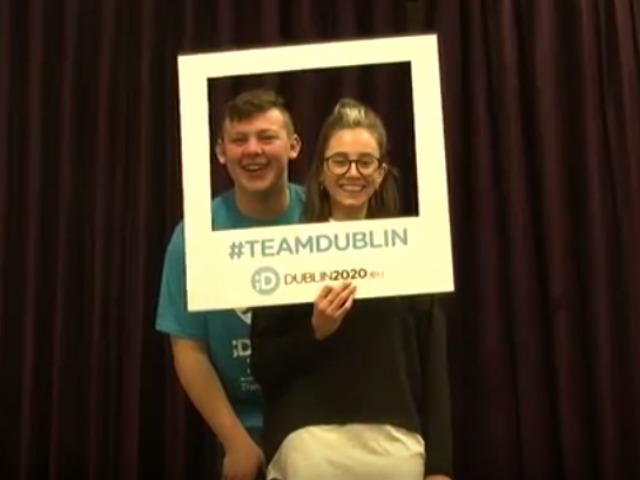
    Want to join #TeamDublin? Start spreading the message of the bid and simply inform others. If you think you have a great idea to help boost our chances of winning then get in touch and #TeamDublin will support you as much as they can.

    By Marie Cogan and Niamh O’Donoghue