
By Paul Lee
A recent study from The Irish Longitudinal Study on Ageing (TILDA) in Ireland shows that about one-third of adults over 50 in the Republic of Ireland have experienced emotional loneliness at some point, with 7% feeling lonely often.
The research found that loneliness tends to decrease between the ages of 50 and 67 but rises again after that.
People over 75 are more likely to report feeling moderately lonely compared to younger groups. Factors like lower education, living alone, poor self-rated health, physical limitations, and chronic health conditions were linked to higher levels of loneliness.
Ireland is currently ranked number one in Europe for people suffering grom loneliness as of last year, with the coronavirus pandemic forcing generations to feel isolated.

Men above 65 years old saw a 25.1% increase in living alone, while women over 65 saw an 18.4% increase in the last six years. “The numbers are only going to continue rising,” said psychotherapist Maggie Molloy.
“I often deal with young people suffering from loneliness, so I know how bad it must be for the elderly who have far more reasons, most of which are out of their hands for feeling lonely.”
Last year The World Health Organization (WHO) declared loneliness to be a pressing global health threat, with the US surgeon general saying that its mortality effects are equivalent to smoking 15 cigarettes a day.
Anne Butler is a woman who knows the effects of loneliness all too well, inspiring her to commit her life to helping the most vulnerable in her community.
“Loneliness is a big issue for older people, and I don’t think the general public realises this enough,” said Mrs. Butler, who is the manager of Walkinstown Social Service Centre.
“It is dangerous to the elderly, we are social creatures that need to interact and get out of the house, but for some people that’s just impossible. It is heartbreaking because some of the faces around here were stuck in nightmare cycles of being upset, refusing to eat, or turning to drinking alcohol at home. It’s stories like these that make me so happy that we’re making an impact in the community and the bigger problem,” she says.
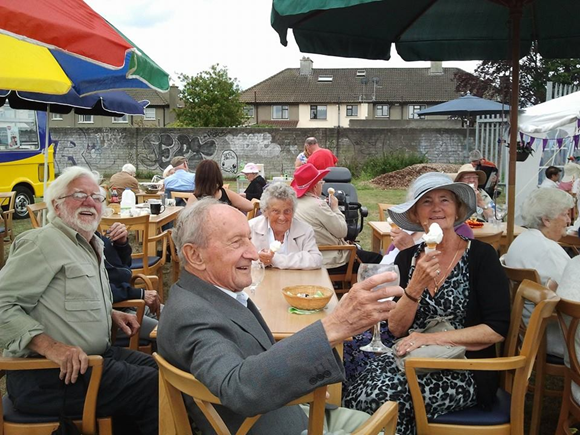
The centre takes in 60 people daily between lunch and dinner with some walking and others taking the centre’s bus that collects them from their houses. The centre charges €10 for transport, a meal, and bonus activities, whether that is a game of bingo, or a fitness instructor to get them exercising.

Source: Facebook – Walkinstown Social Service Centre
Group day trips around the country are organised and voted on. Special events happen year-round with ‘Strictly Come Dancing’ watch parties and even live shows with staff members performing dances.
“I’ve been coming for the last few years now and it’s just brilliant,” said Monica Walsh, age 72.
“I’m not great on my feet any more so going out wasn’t really possible unless I waited for my kids to come and bring me out somewhere. The centre is great because I get a sense of independence back, able to go out on my own.
“I feel like a kid again, going out with friends, singing songs. This place has given me some of the best moments I’ve had in years. All the staff are true heroes.”
The centre’s staff is made up of half full-time workers and half part-time voluntary workers from the local area such as Amanda Nic Fhannchaidh.
“I don’t work on Thursdays or Fridays, and I’d just be watching the Telly all day, so it’s really a no-brainer for me to come here, have a laugh, and feel good about myself for helping out where I can,” said Amanda.
Both local schools, the Assumption Secondary School Walkinstown and Drimnagh Castle Secondary School, have included helping out at the centre as a part of the transition year experience.
“It’s the right thing to do, so it’s what the lads will do. It gives the school a good name in the community and a chance for the boys to see how far a little help can go,” said Drimnagh Castle Secondary School principal John Haze.
You must be logged in to post a comment.